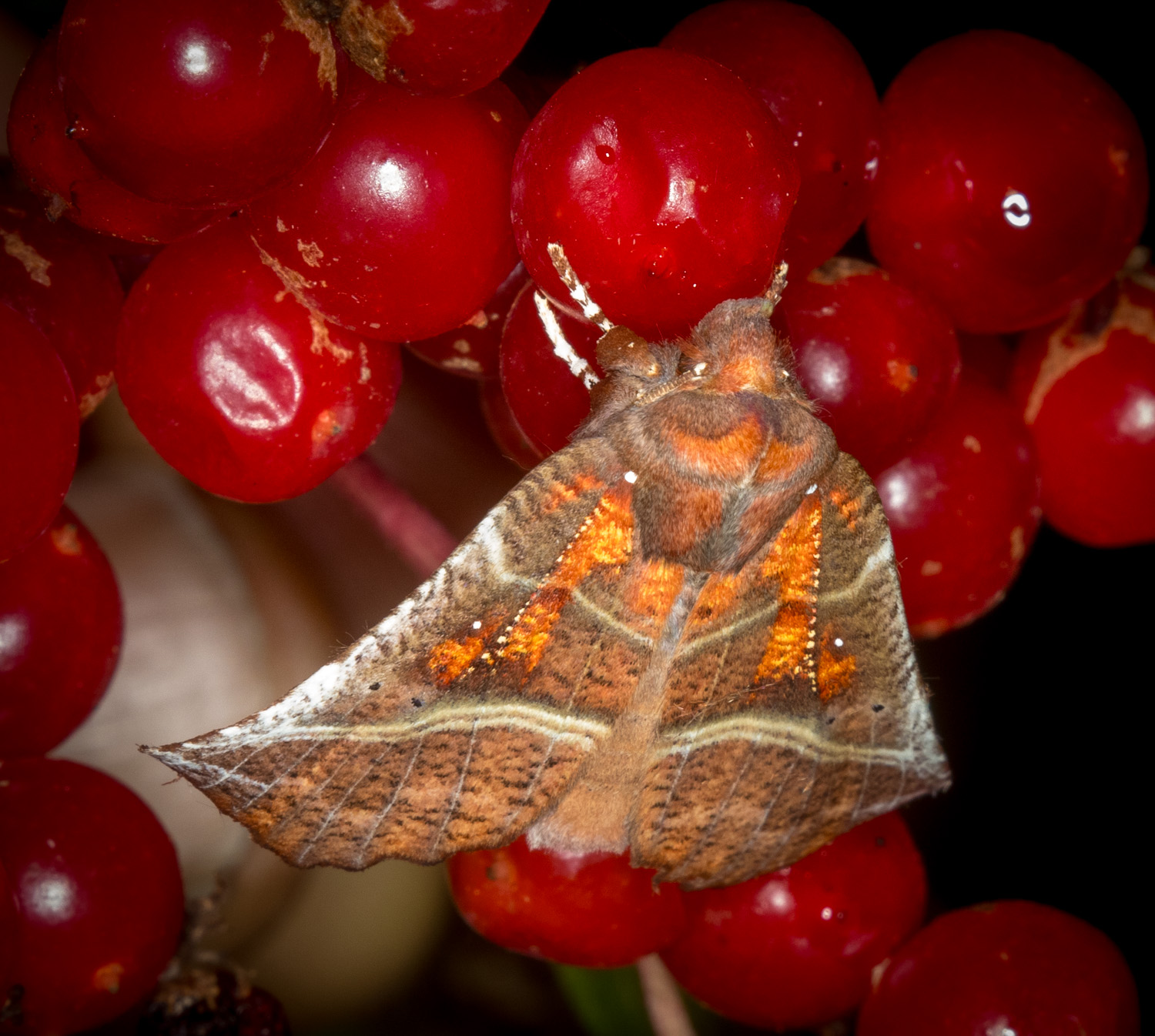
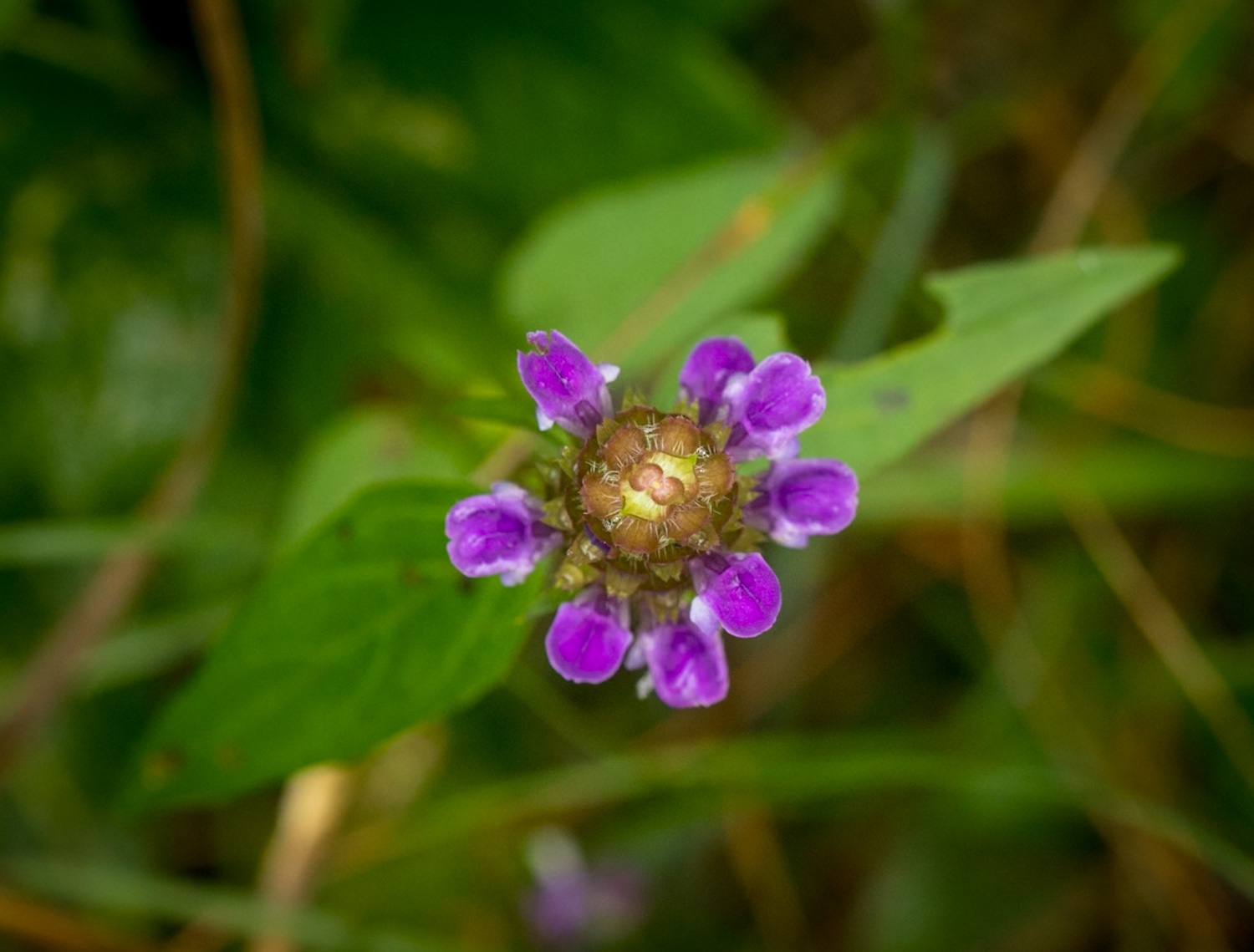
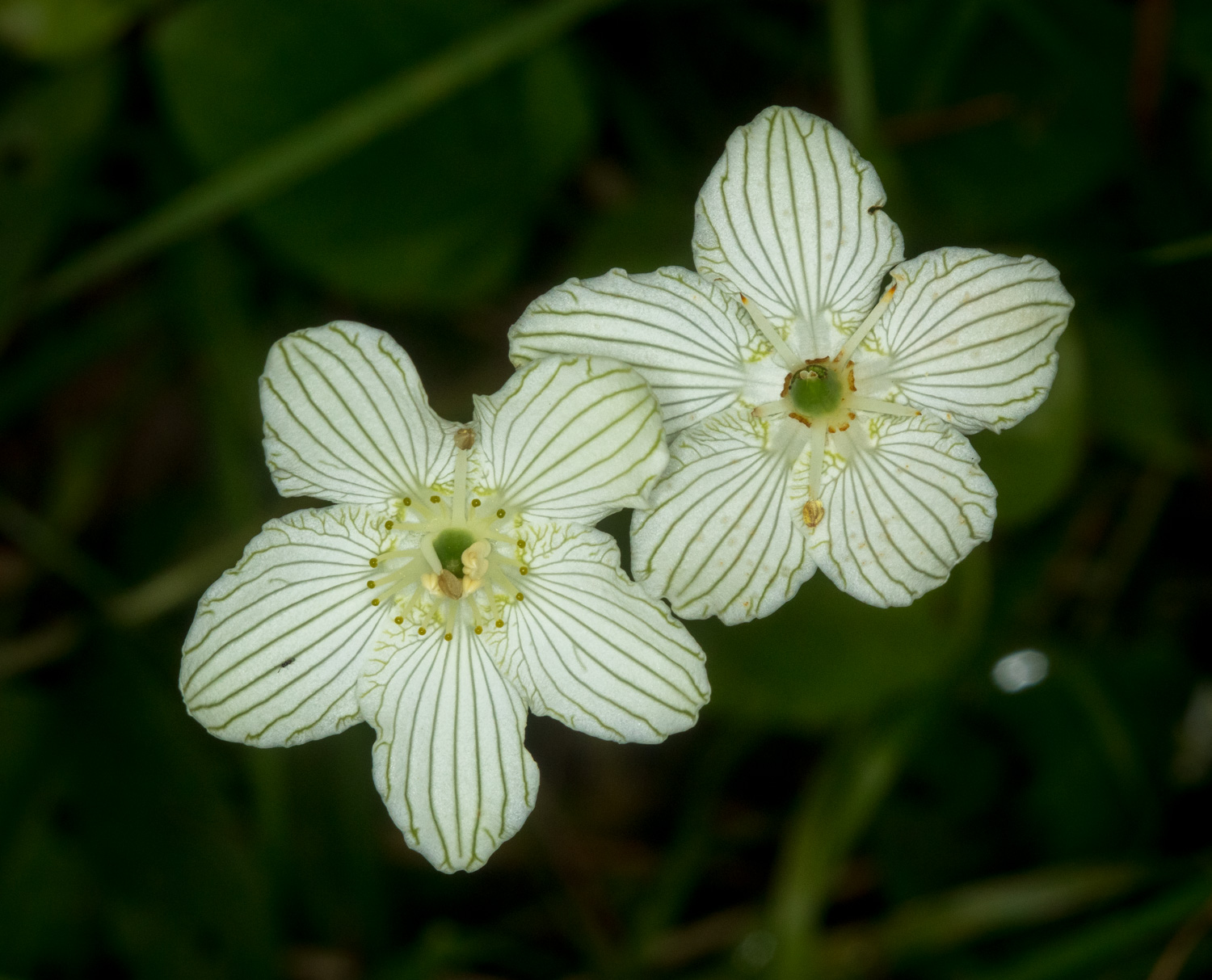
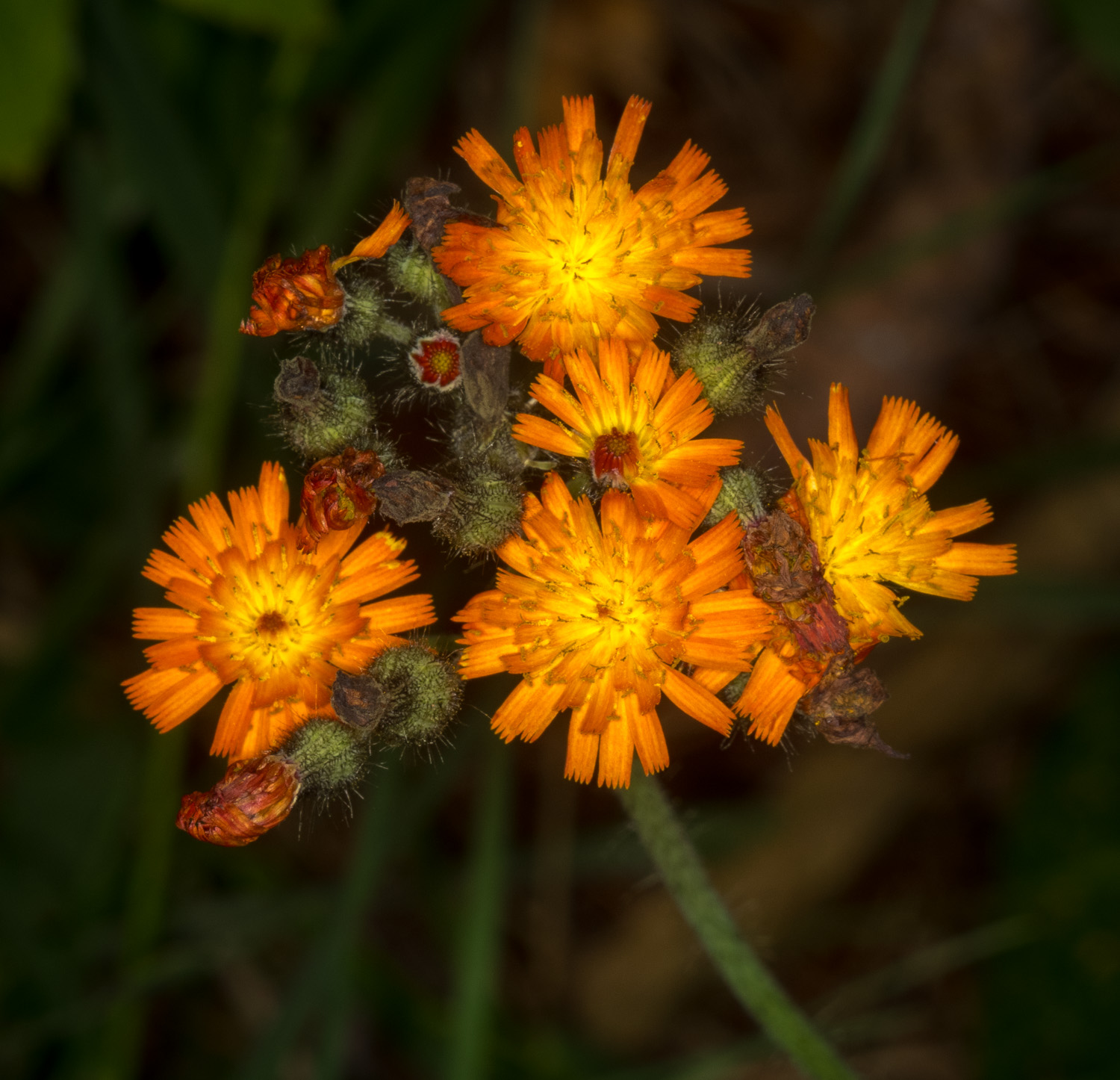
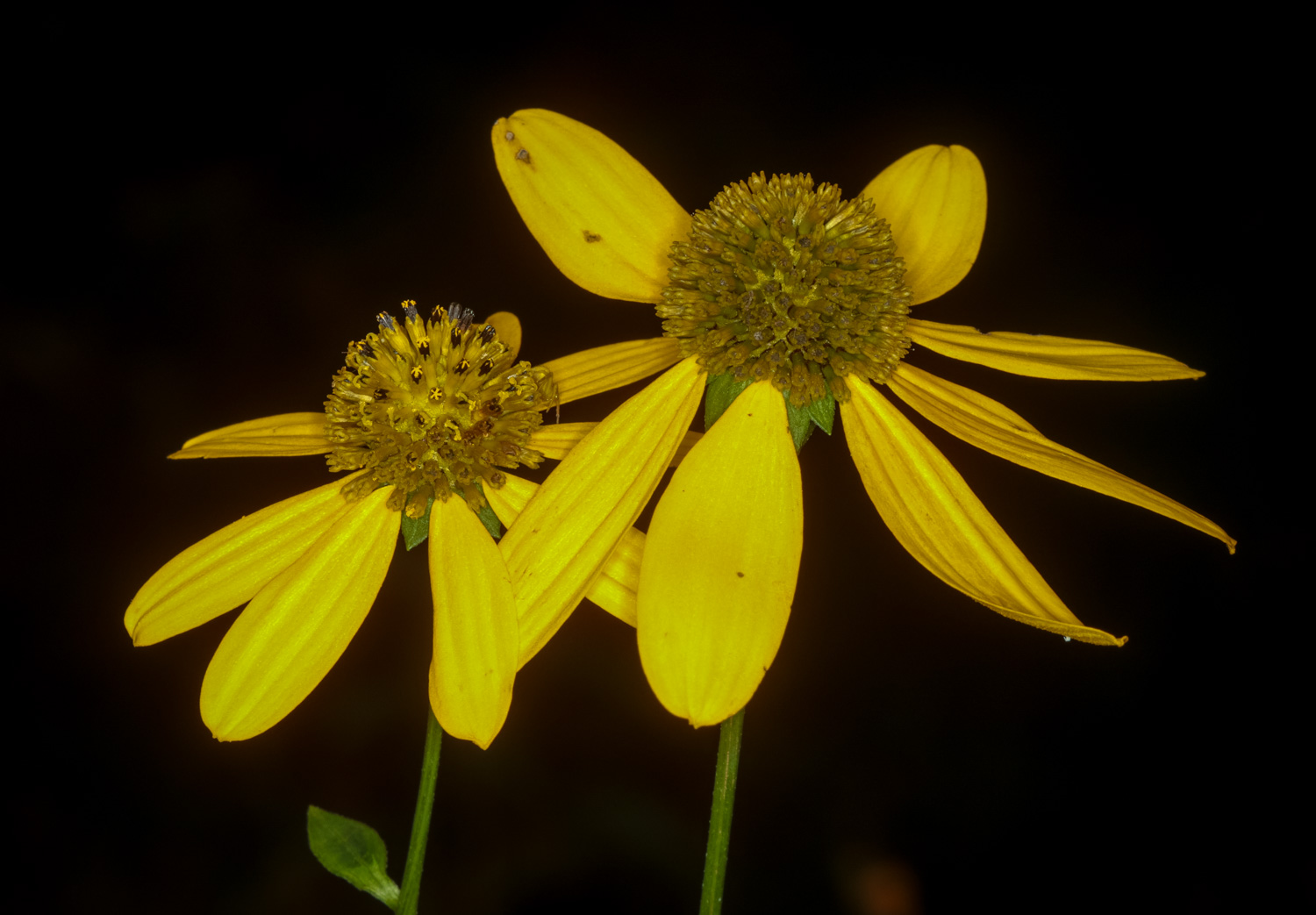
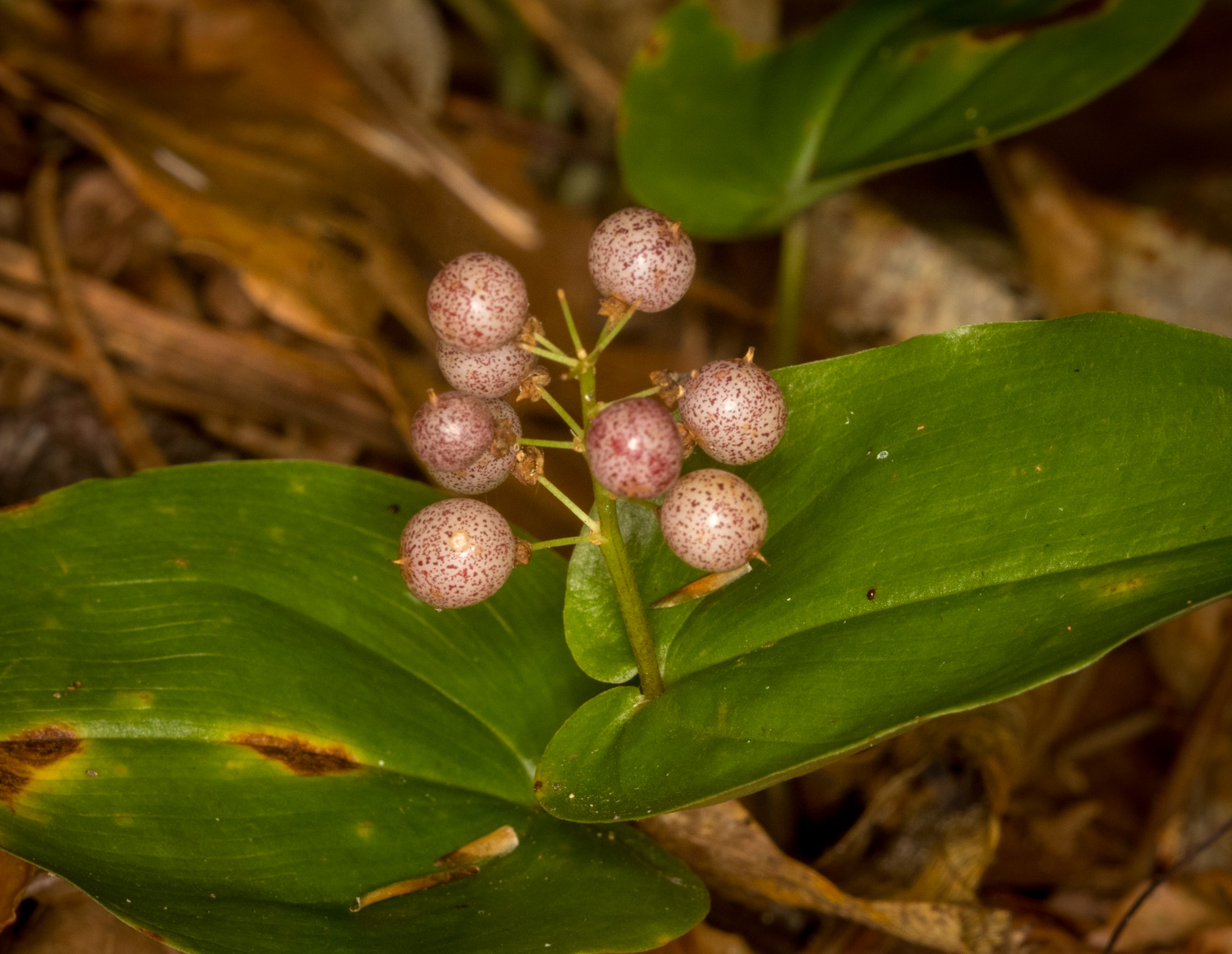
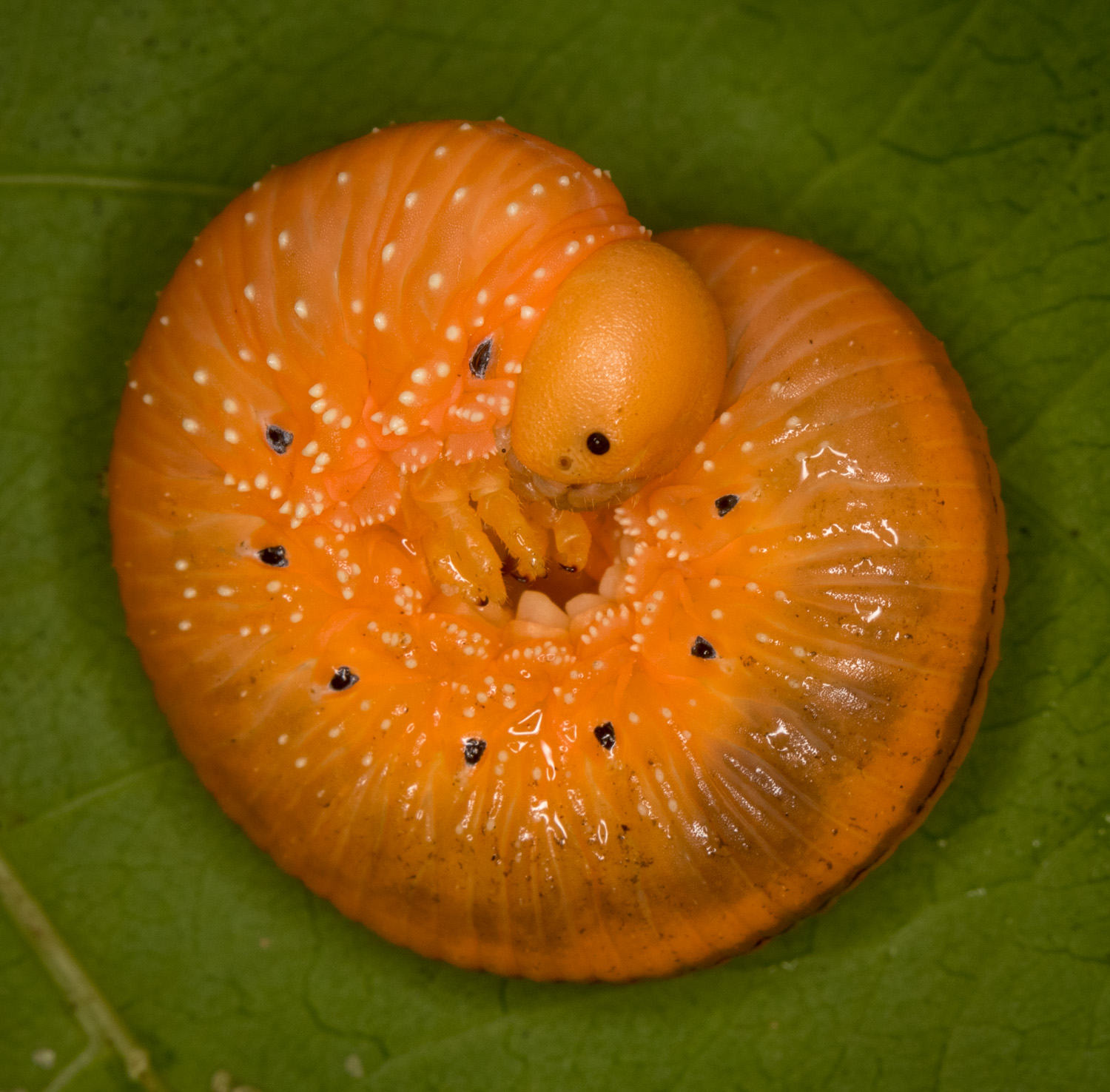
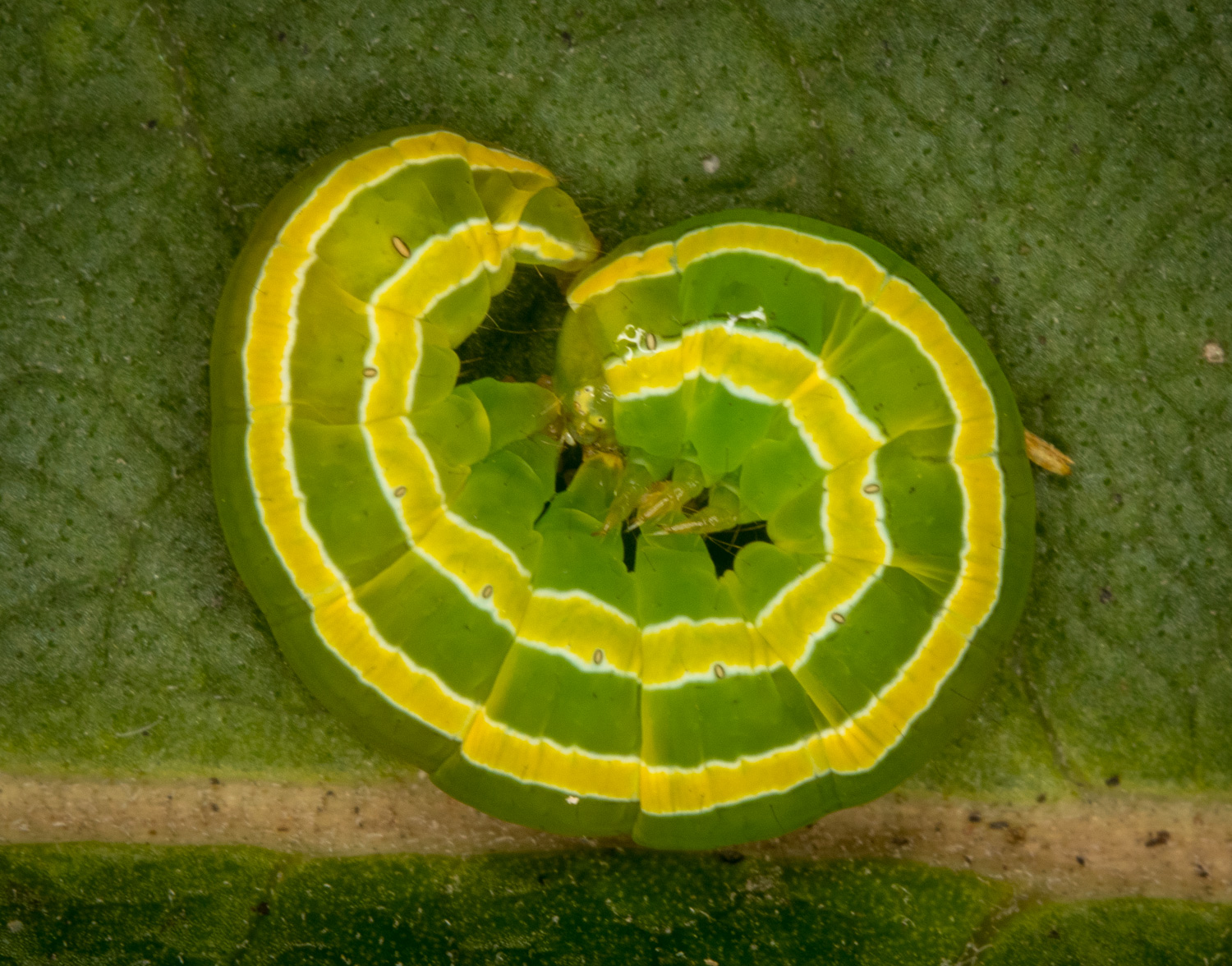
Pigeon River Country Sep 2-3
I have visited the Pigeon River for 50 years. I've uploaded 484 observations to iNaturalist including 323 species. I've just scratched the surface.
Biological Observations, 2026 EditionIn 2024, I began using this html format to record images that represent my ongoing taxonomic work, as well as a range of biological subjects that capture my attention. Previous: The 2024 Edition and The 2025 Edition. See also Home page & taxonomy projects. |
Pigeon River Country Sep 2-3I have visited the Pigeon River for 50 years. I've uploaded 484 observations to iNaturalist including 323 species. I've just scratched the surface. |
|
|
|
|
|
|
|
|
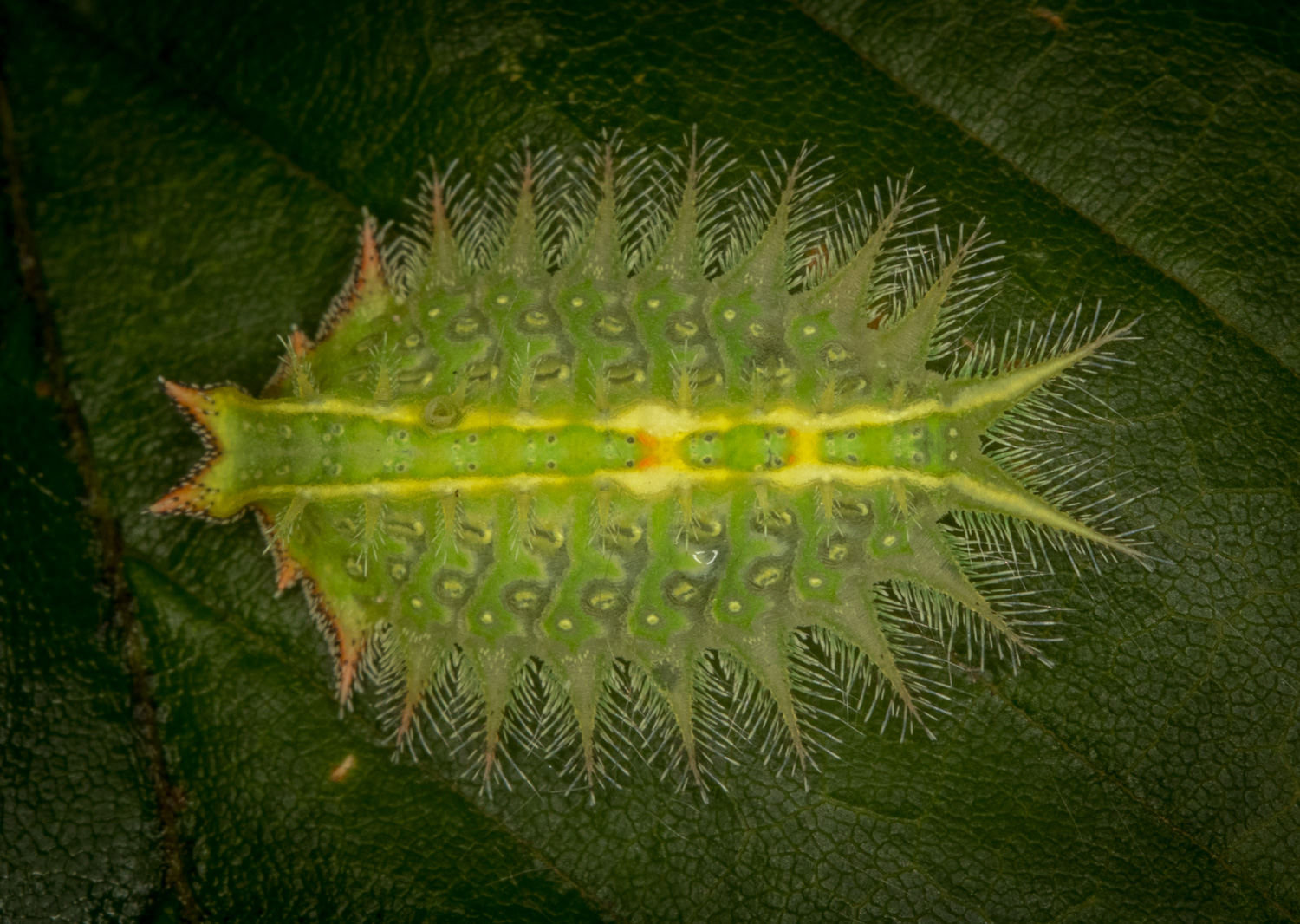
|
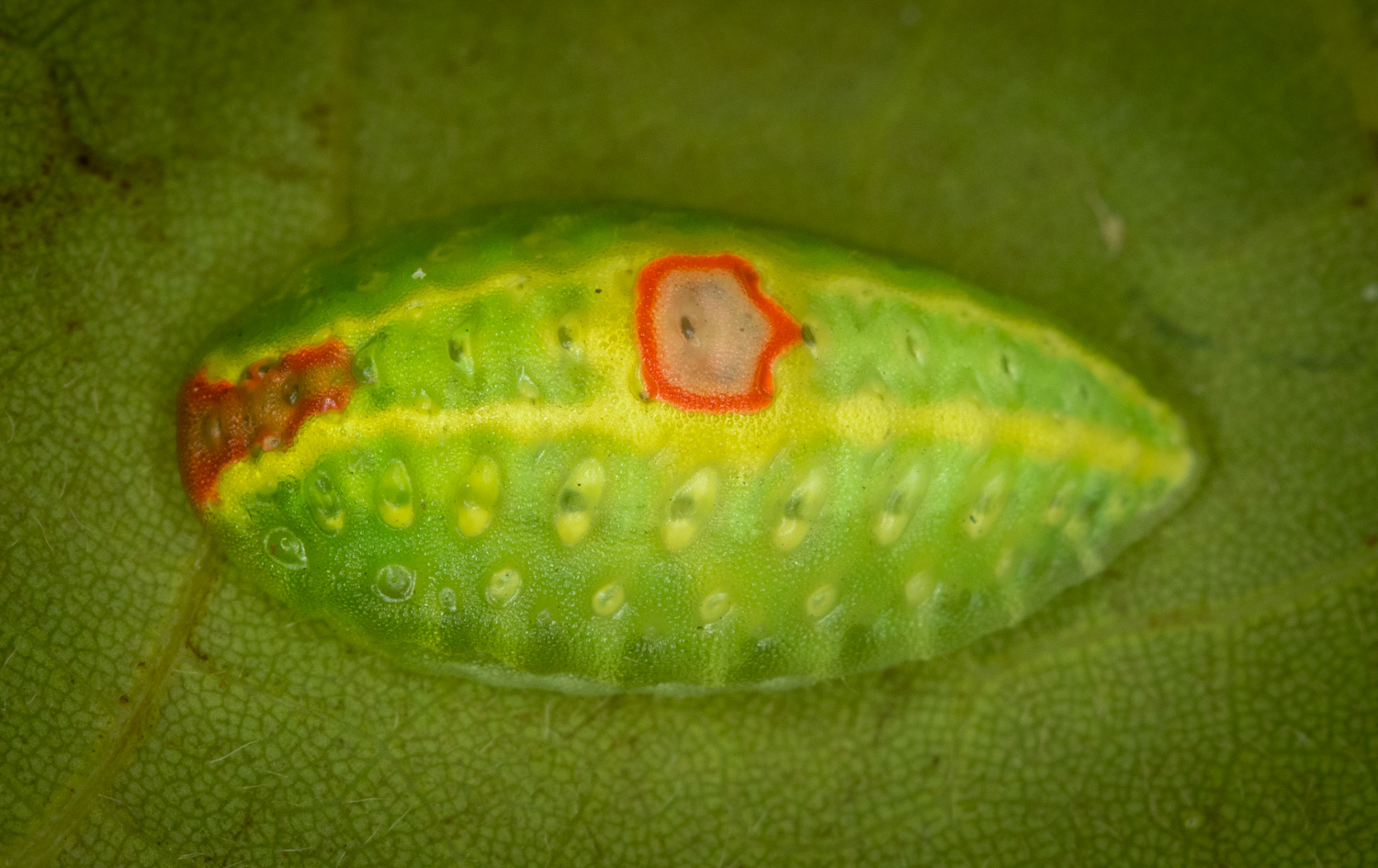
|
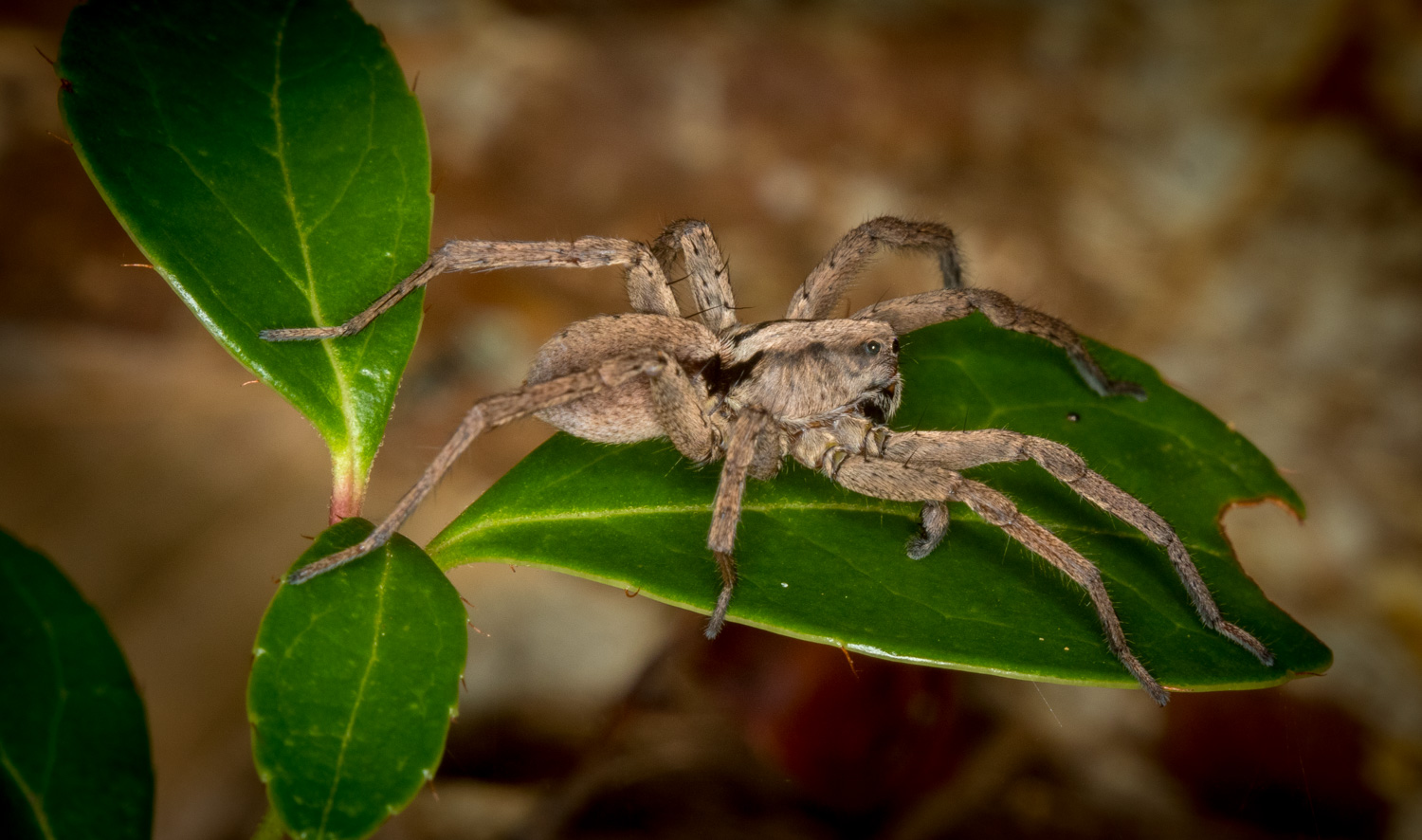
|
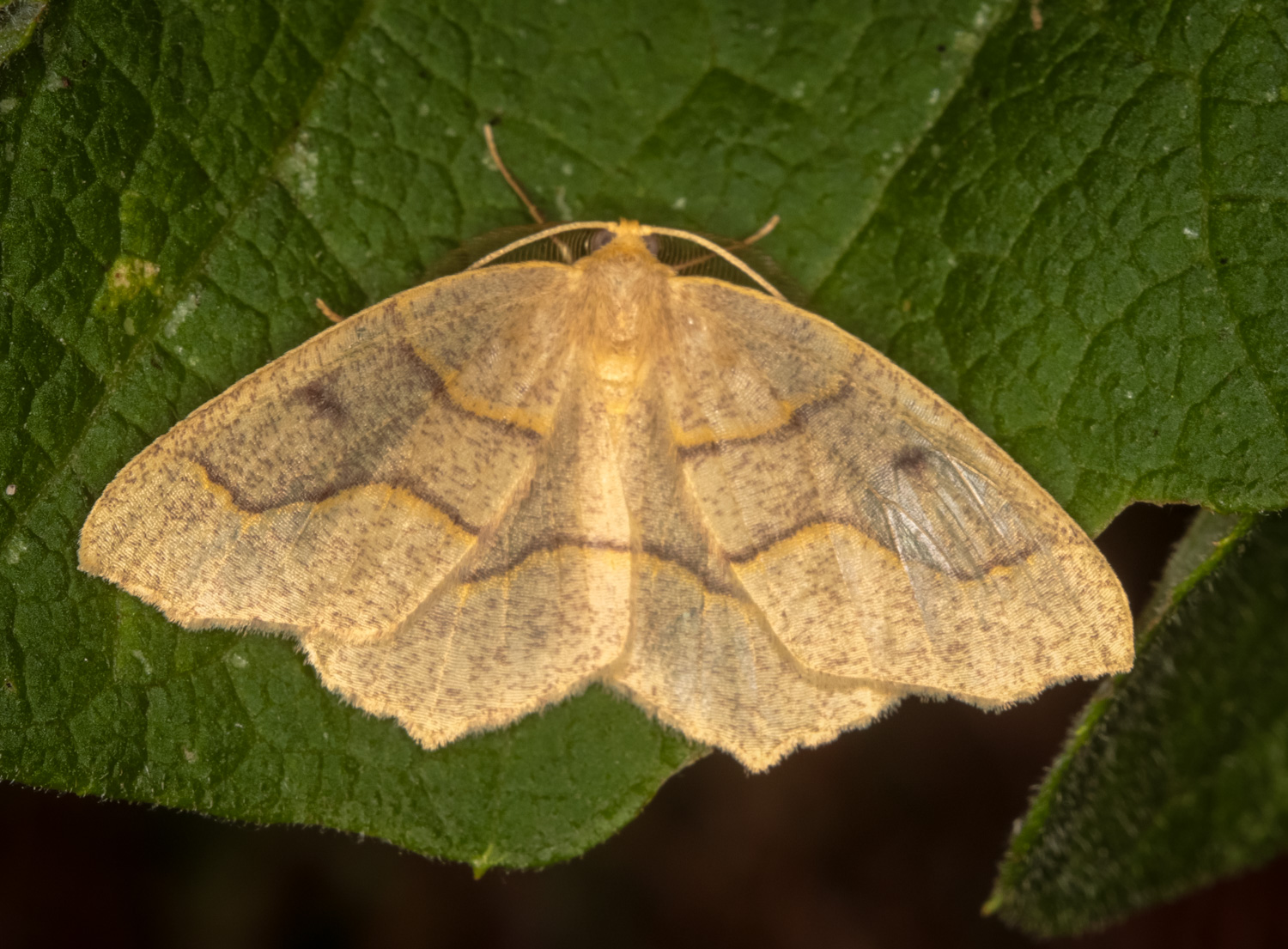
|
|
|
|
|
|
|
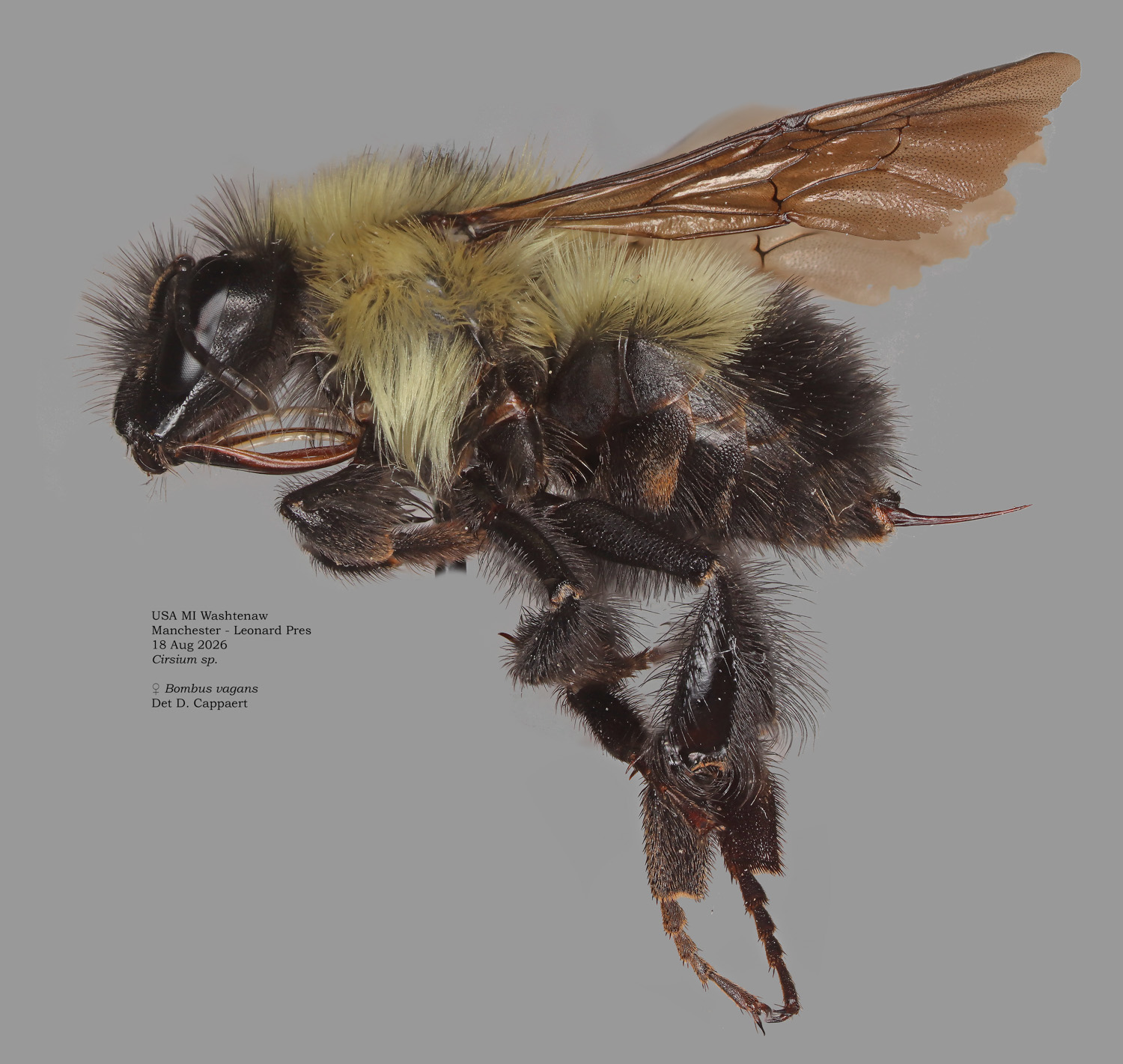
Recent bees: Leonard PreserveWith Shawn Severance and other County staff, we surveyed for bumblebees at the preserve near Manchester. The standout observation was Bombus vagans, a species new to us, collected on Cirsium sp. We also saw Triepelous donatus, expected on thistle, as well as two thistle specialists: Osmia texana and Melissodes desponsus. 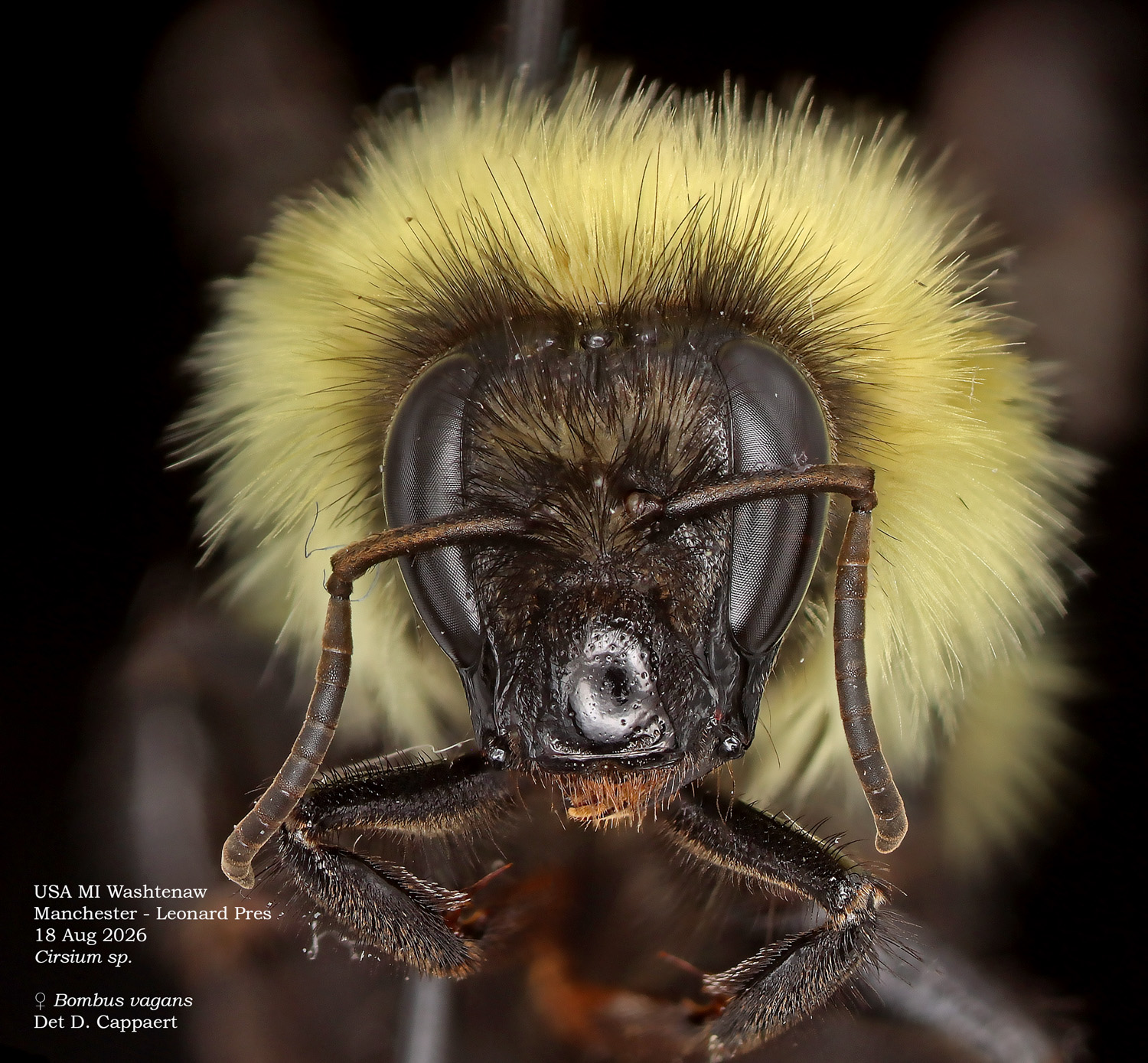
|
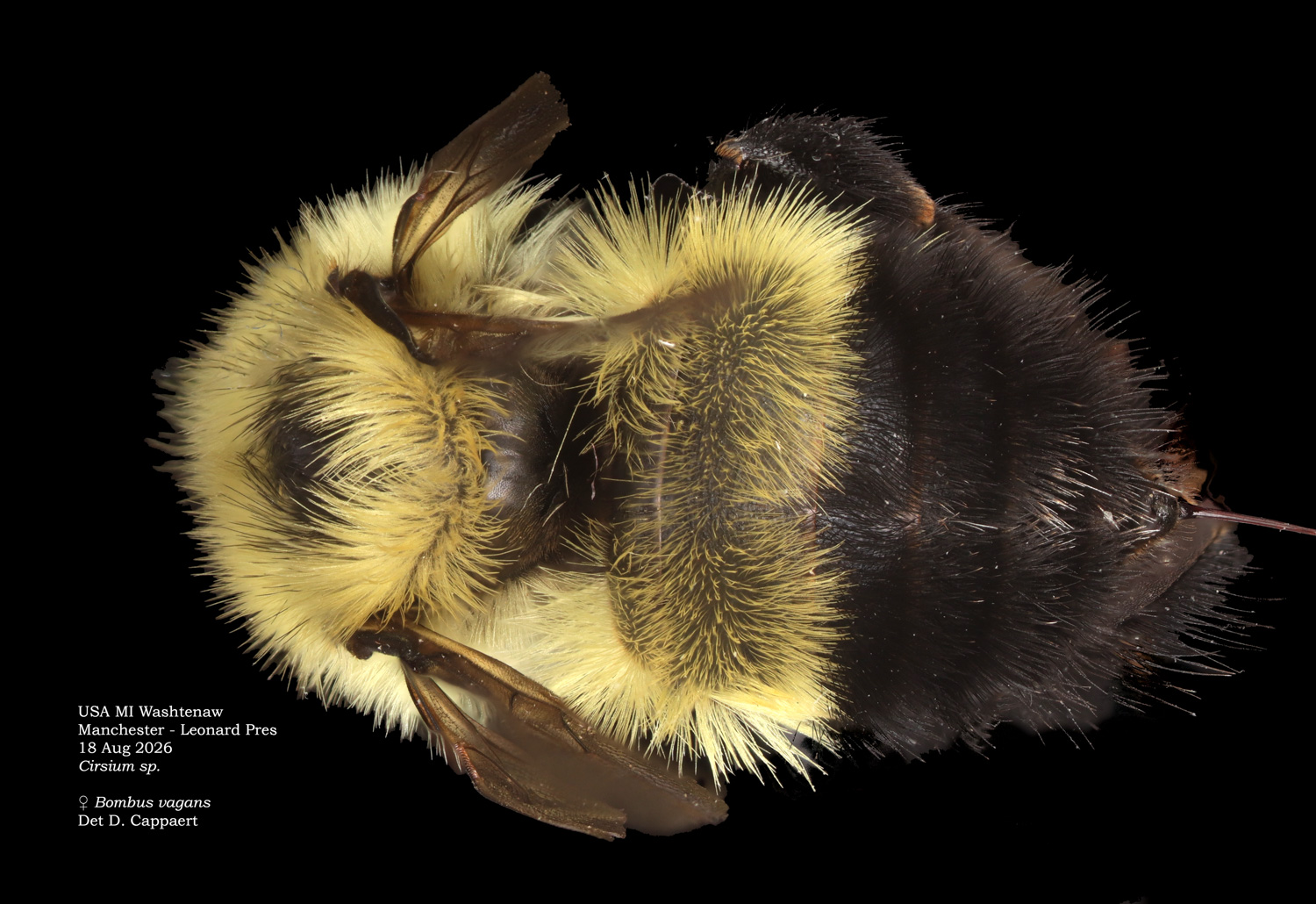
|
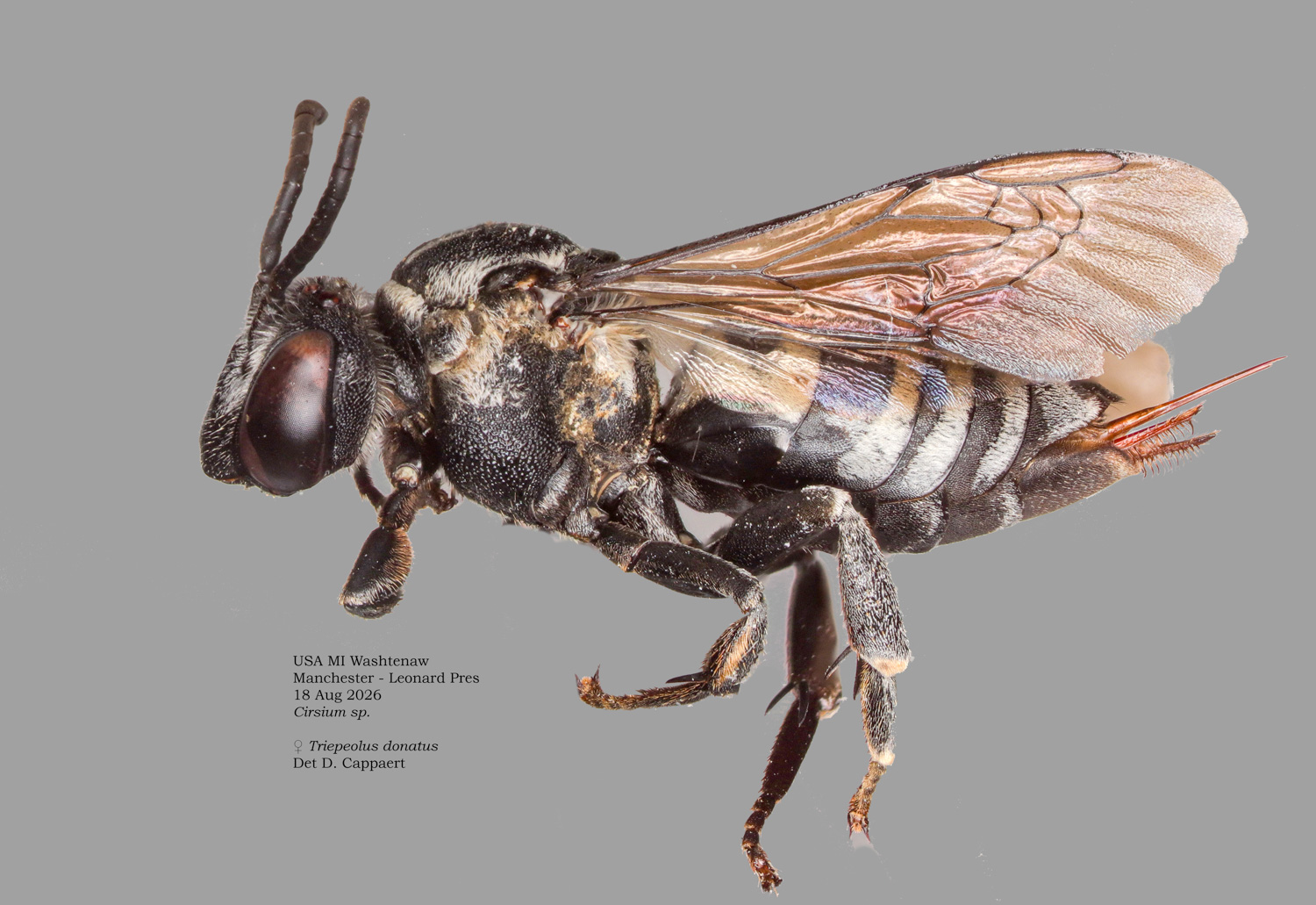
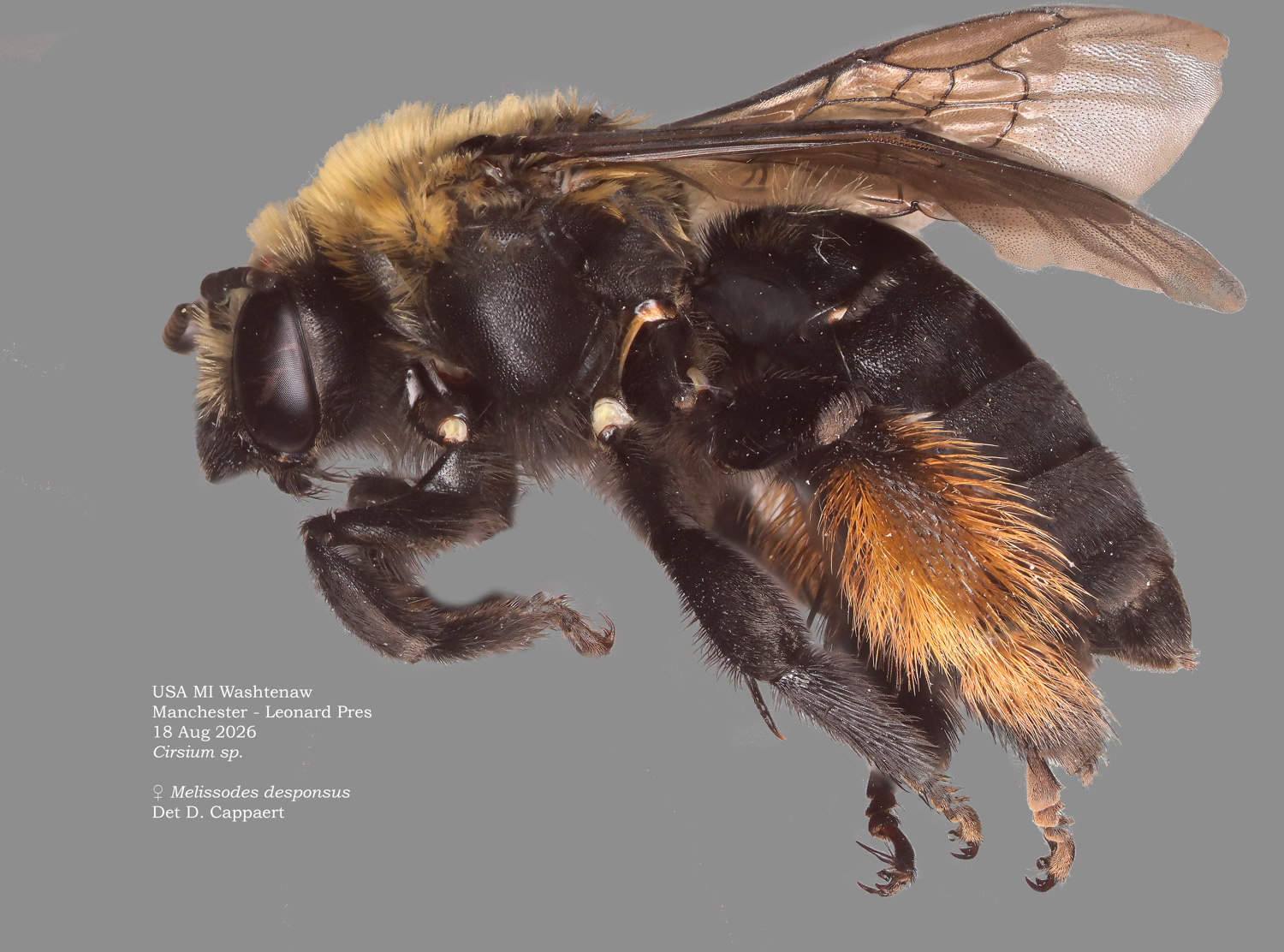
|
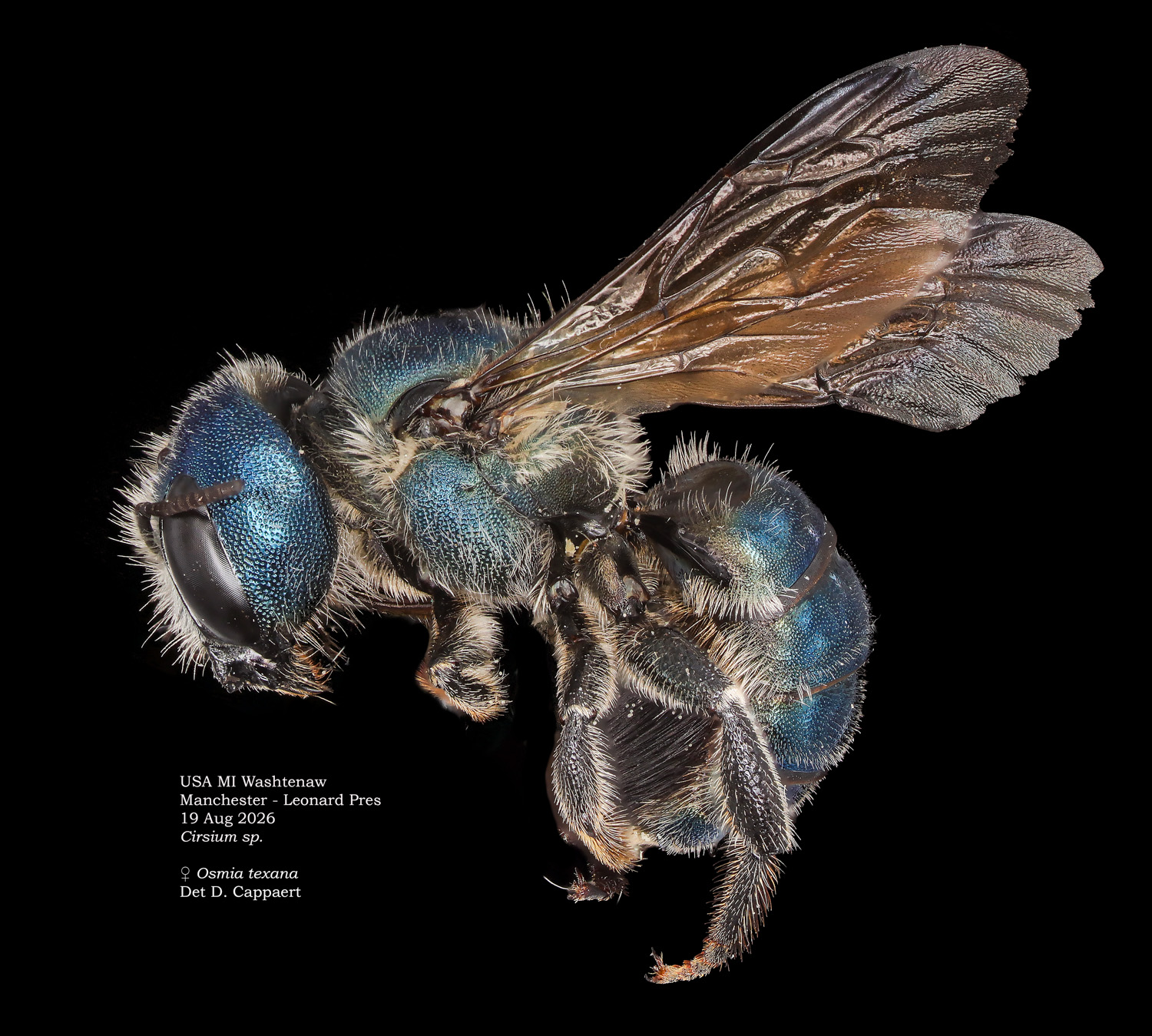
Bonus: pandorus sphinx caterpillar 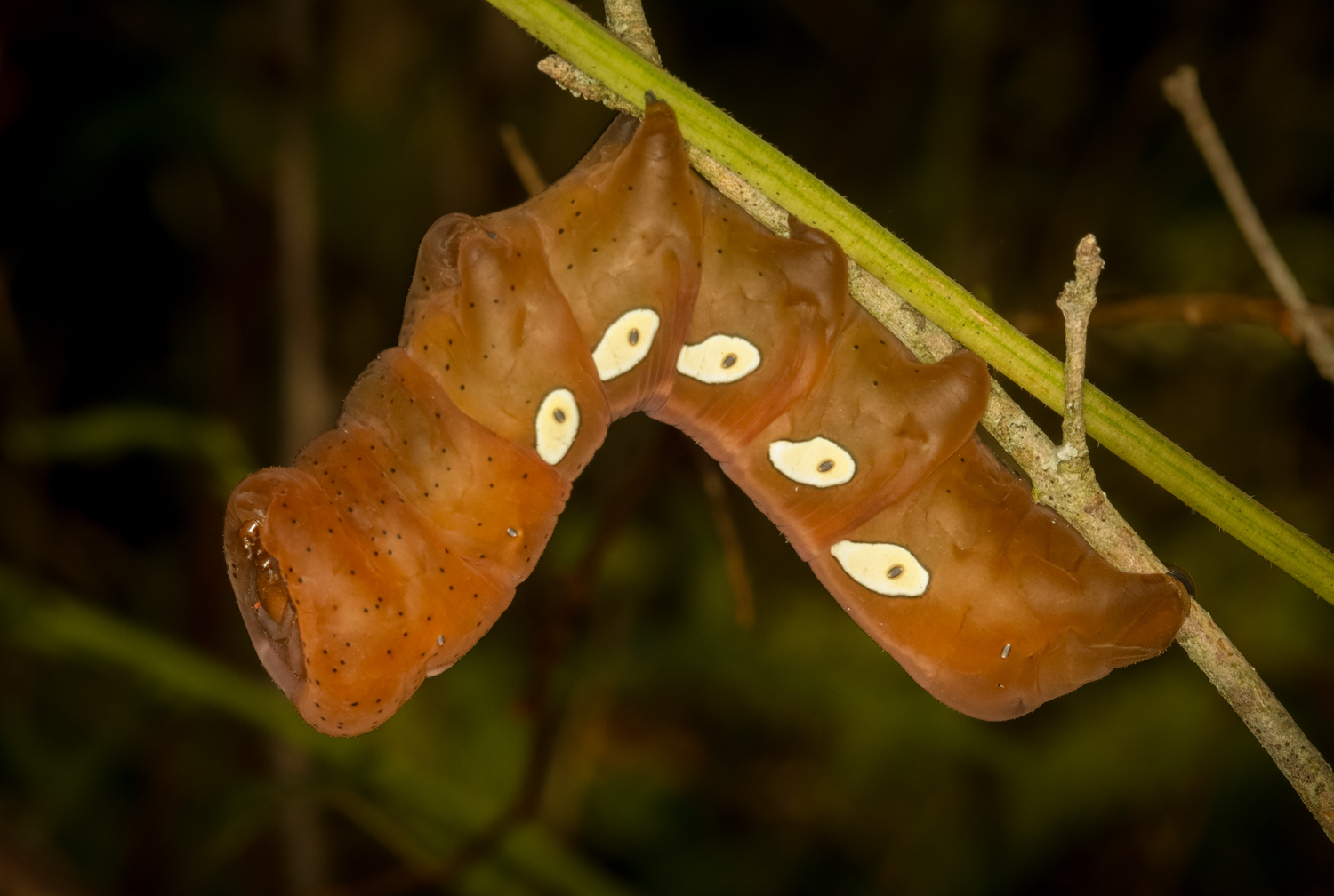
|
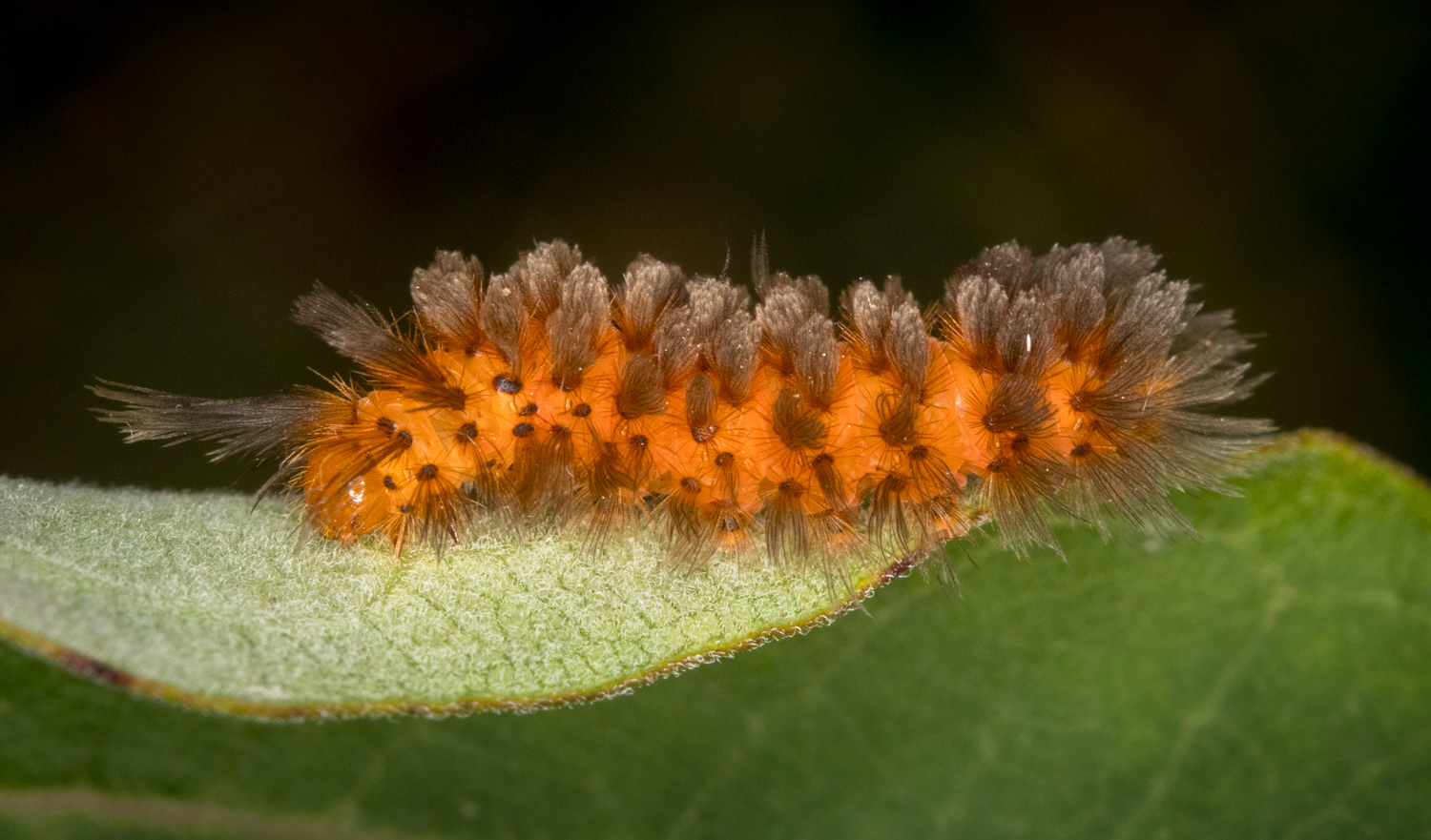
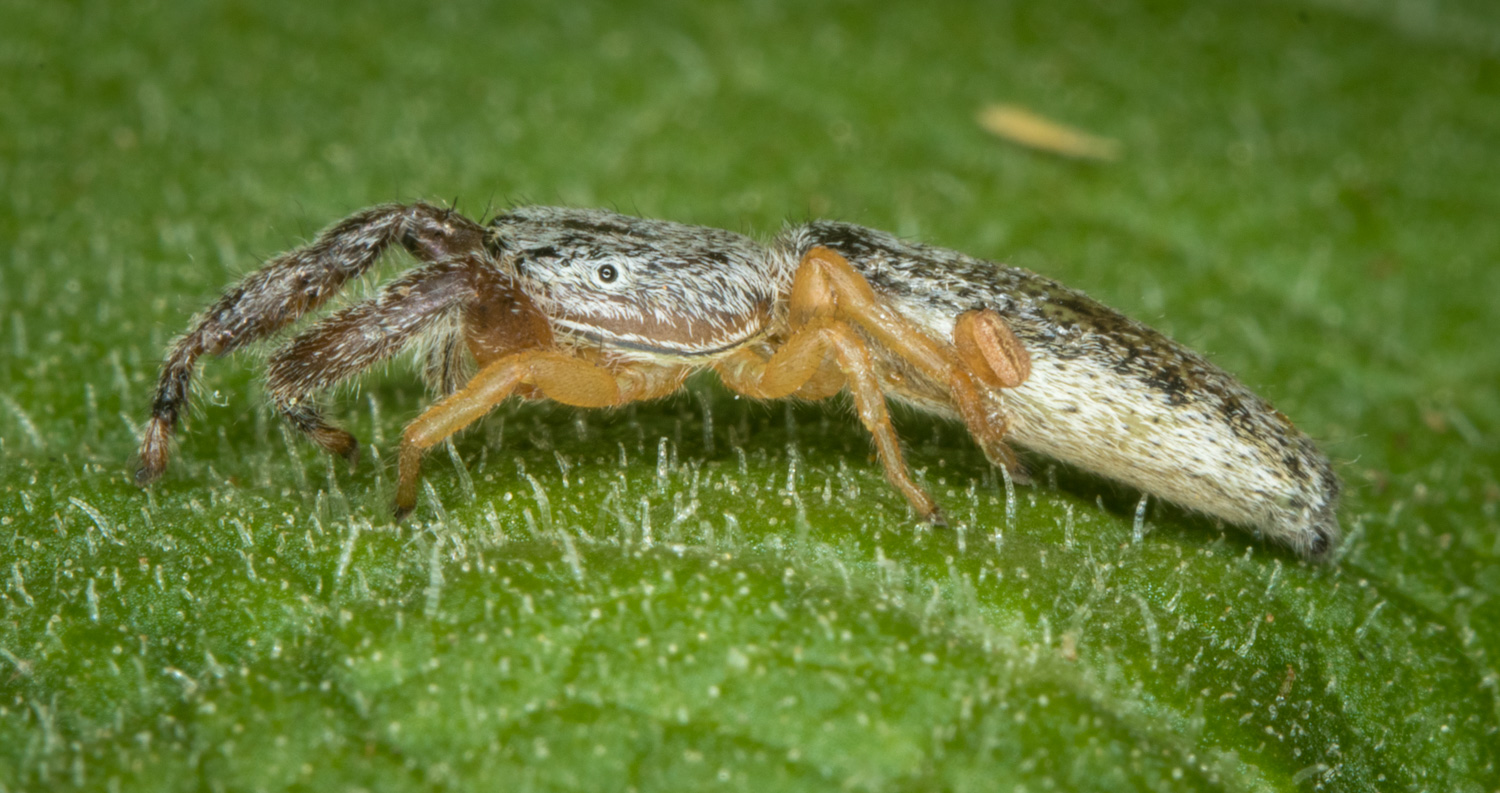
Buhr Park Aug 2026I spent ~24 hours on a personal bioblitz at Buhr Park in Ann Arbor. More images in this gallery. For IDs, see iNaturalist. 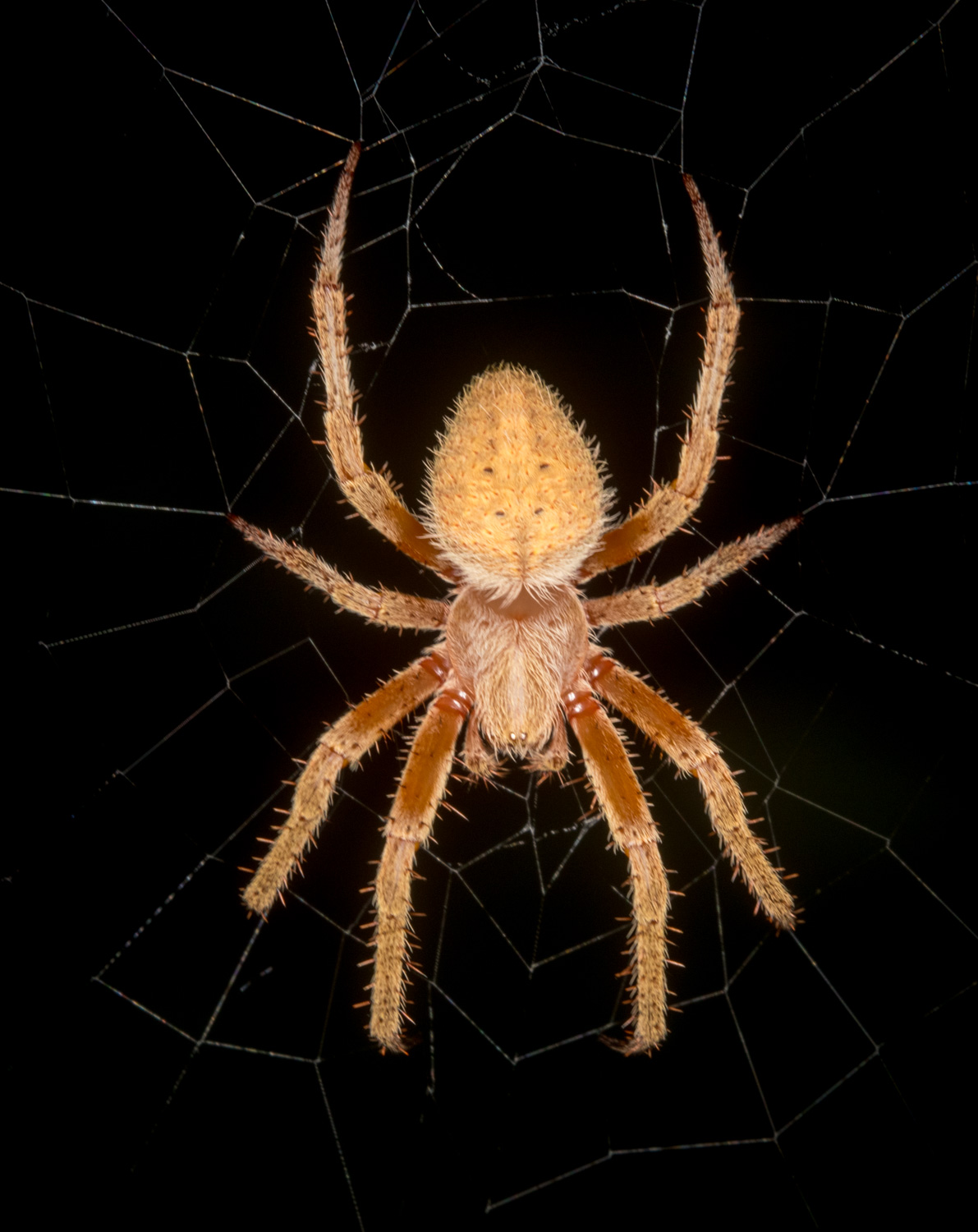
|
|
|
|
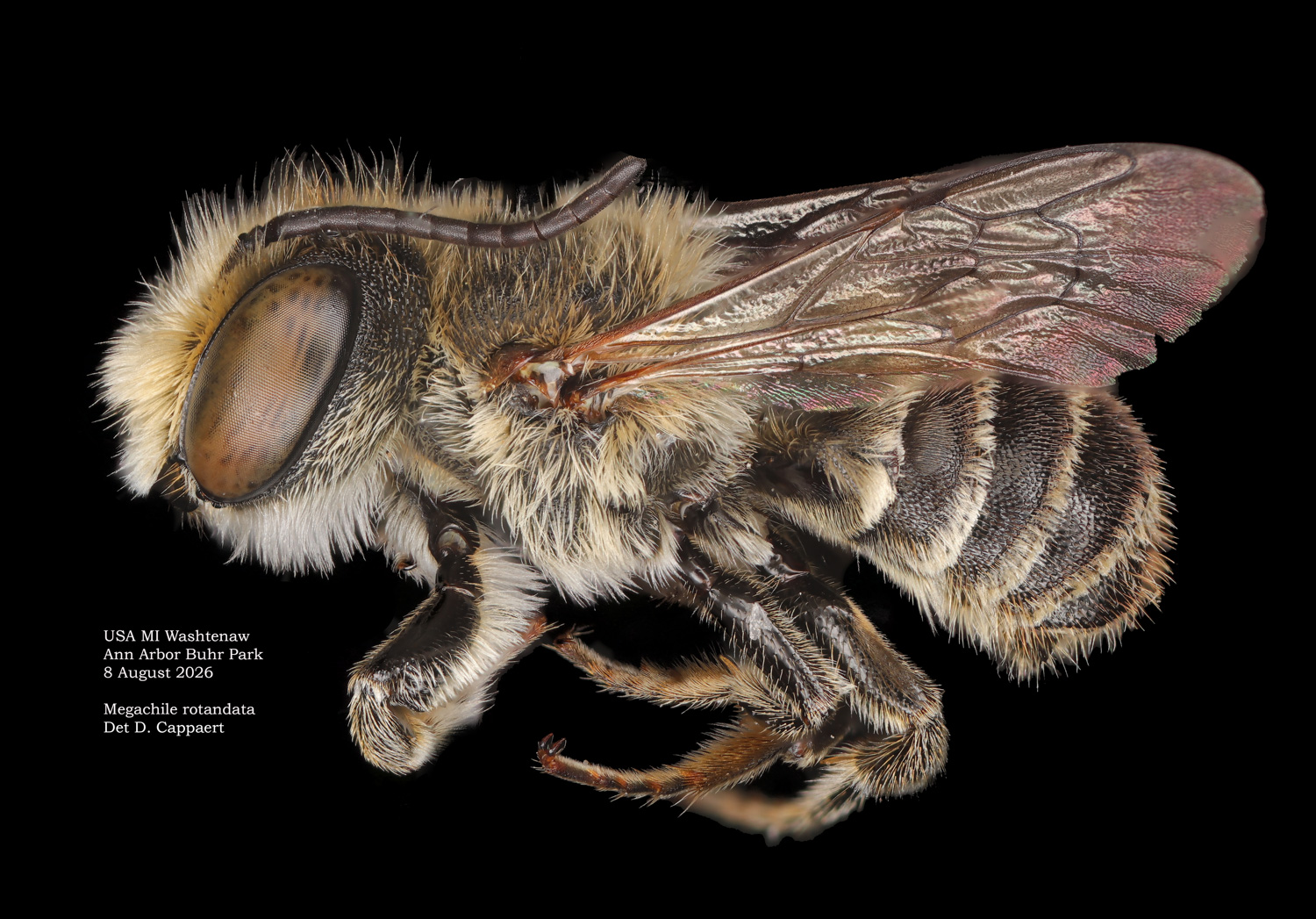
|
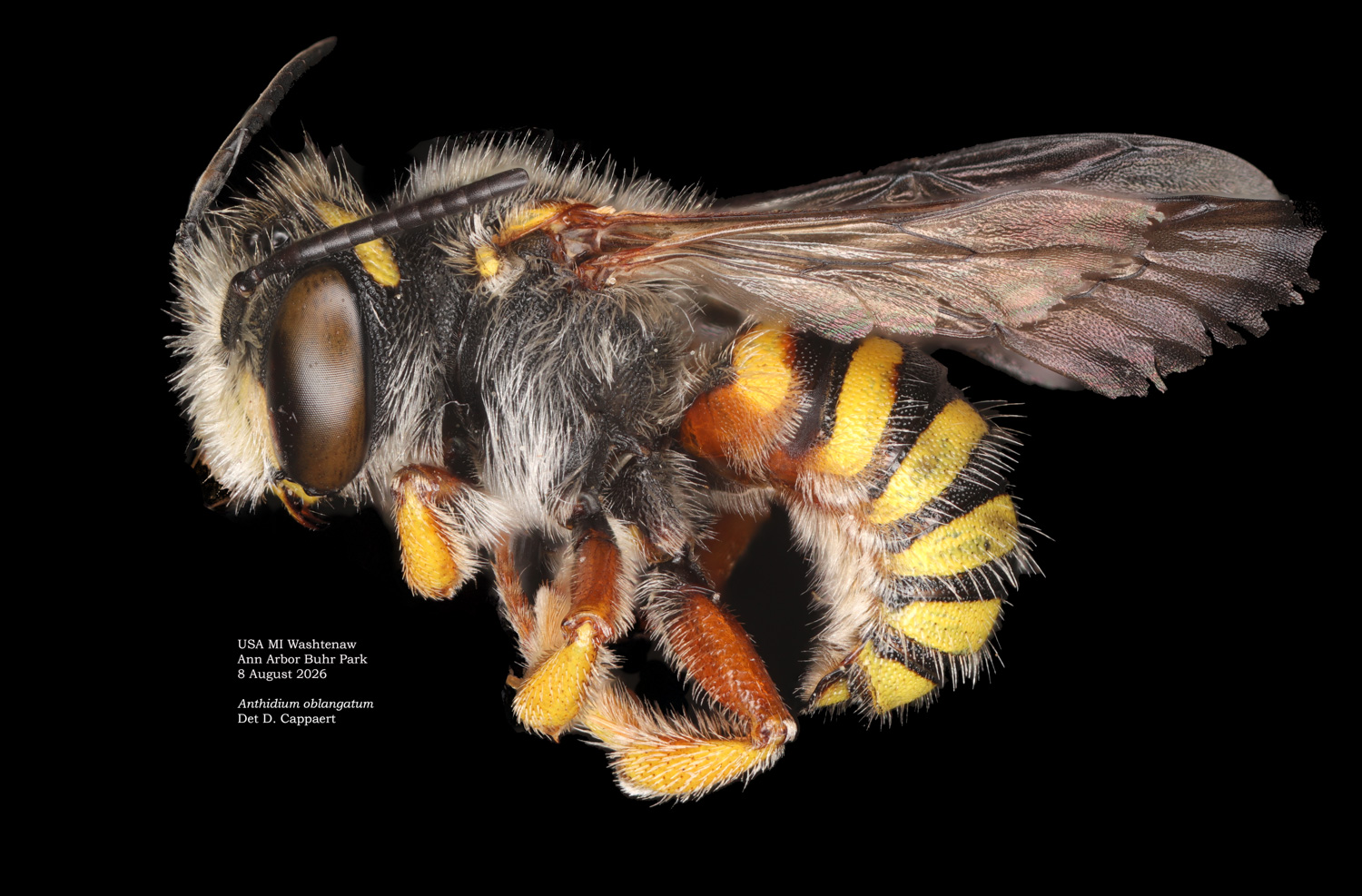
|
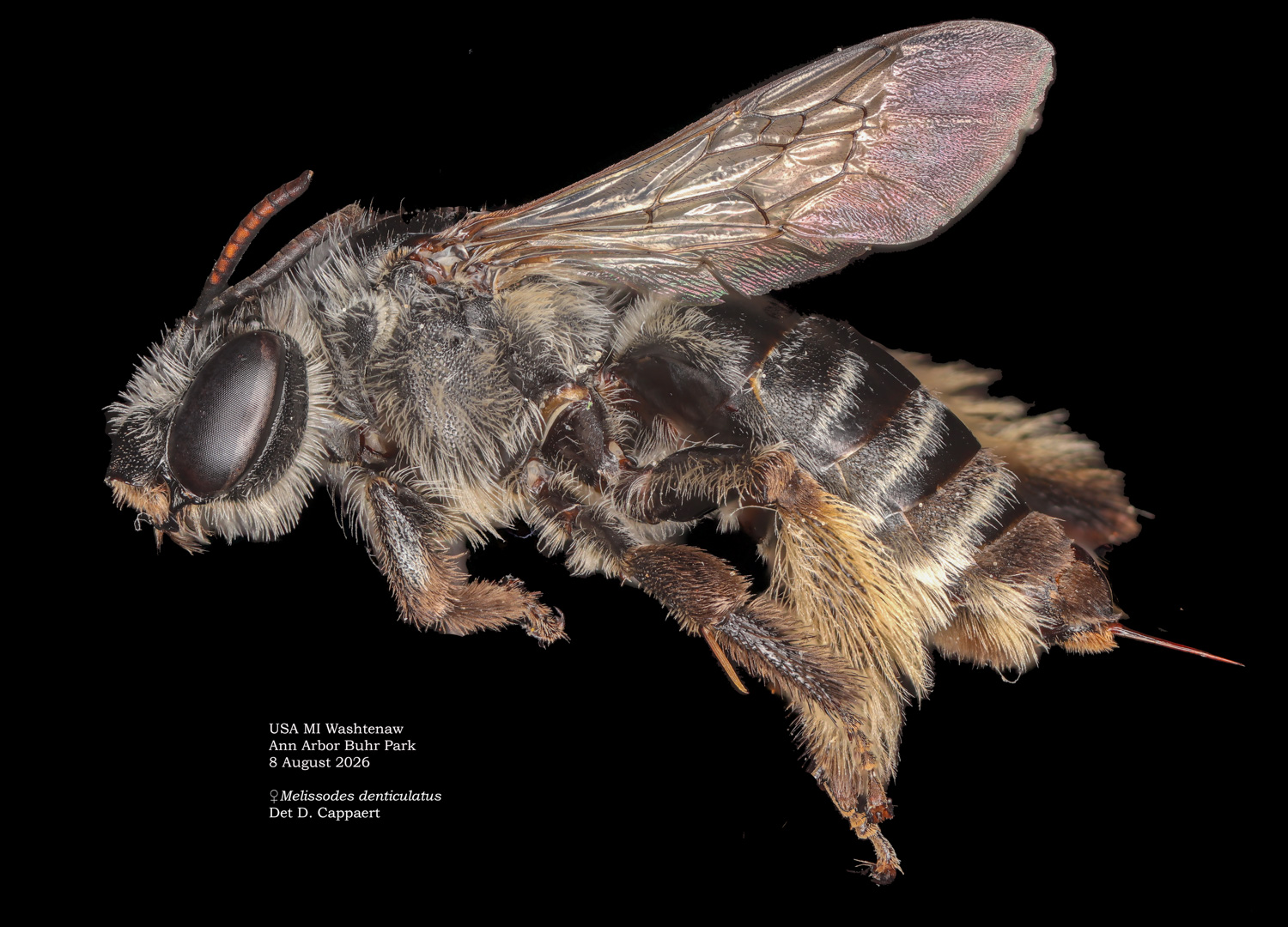
A longhorn bee species that is an ironweed specialist.
|
Ypsilanti Library Teen CafeAlong with Shawn Severance and YDL youth librarians Stephanie Pocsi-Morrison and Jenny Hannibal, I met with the STEAM Teen Cafe group. We looked at caterpillars, and then walked a short distance to a degraded habitat along the Huron River (see crownvetch post below) to sample insects. Photos here are highlights. I predicted, correctly, that we would see insects new to me. Excellent group, excellent program. 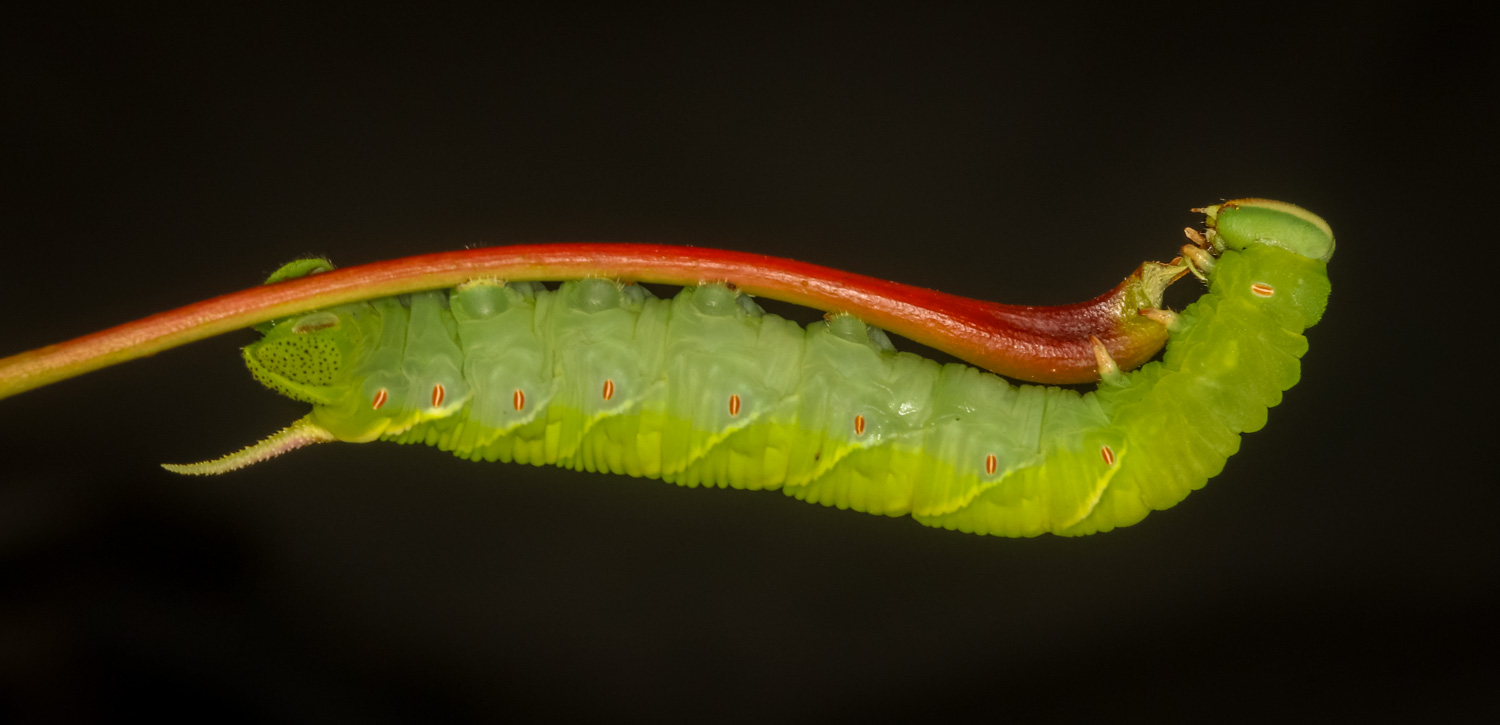
|
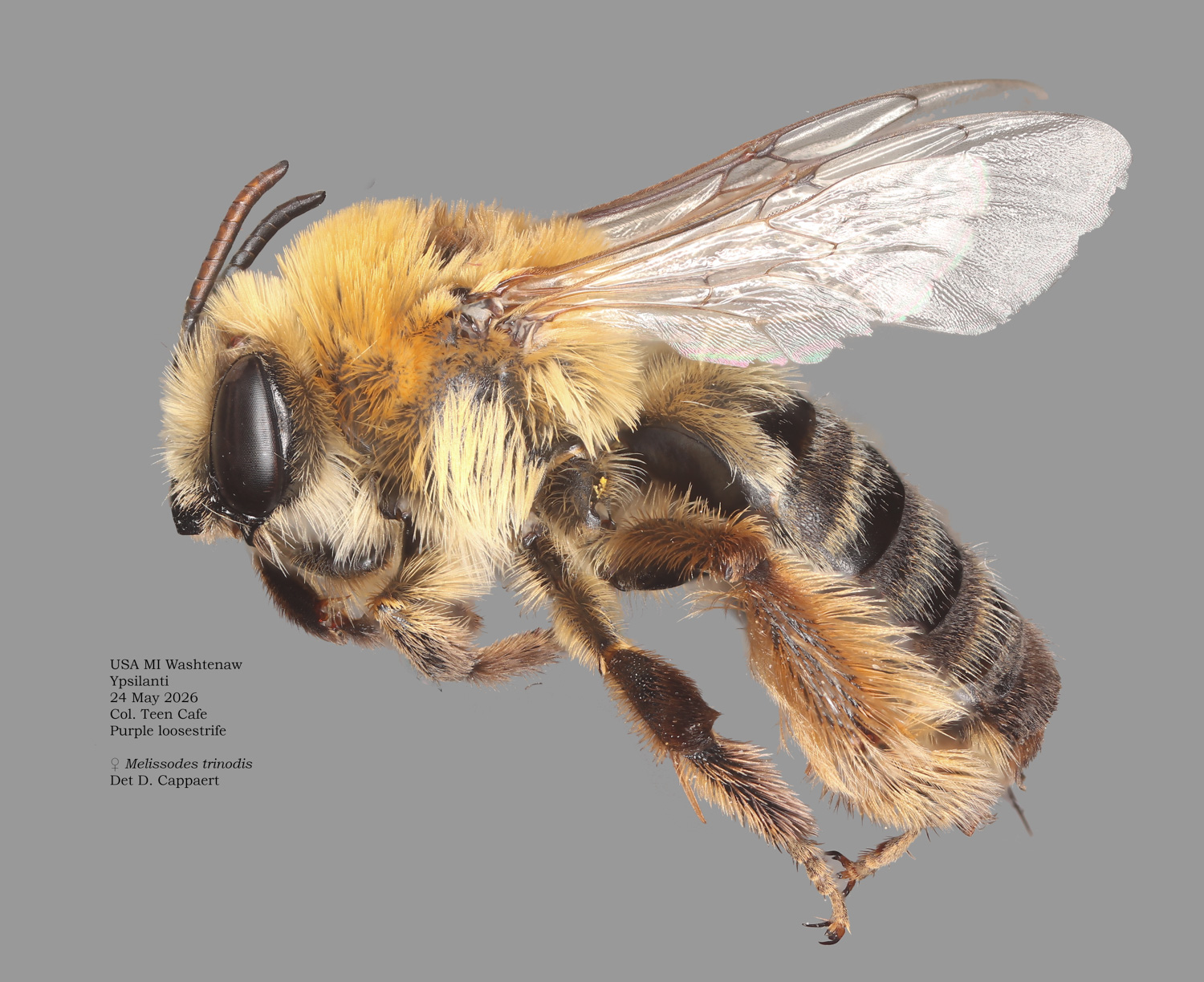
Melissodes trinodis (above), longhorn bee on purple loosestrife.
Resin bee (below). 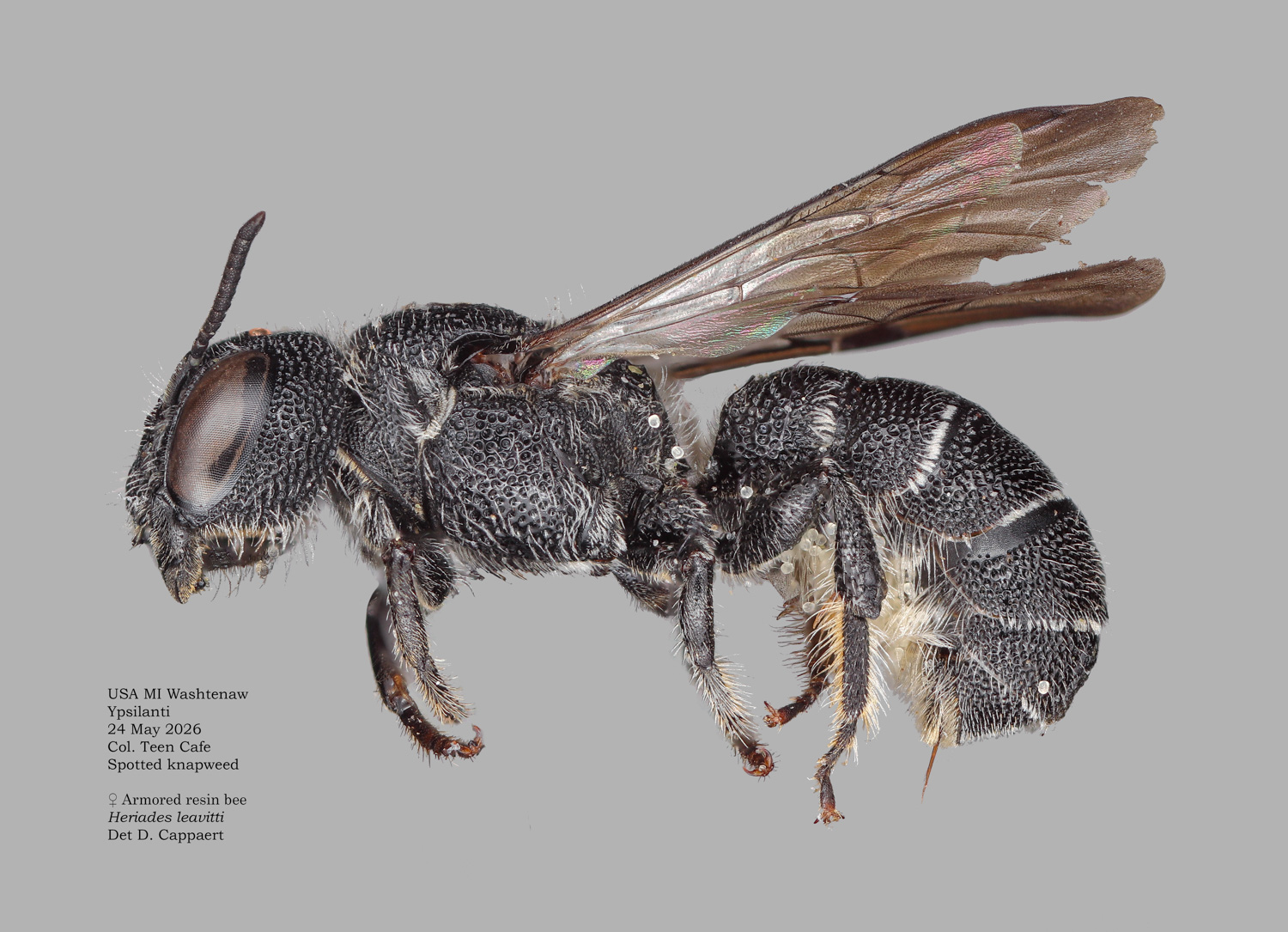
|
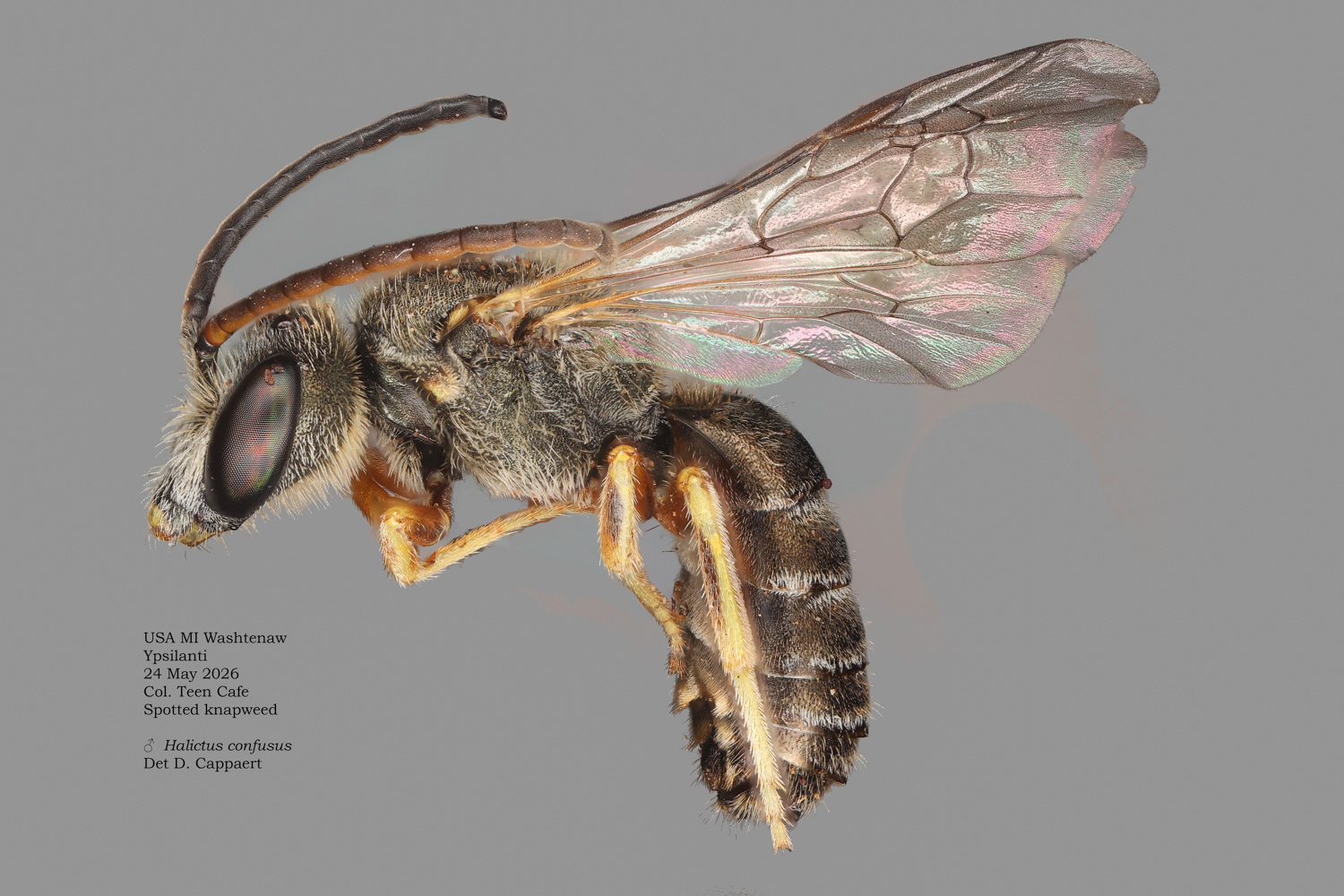
Sweat bees, Halictus confusus (above), H. rubicundus (below) 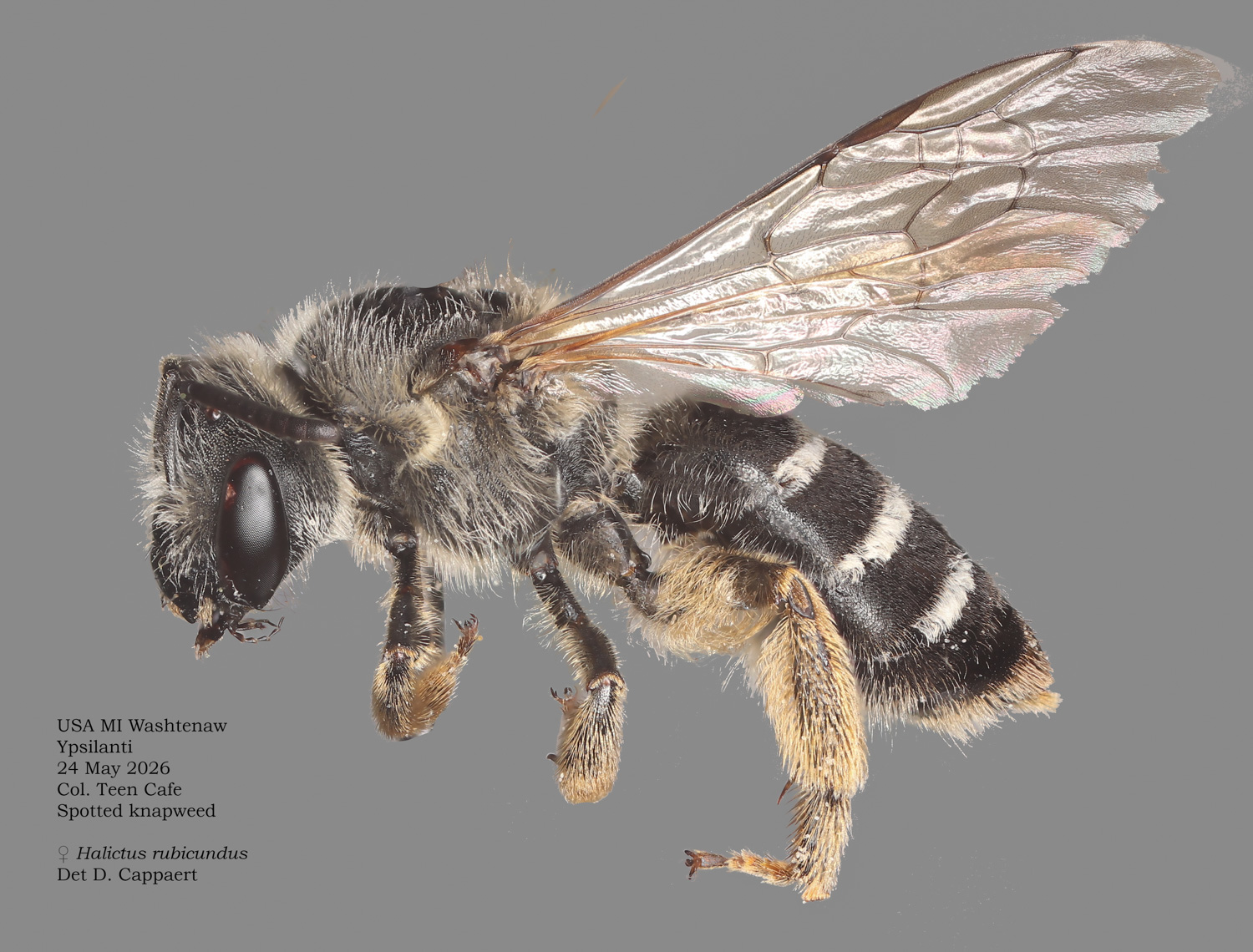
|
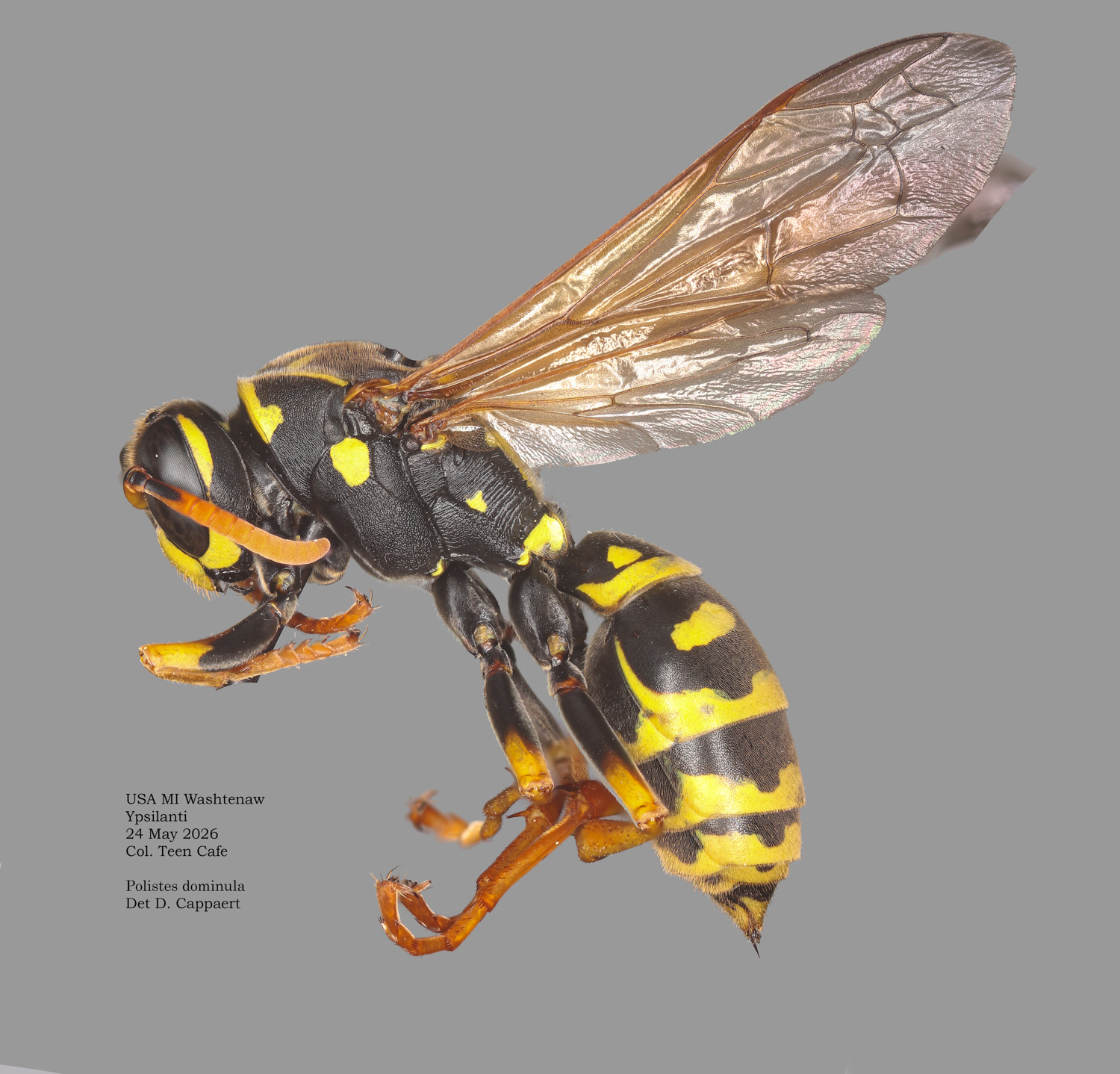
European paper wasp (above) Knapweed weevil (below) 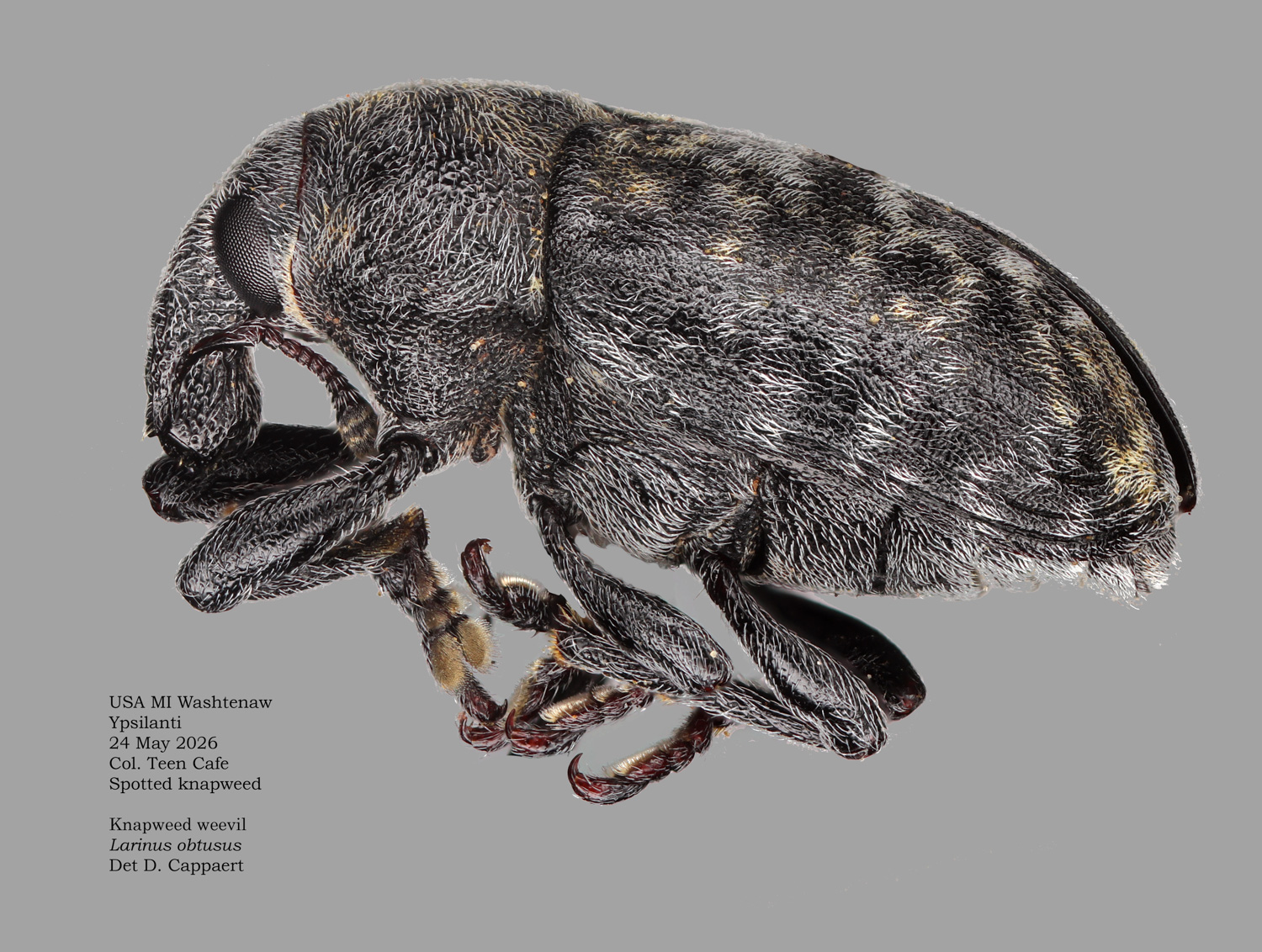
|
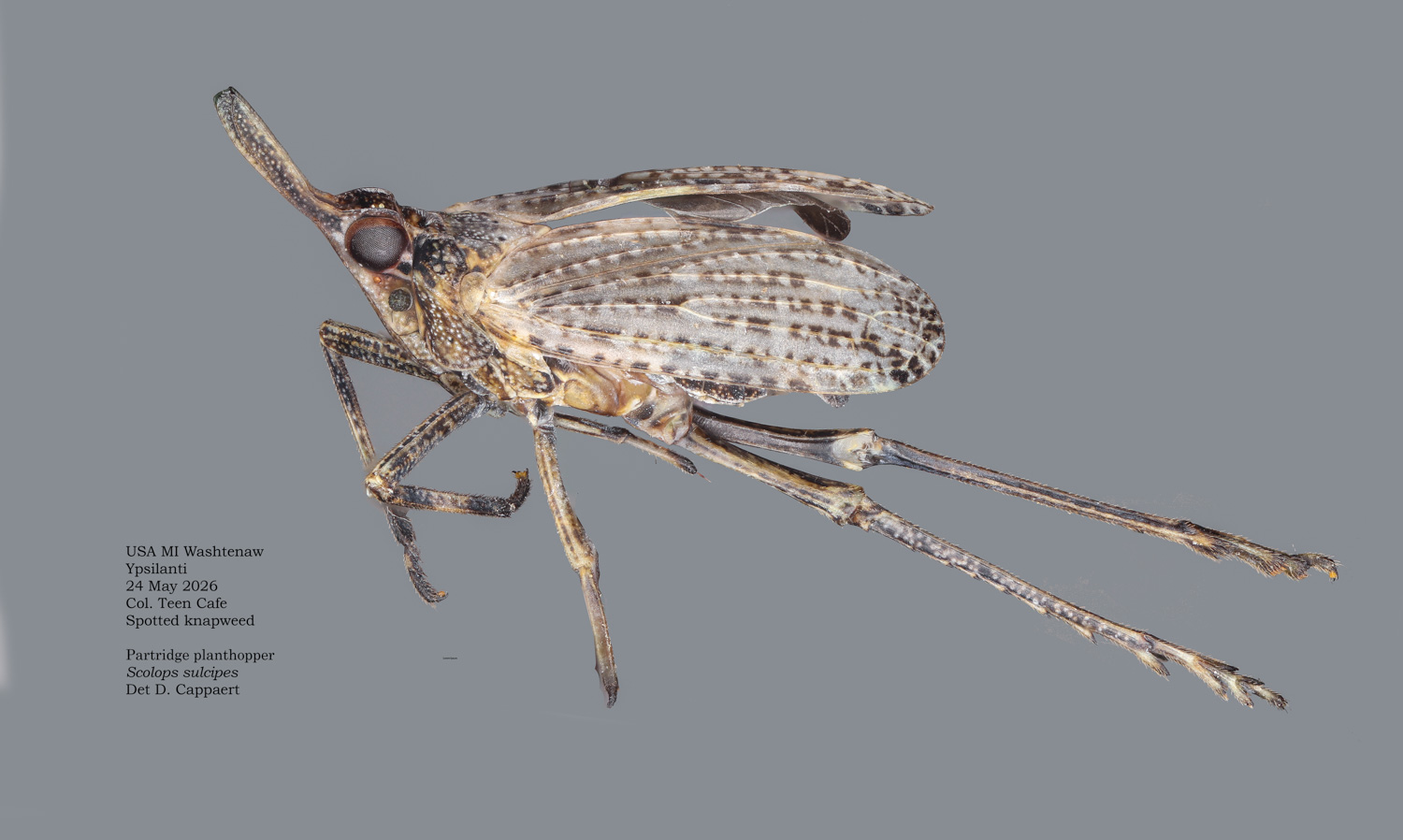
Partridge planthopper
|
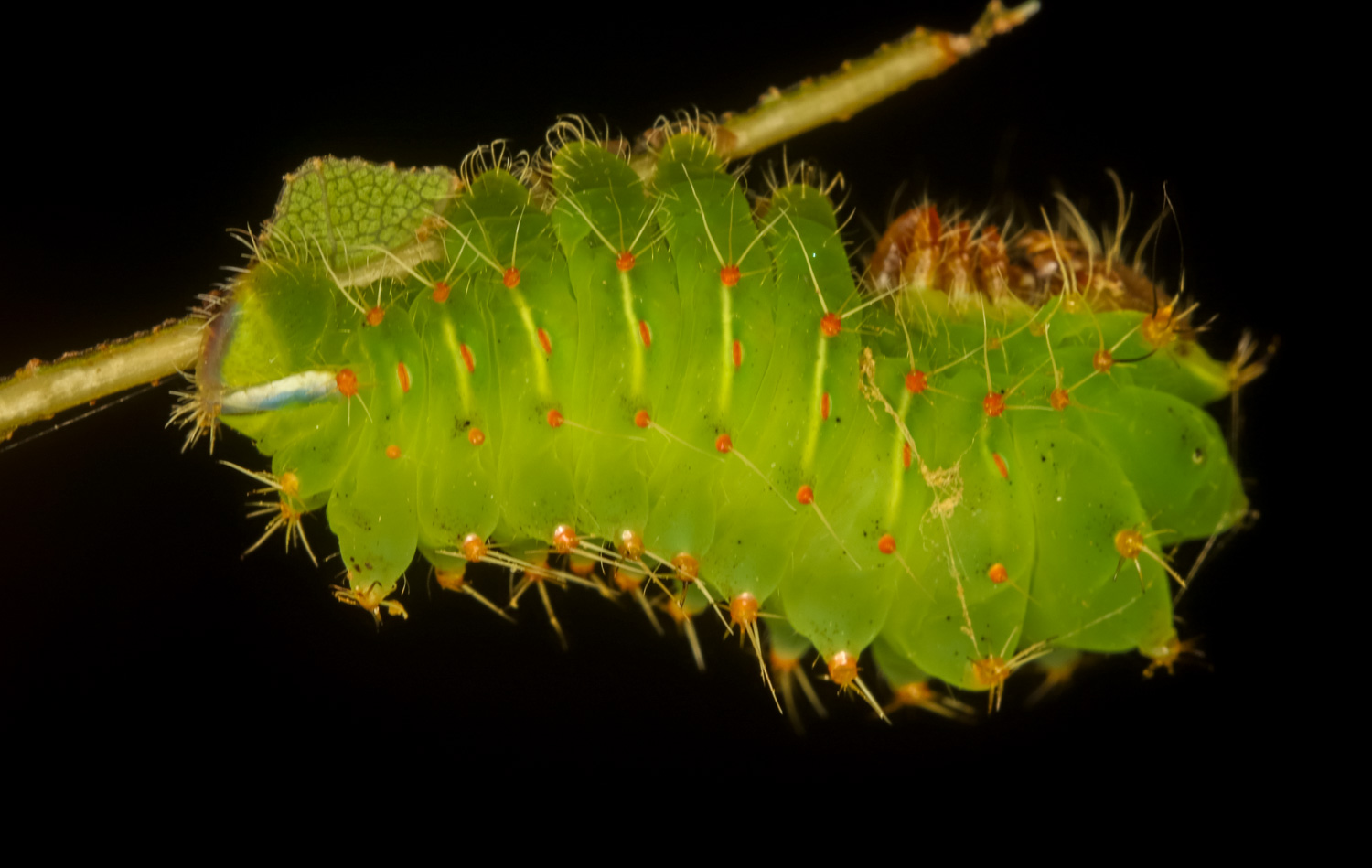
Polyphemus moth caterpillar
|
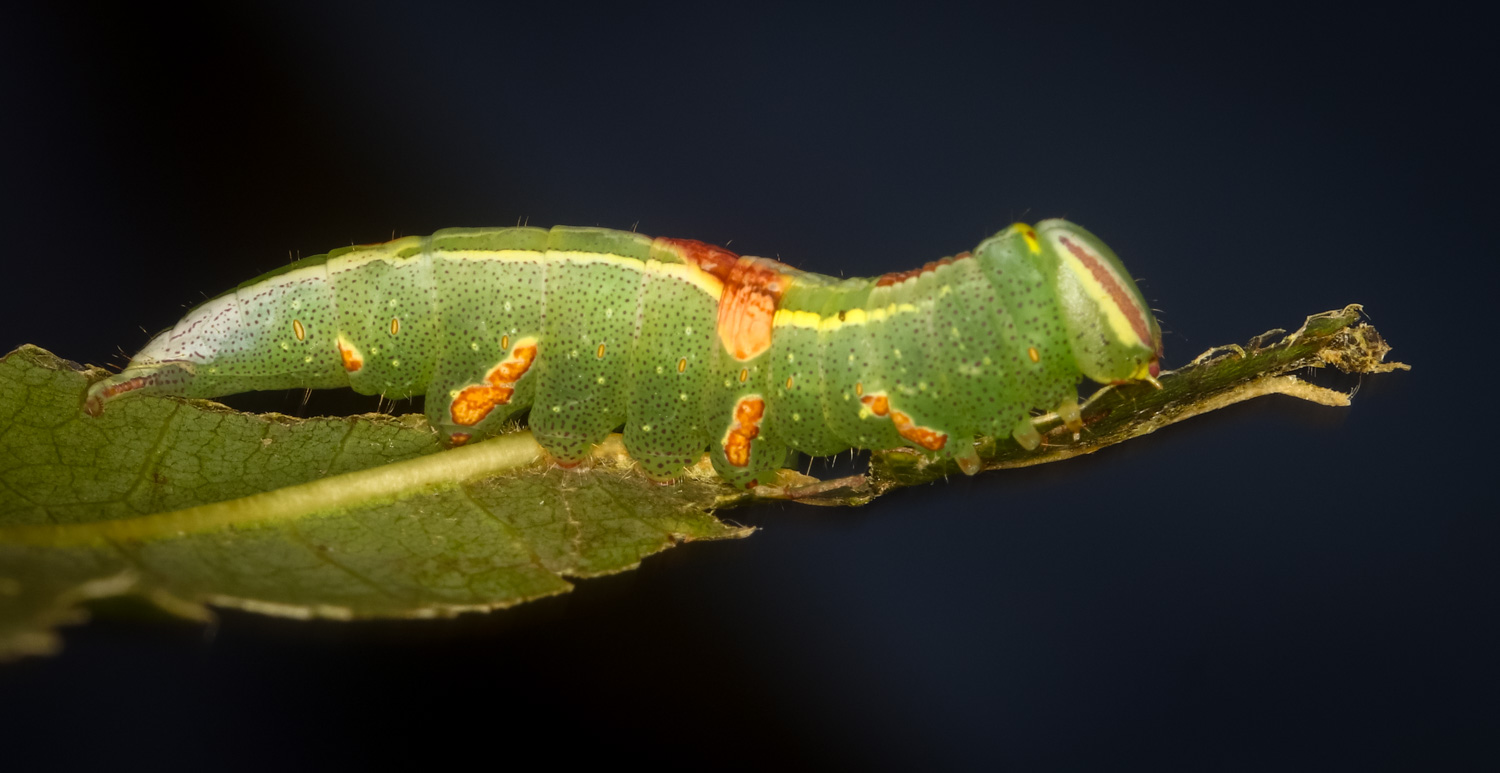
Prominent caterpillar
|
Crownvetch megachilidsAlong the Water Street trail in Ypsilanti, there is a dense and extensive bloom of crownvetch. This is an invasive "weed" with real value for some pollinators. These include the bumblebees Bombus griseocollus, and B. impatiens, and at least 5 bees in the Megachilidae family, pictured here. 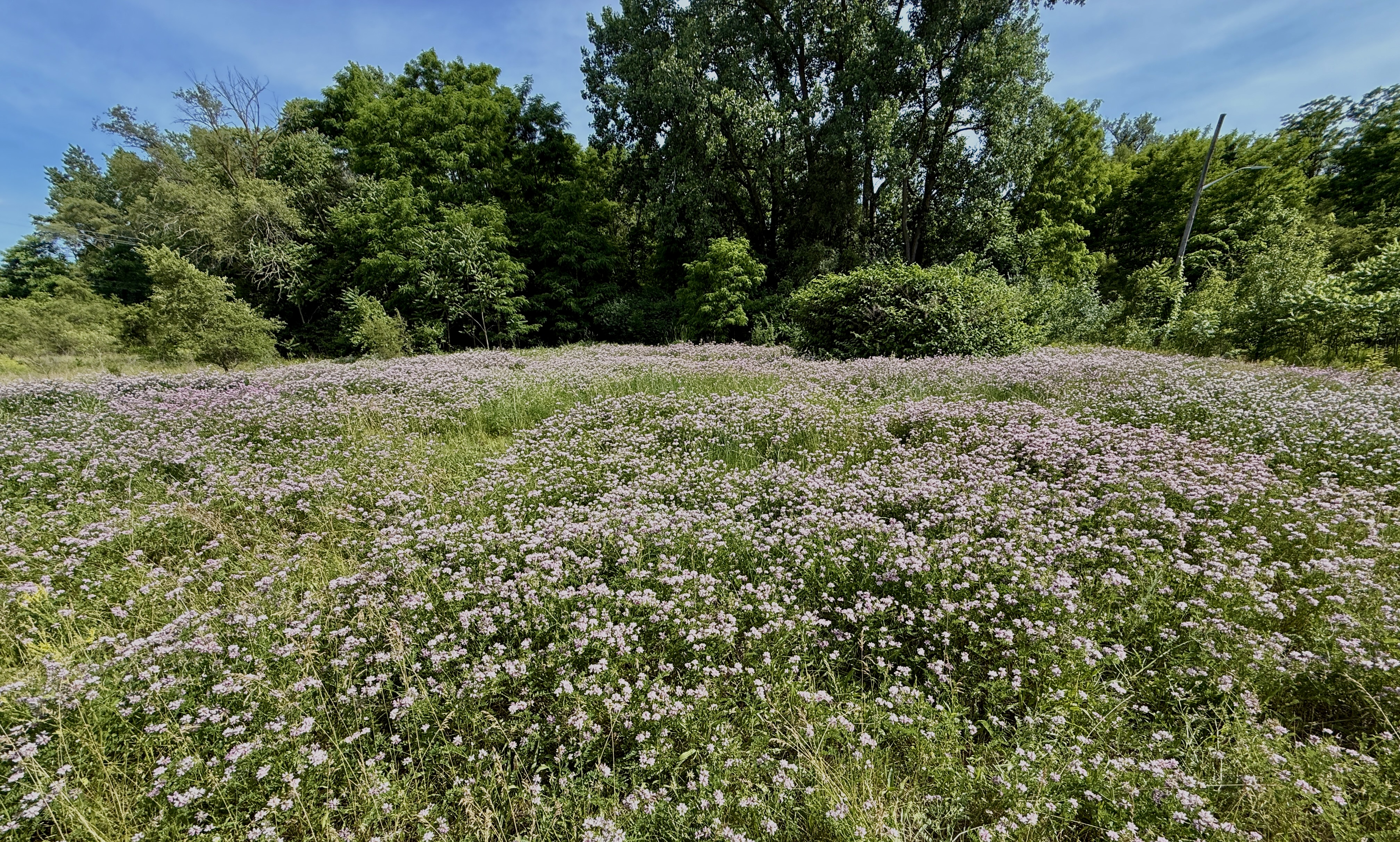
|
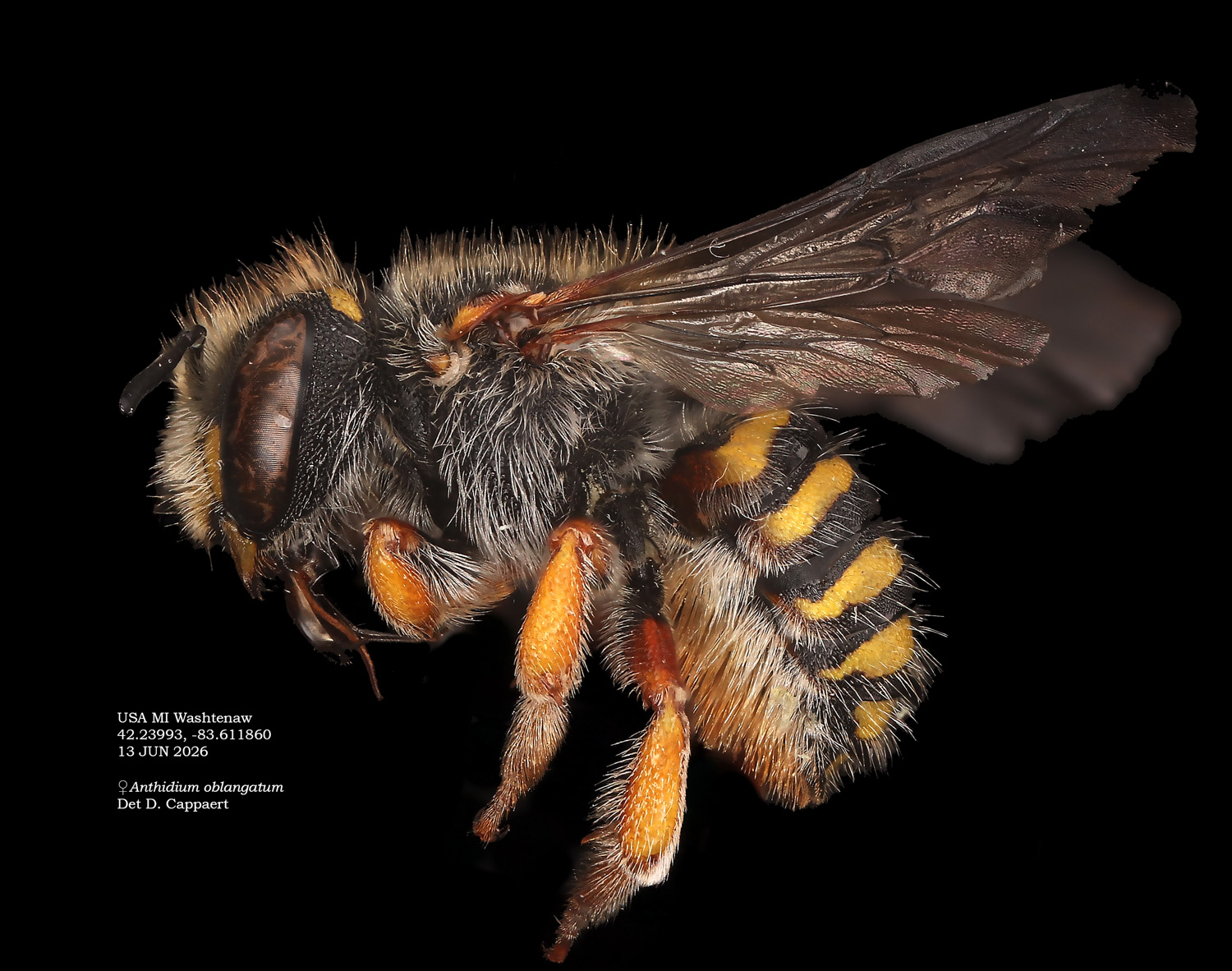
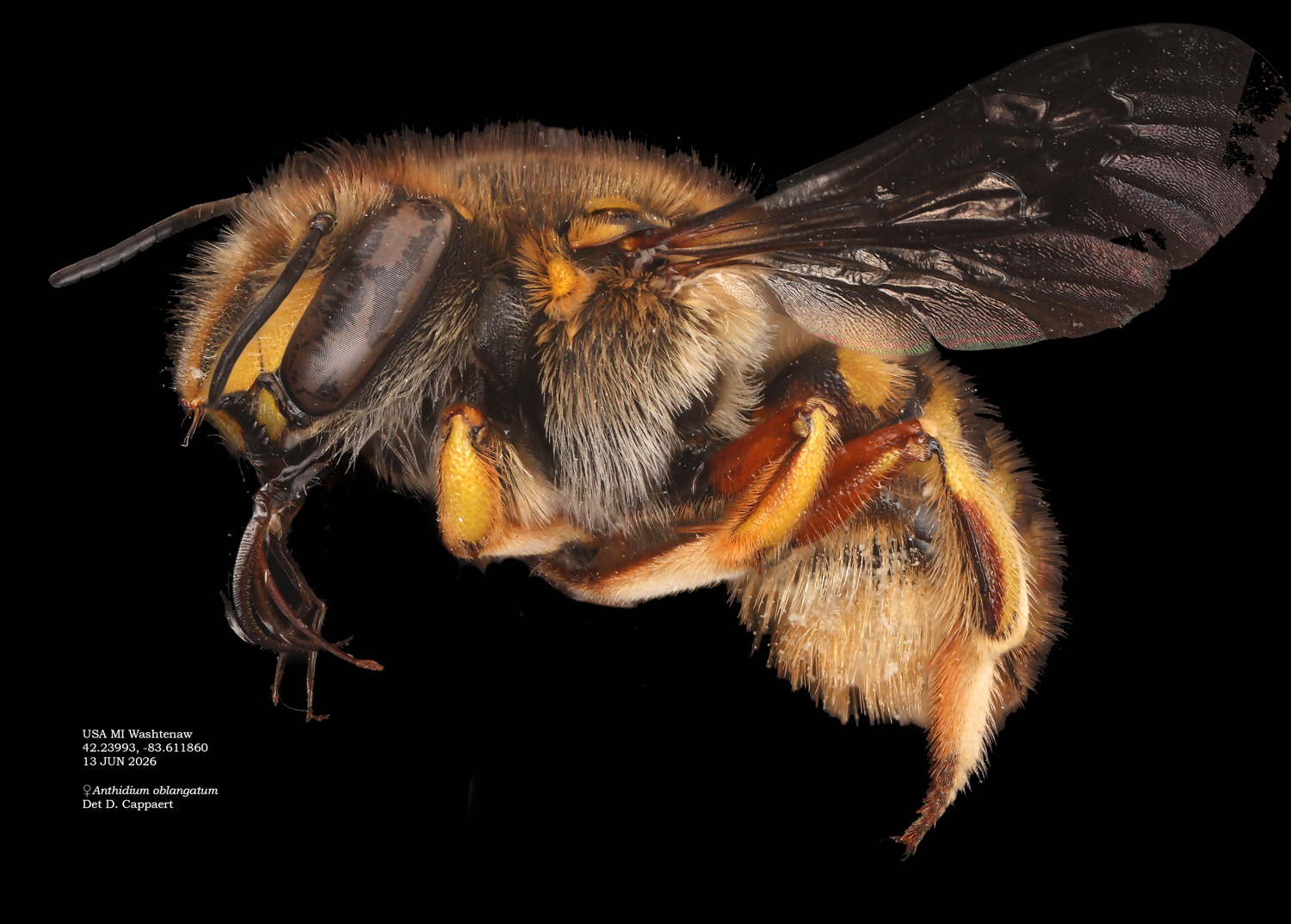
Wool carder bees, Anthidium oblangatum (above), A. manicatum (below).
|
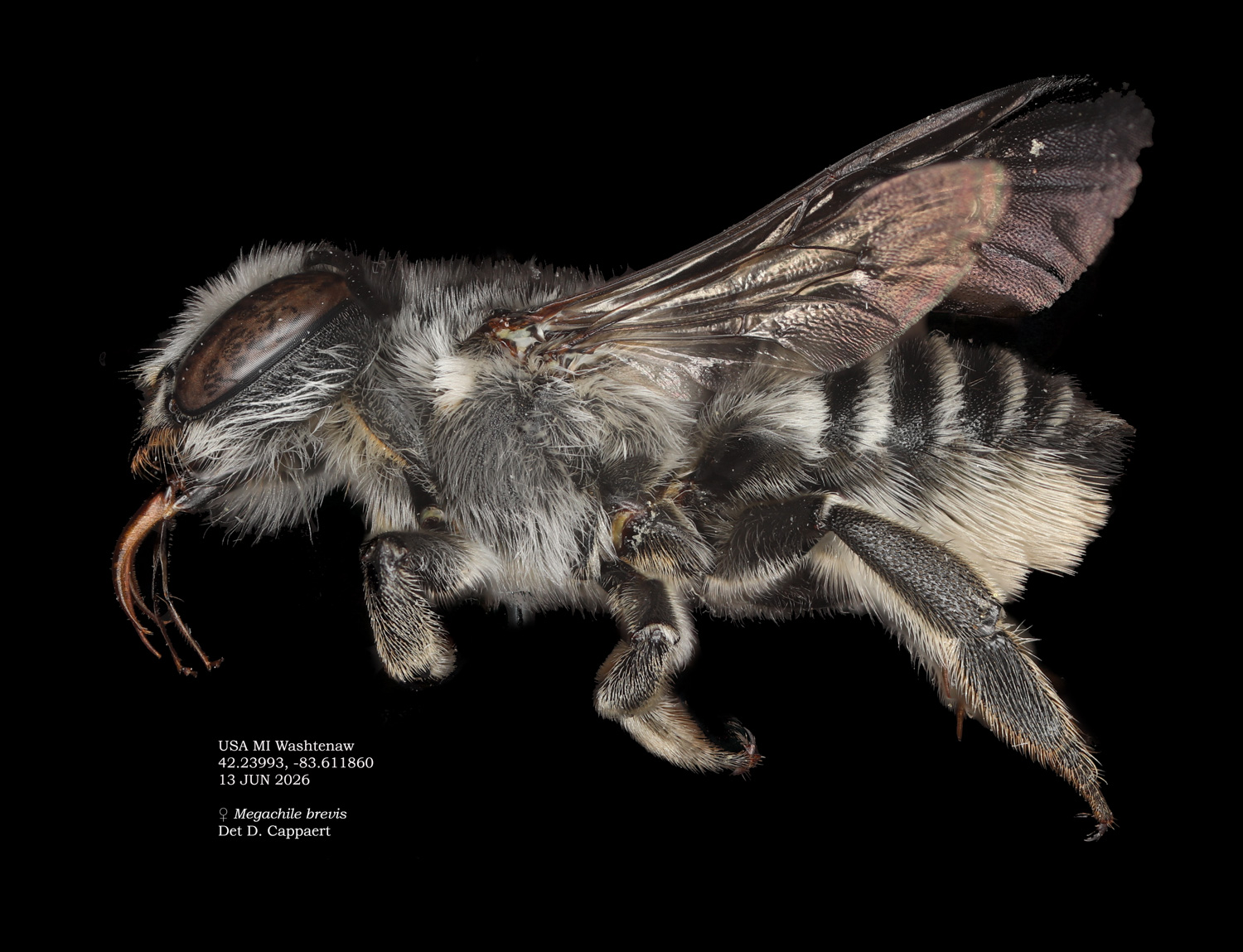
Leafcutter, Megachile brevis 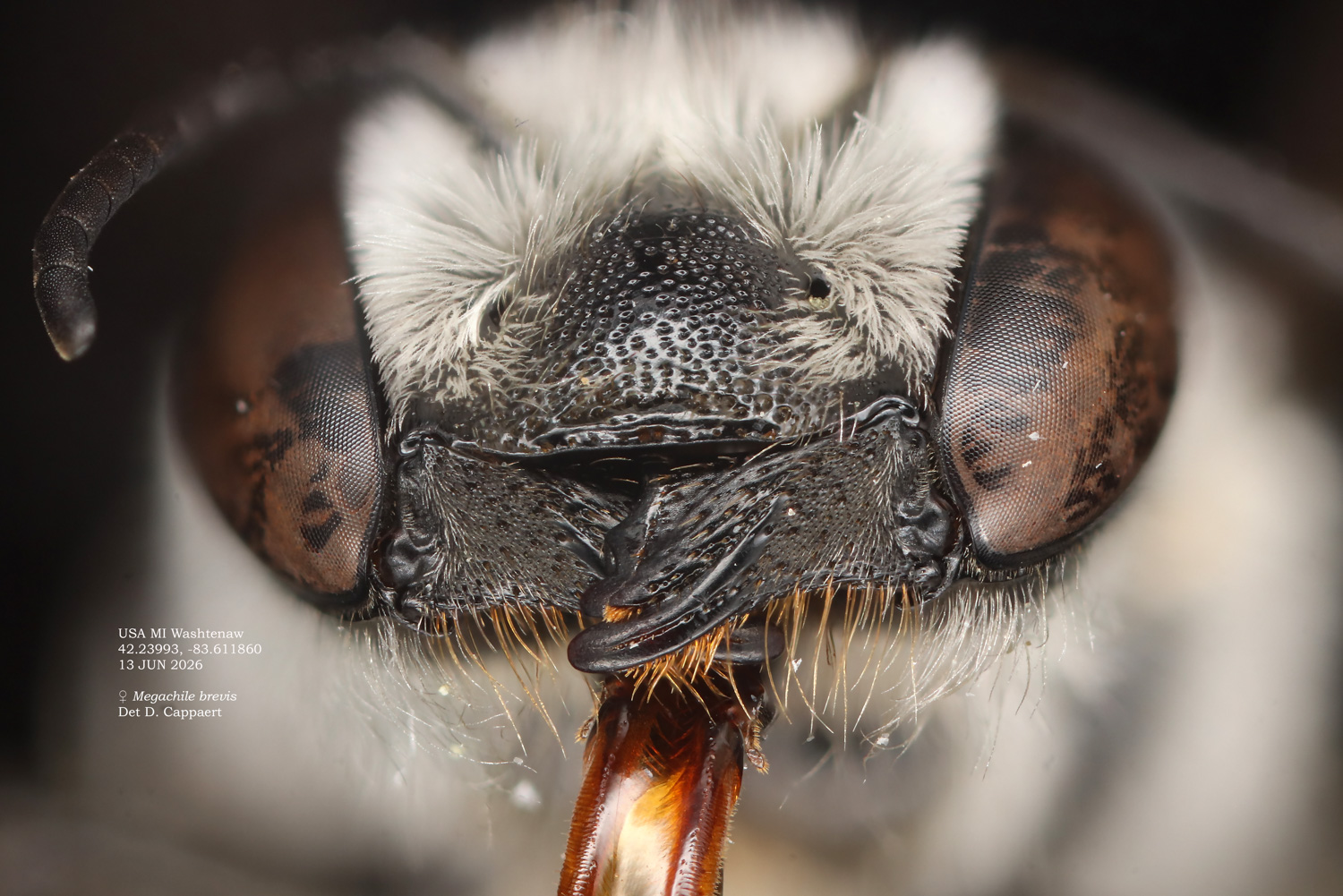
|
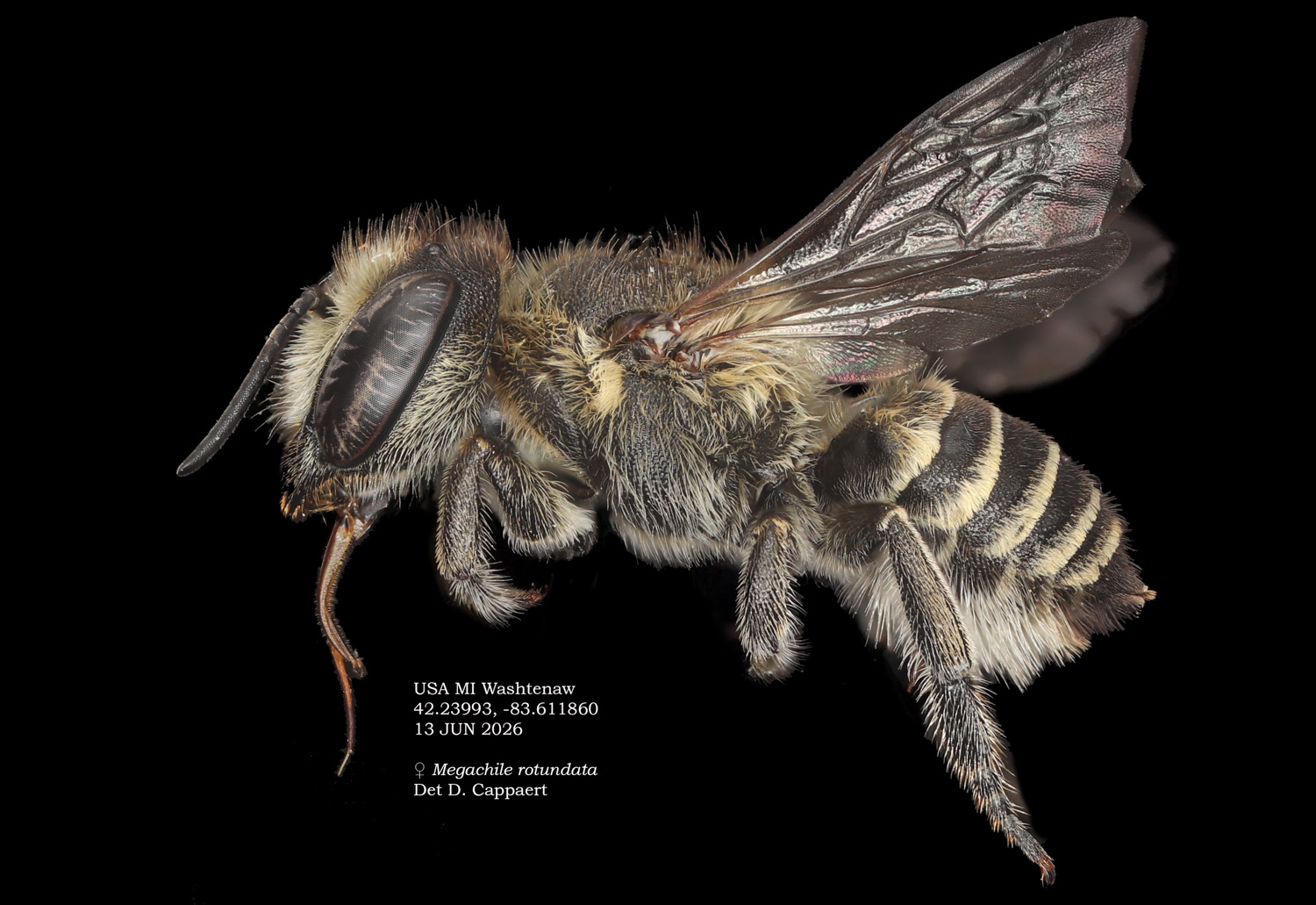
Leafcutter, Megachile rotundata 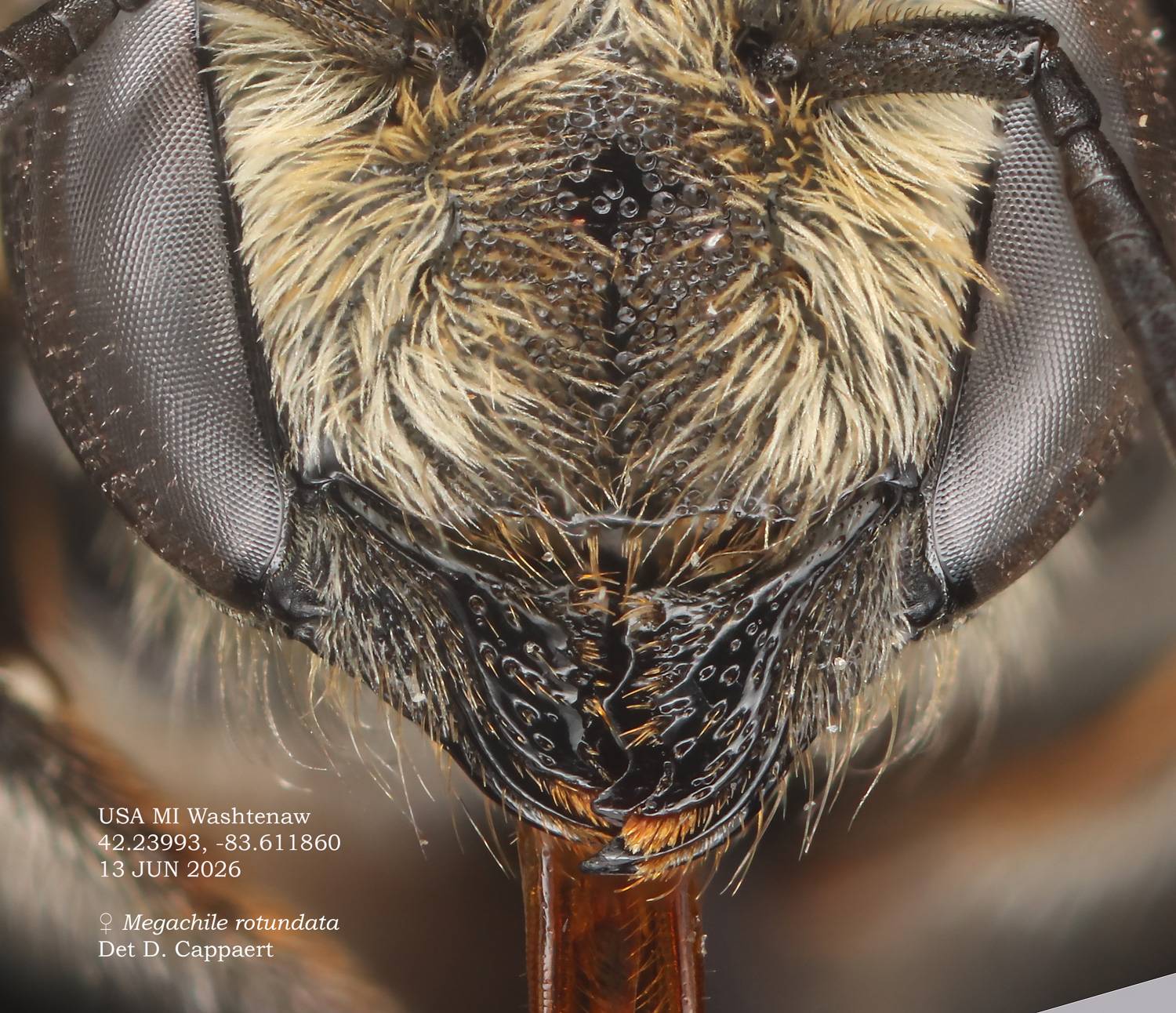
|
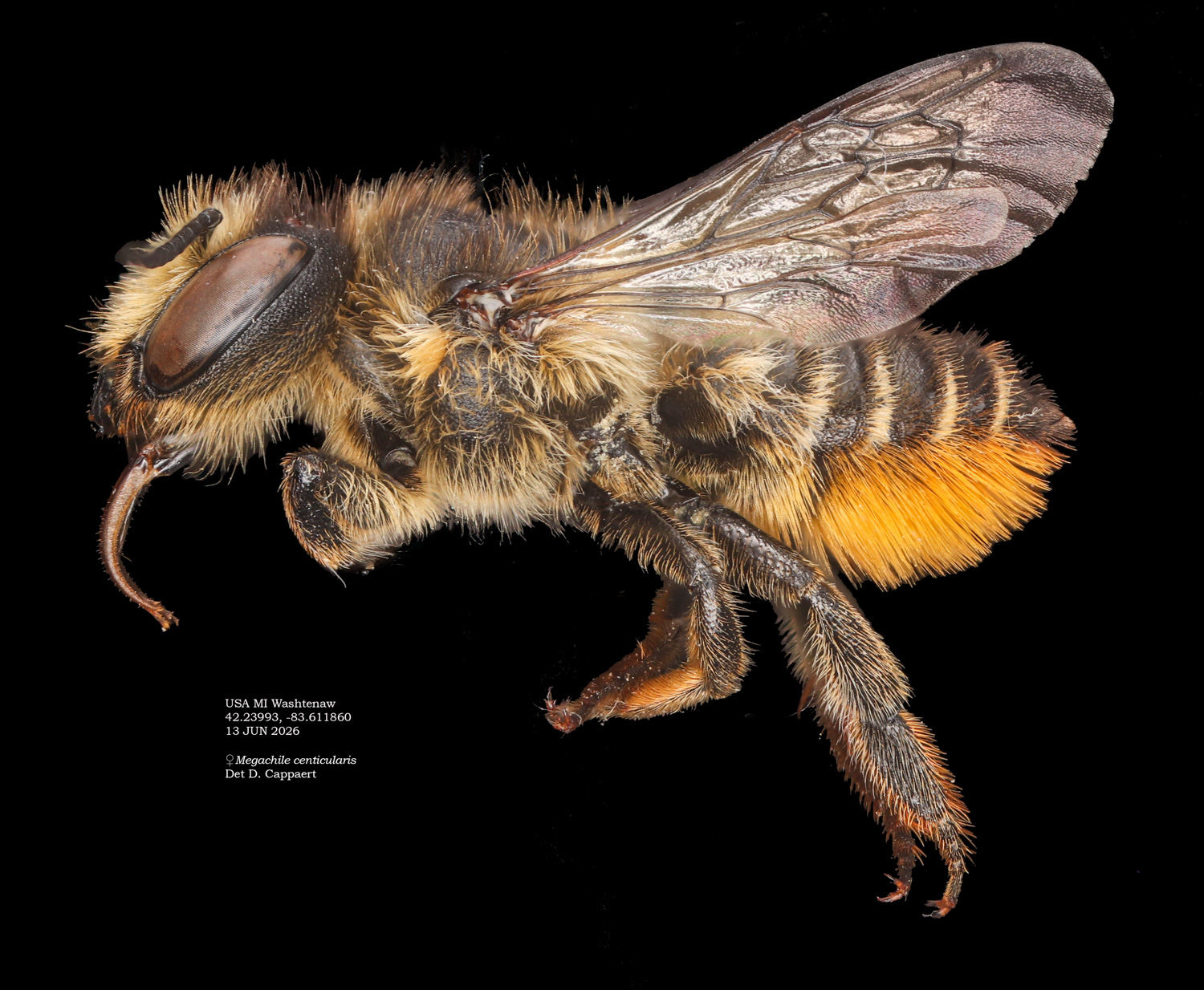
Leafcutter, Megachile centicularis - maybe. Fits in the Canadian Arthropod Megachile key.
|
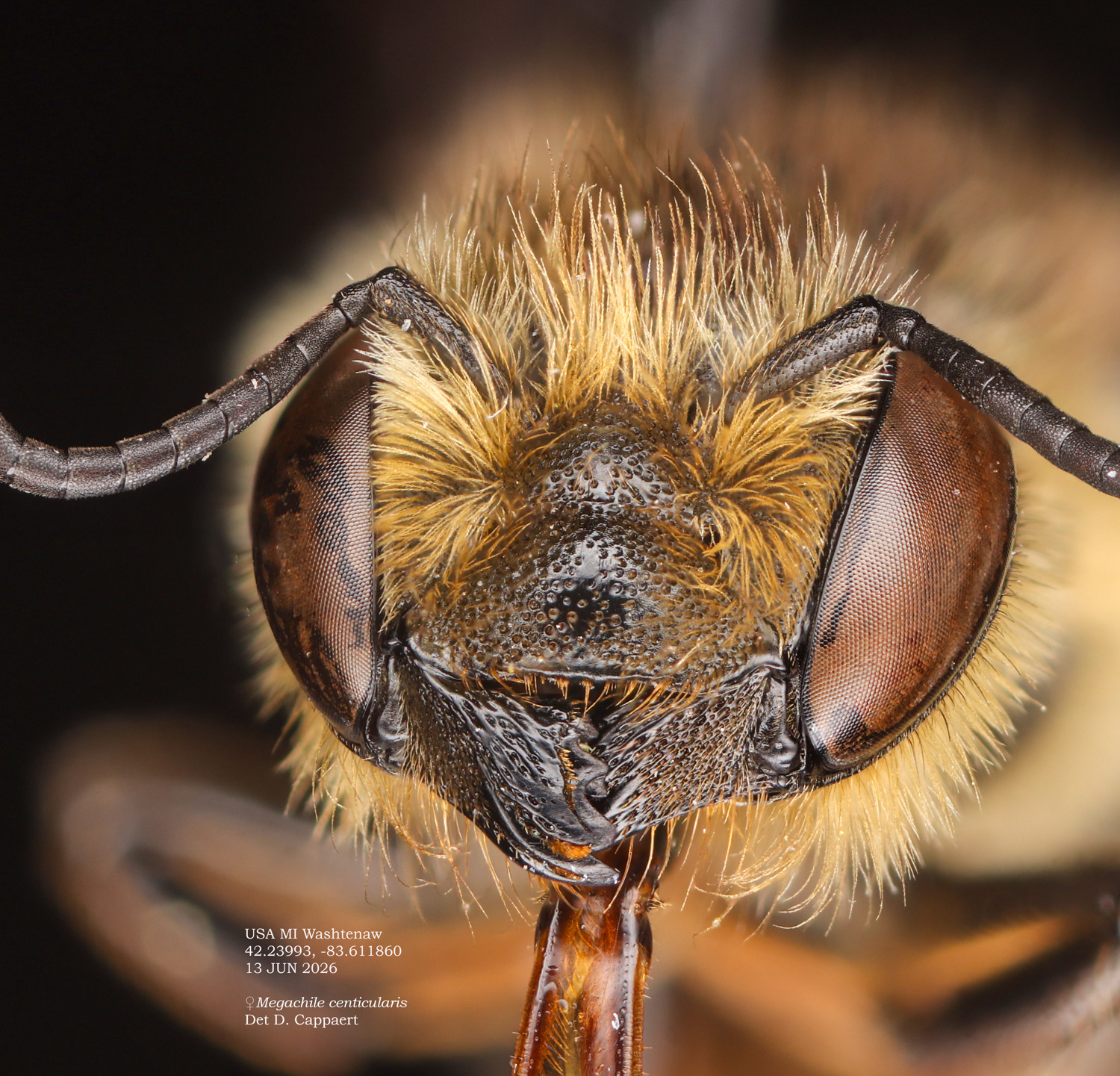
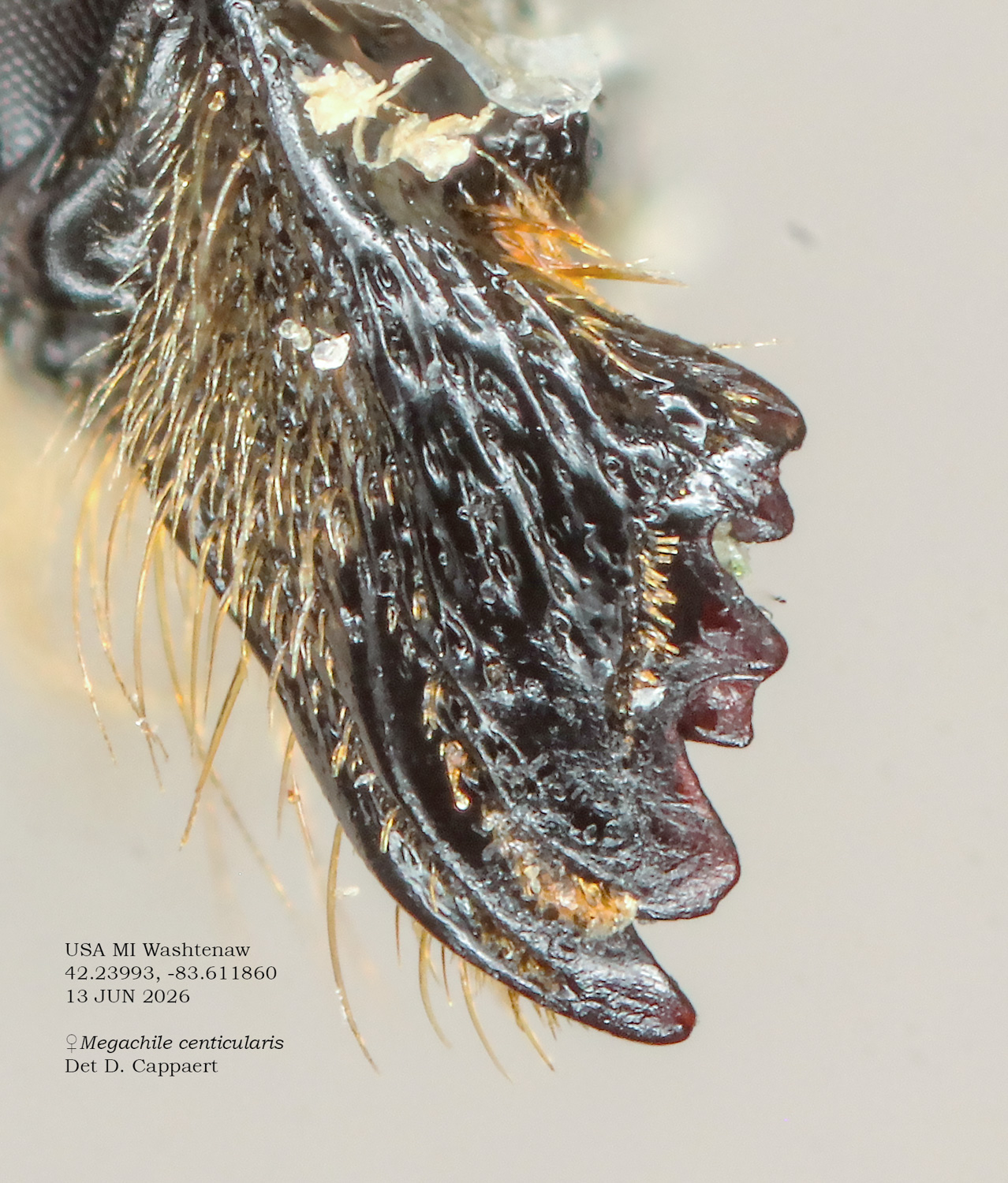
As often with bees, the mandible is a key diagnostic.
|
|
With Shawn Severance, Washtenaw County Naturalist, I am organizing a study of pollinators of spring ephemerals (more info). We'll identify floral visitors, and look at how they are distributed among plant species. For most of April and May, I'll use this page for news of the ephemerals project, most recent info first.
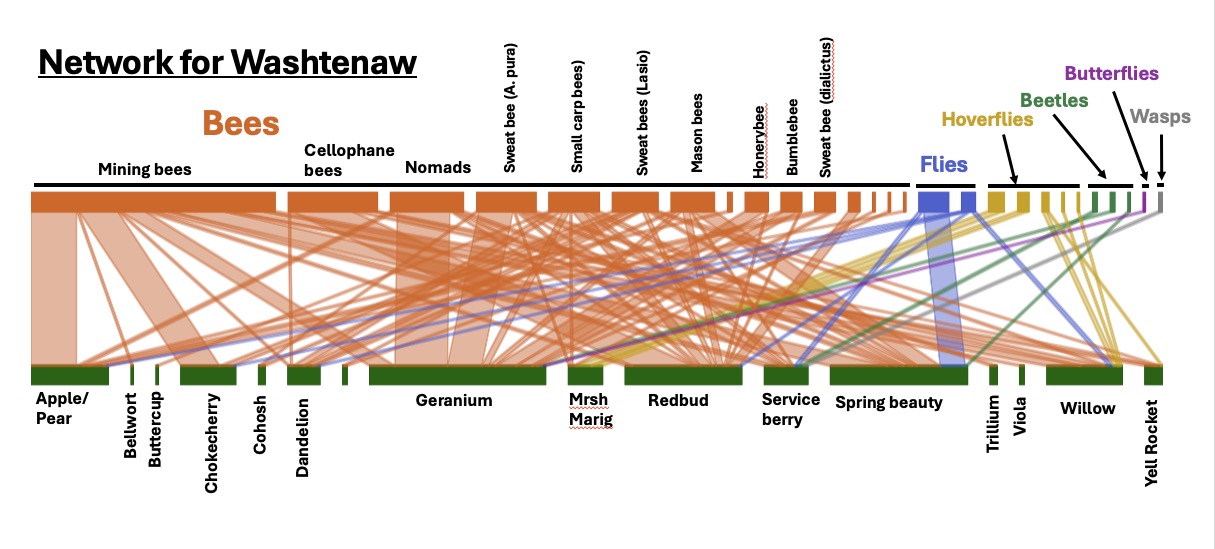
June 10: See a summary of data for each partner organization: Washtenaw County, Legacy Land Conservancy, Friends of Greenview, Pittsfield Preserve, City of Ann Arbor. These each include a network diagram, like this one for insects by genus at Washtenaw County sites:
Geranium@Johnson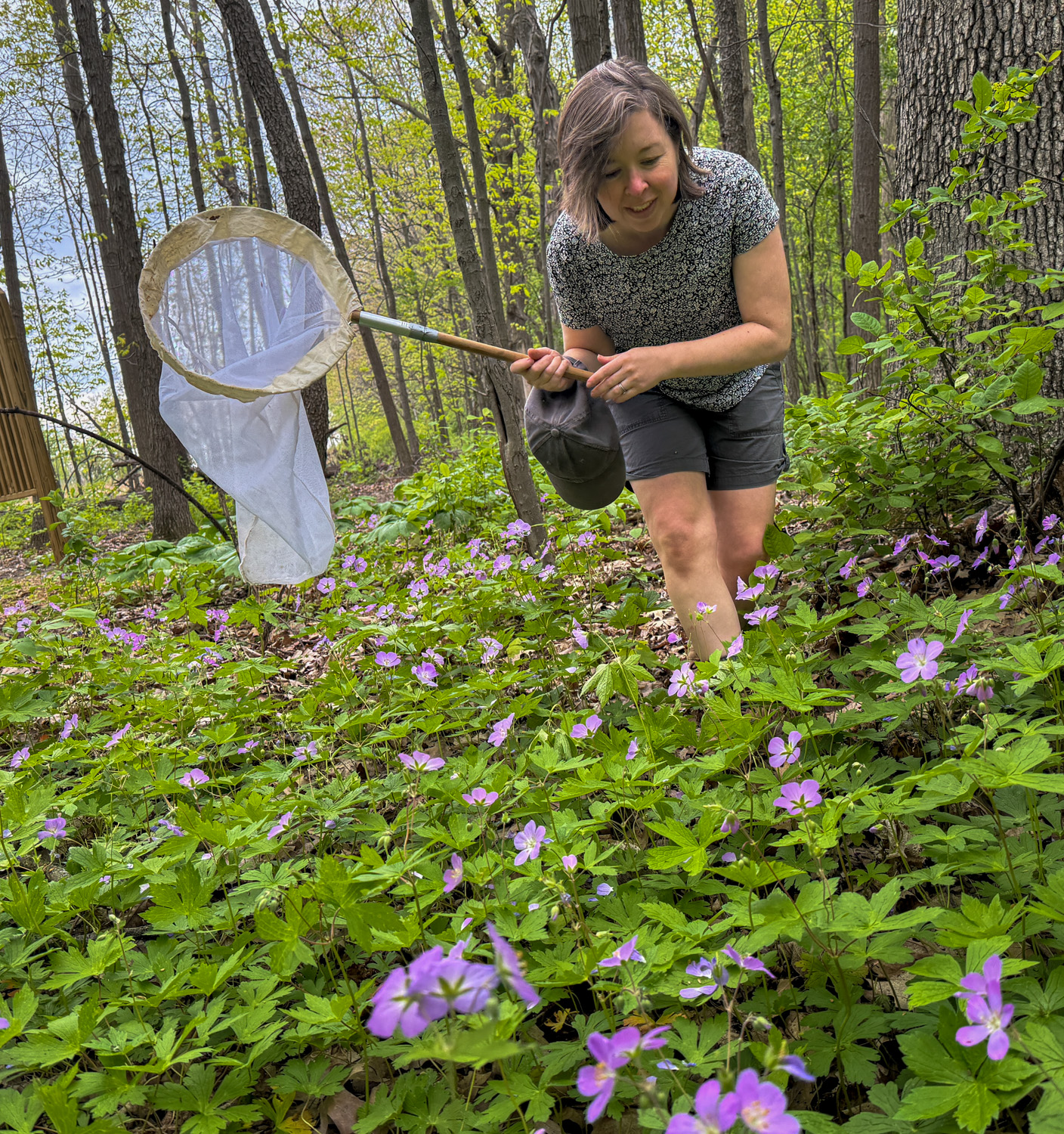
Heather at Johnson Preserve.
|
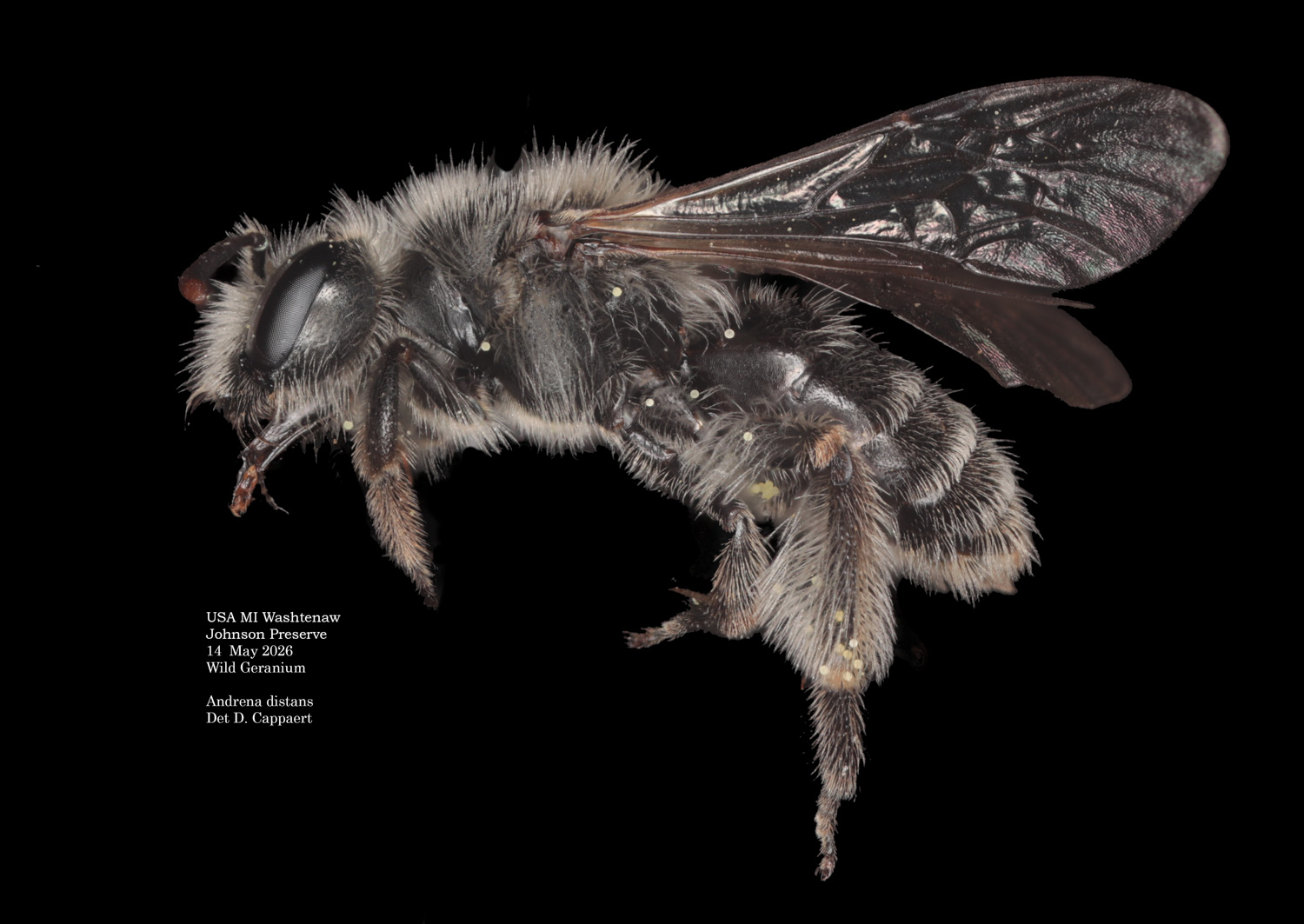
The cranesbill mining bee, a geranium specialist.
|
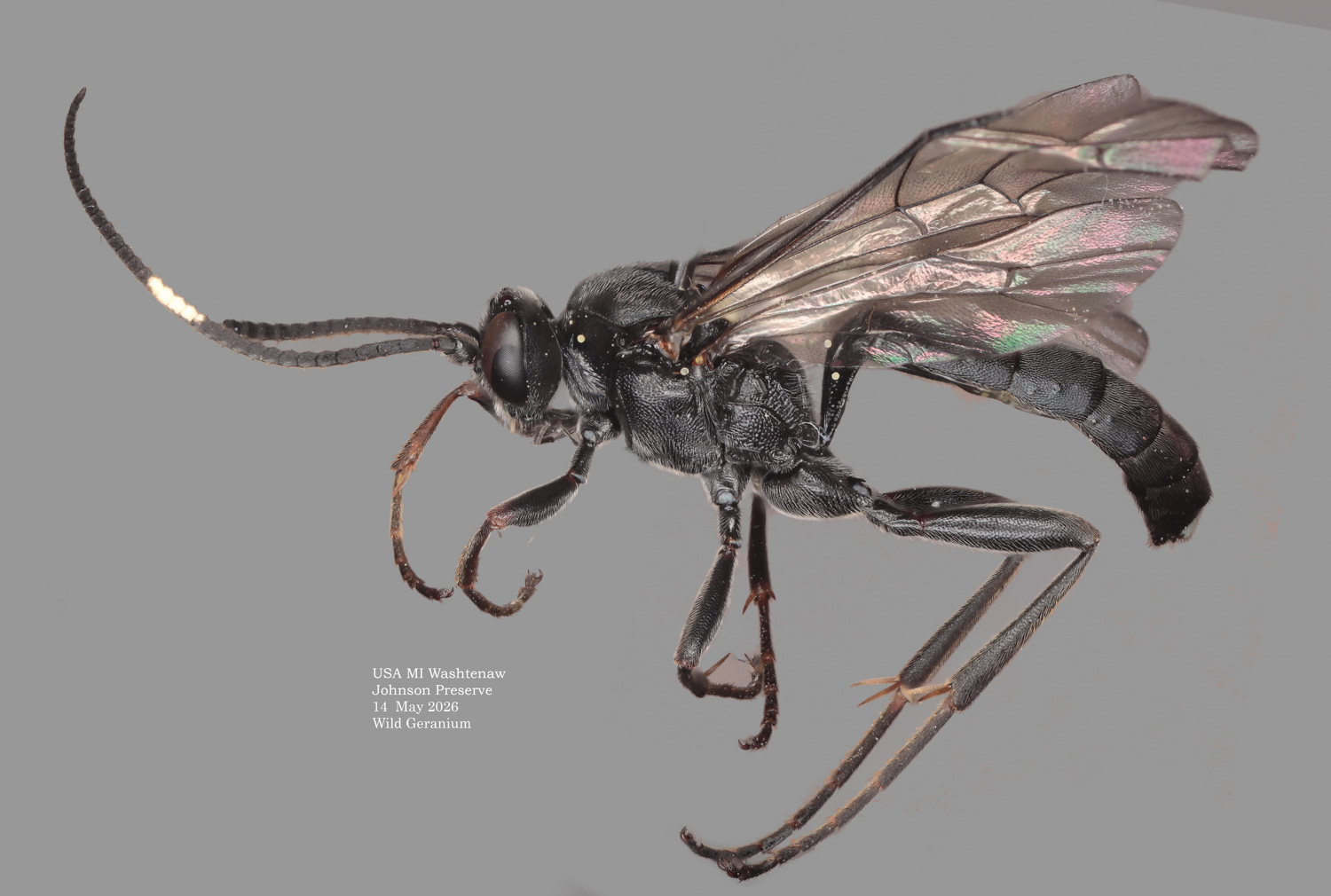
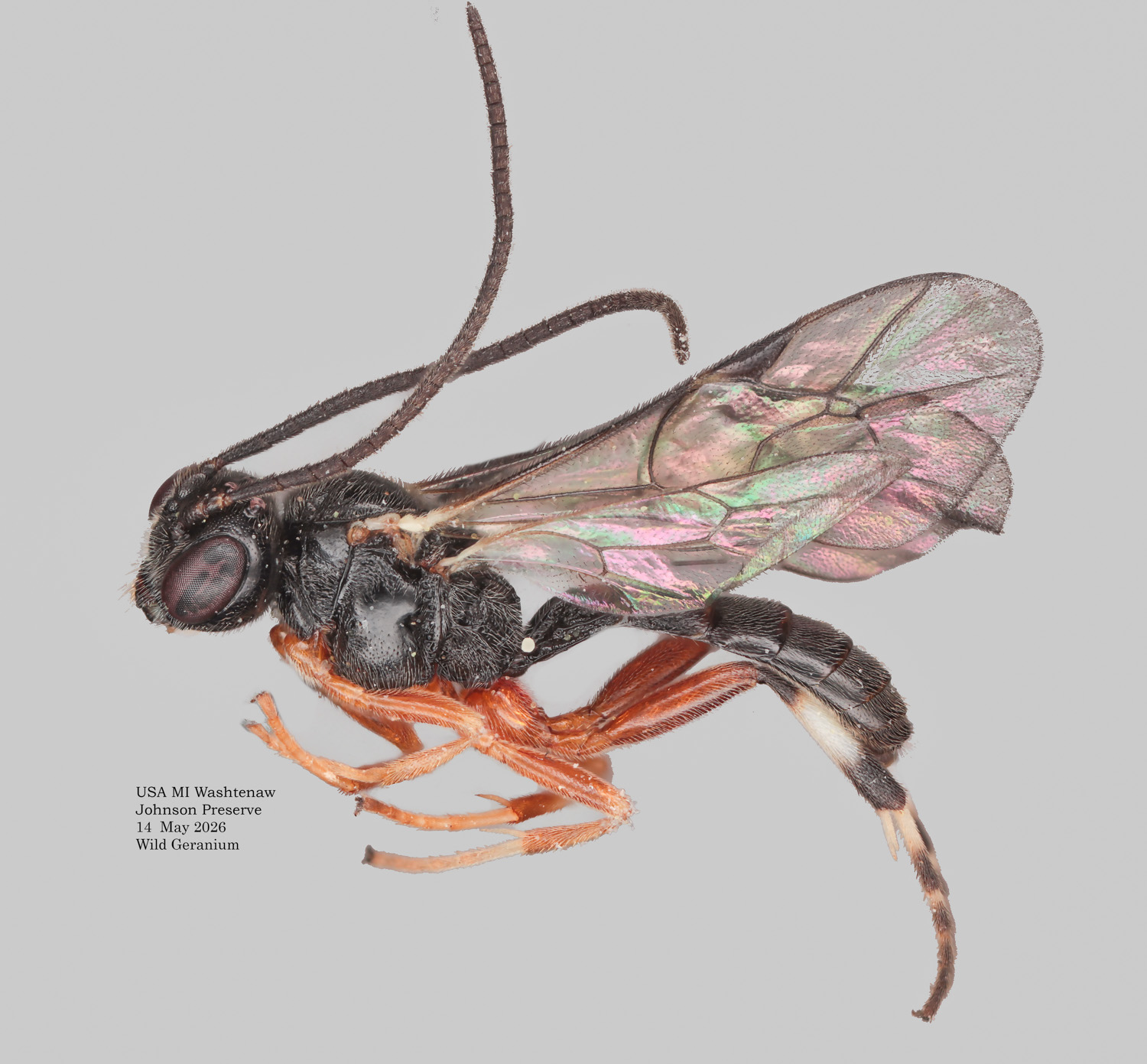
Parasitoid wasps.
|
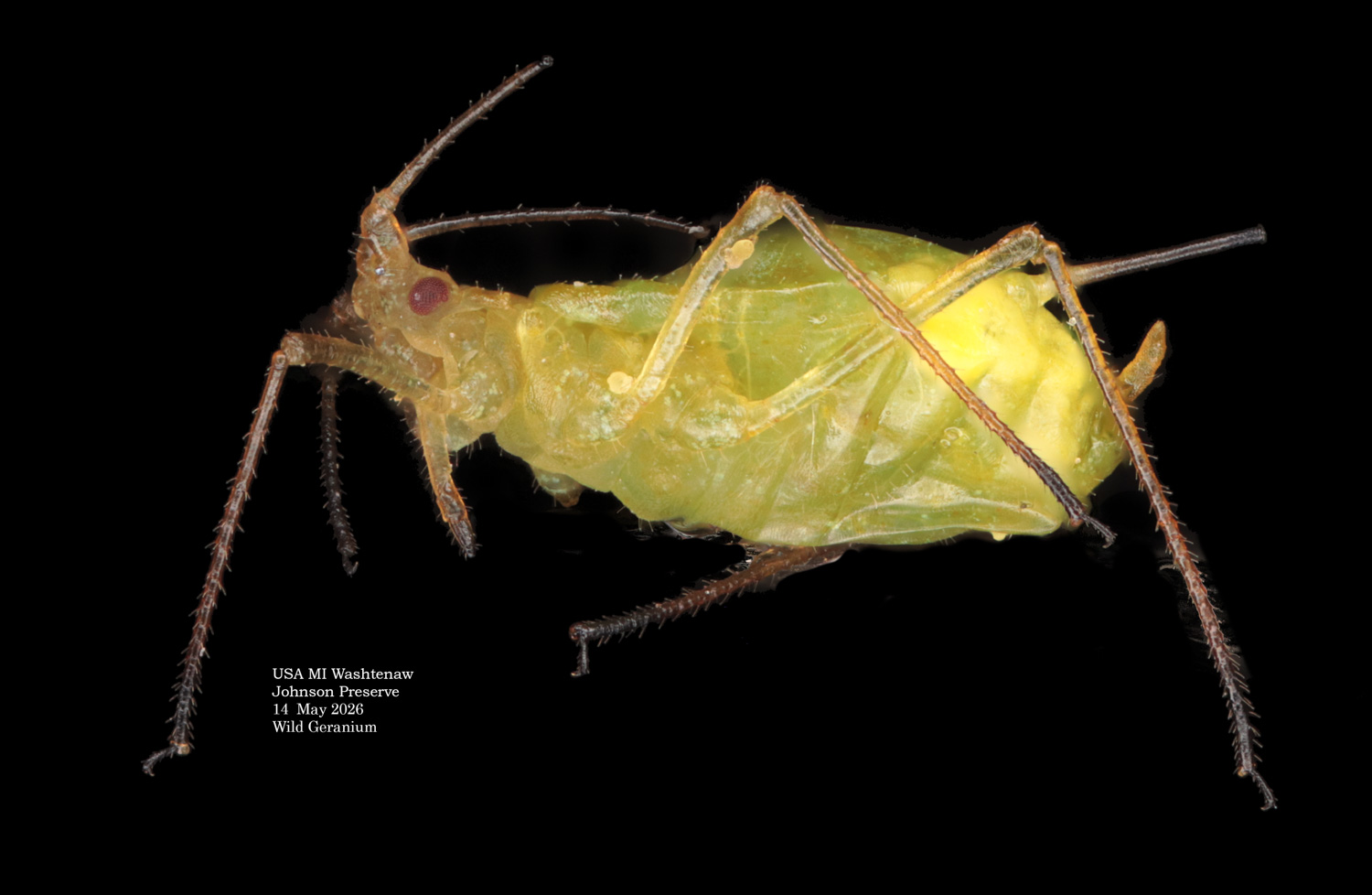
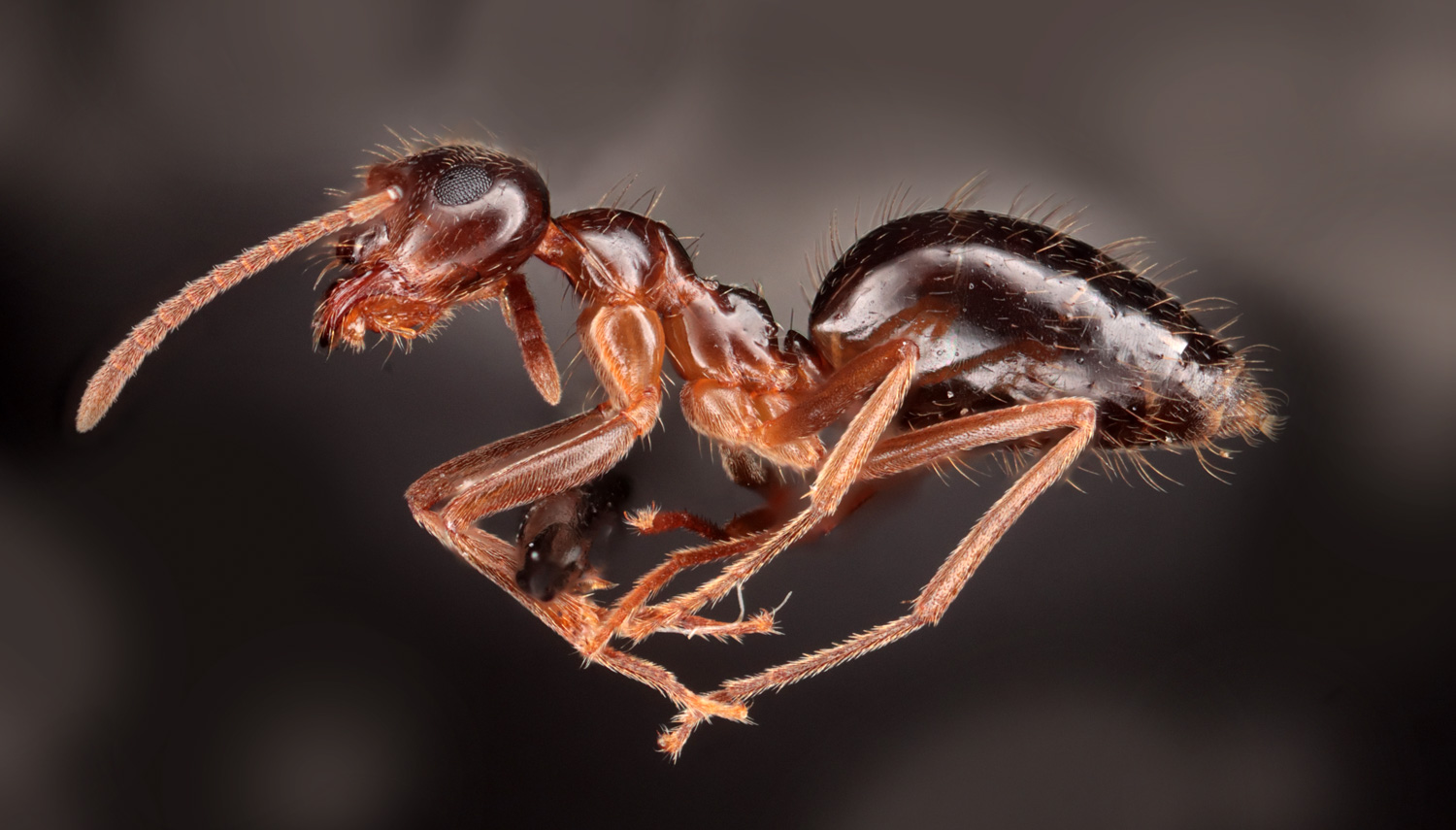
We noticed tiny lady beetles (14-spotted) on geranium. I thought these were probably there to prey on aphids. We also saw another aphid predator, a brown lacewing. Then we picked up ants in our nets - probably tending the aphids. These ants were picked up in our nets. I wasn't surprised net
|
The Cuckoo QuestionCuckoo bees in the genus Nomada turn out to be super abundant, especially on geranium. Because they don't collect pollen, they don't help with pollination, and even hinder it as they consume nectar that would otherwise support effective pollinators. The diversity of Nomada is also surprising - I *think* we have 5 species to date. 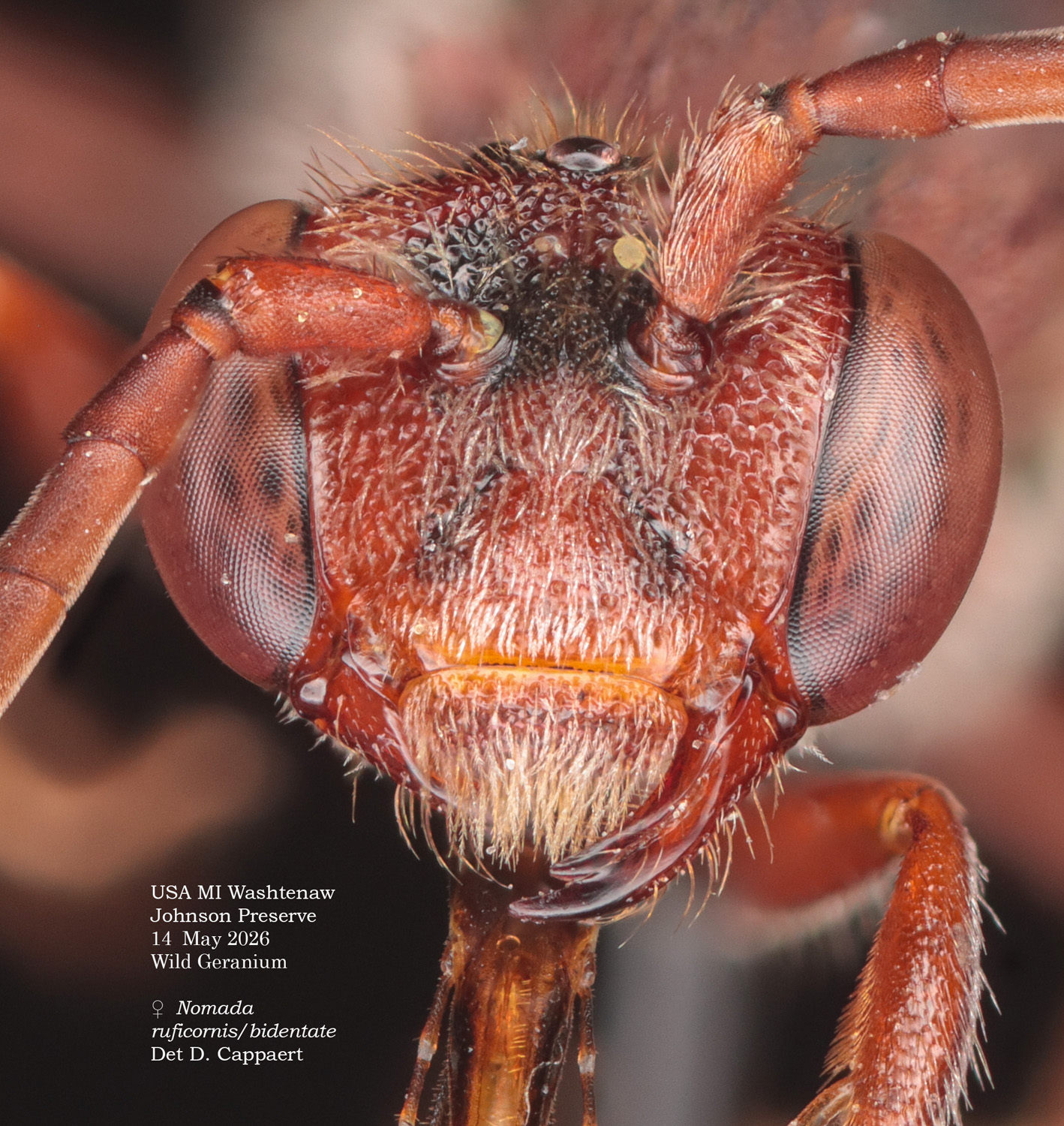
The US expert on Nomad bees tells me that this one is not identifiable from photos. We can only say that it is in the "bidentate group." (bidentate = mandible with 2 points, evident in photo).
|
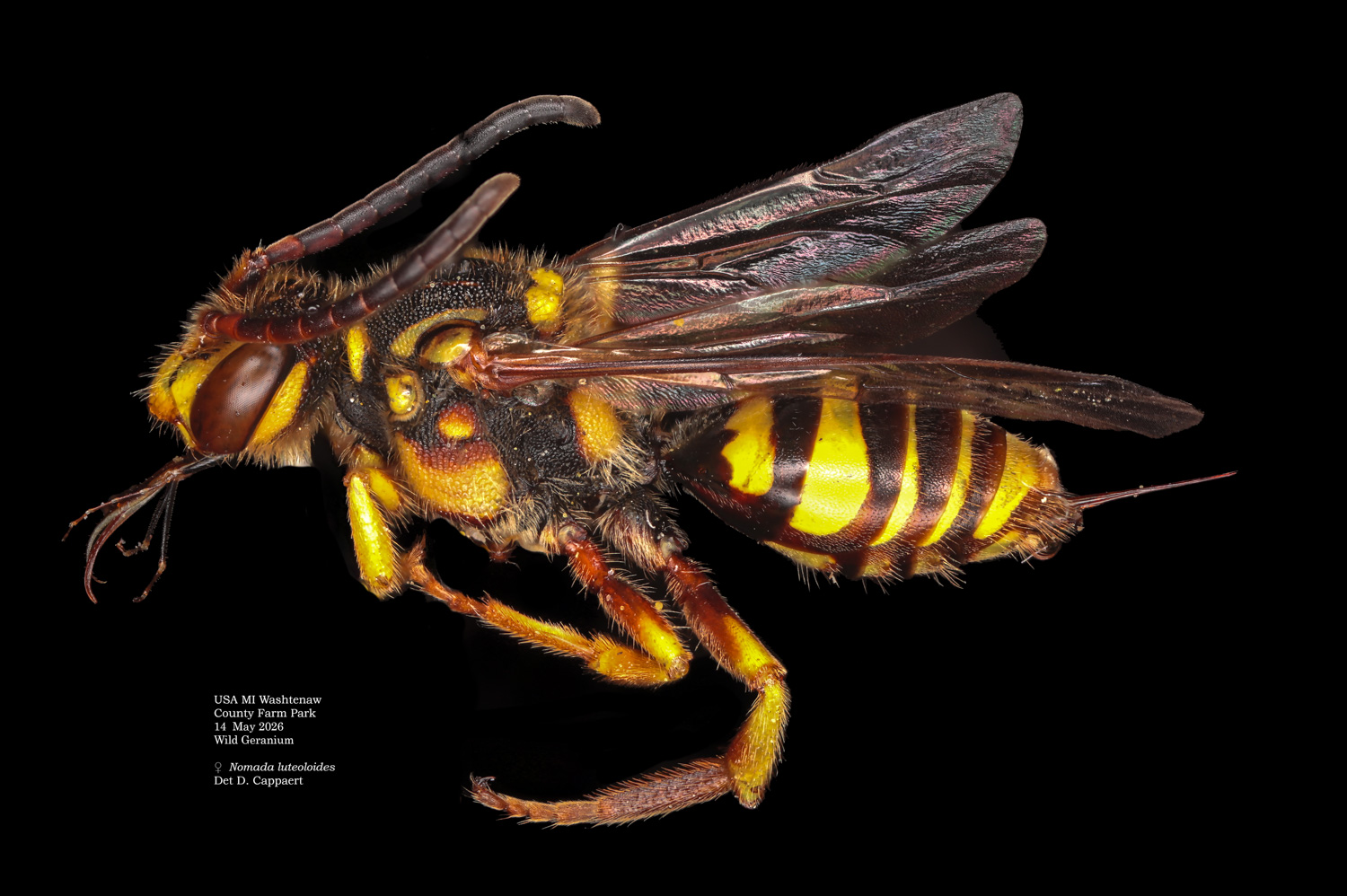
Nomada luteoloides.
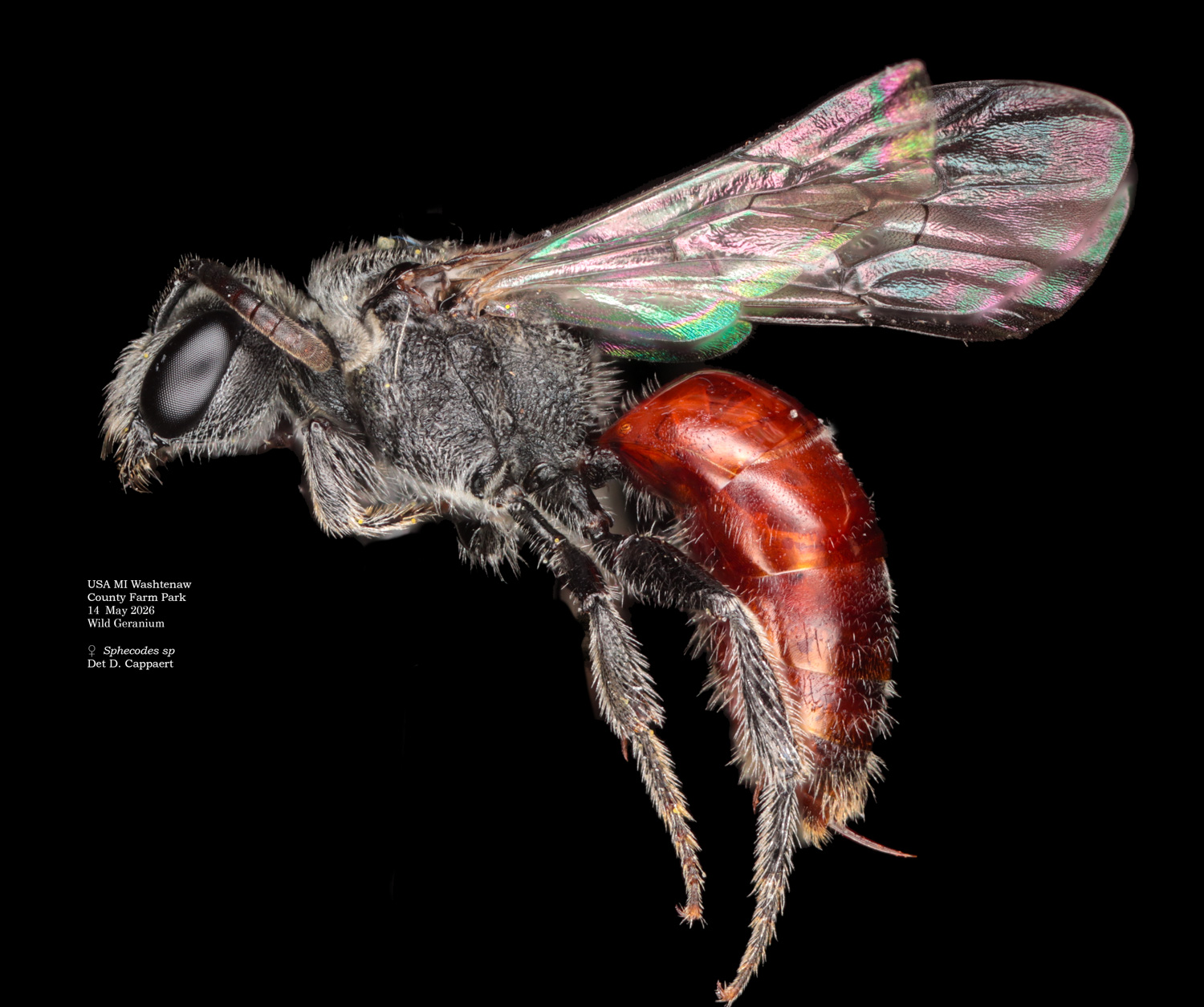
Sphecodes sp, the only specimen observed to date. These are also cuckoo bees, in the sweat bee group halictidae.
|
May 4On the only great weather day, we visited County Farm Park and Scio Woods. Notable:
|
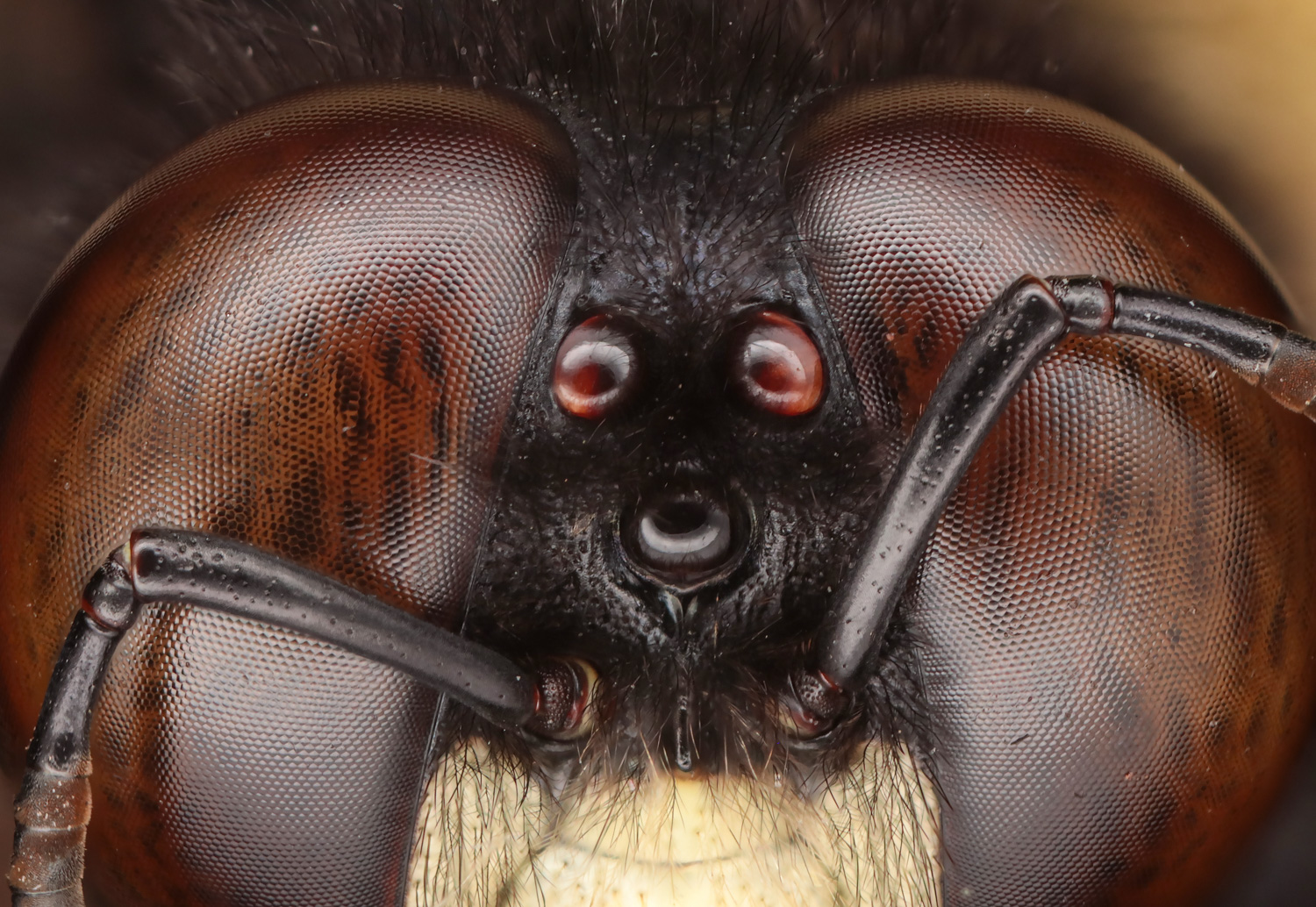
The head of a male carpenter bee, highlighting the simple eyes - ocelli - between the compound eyes.
|
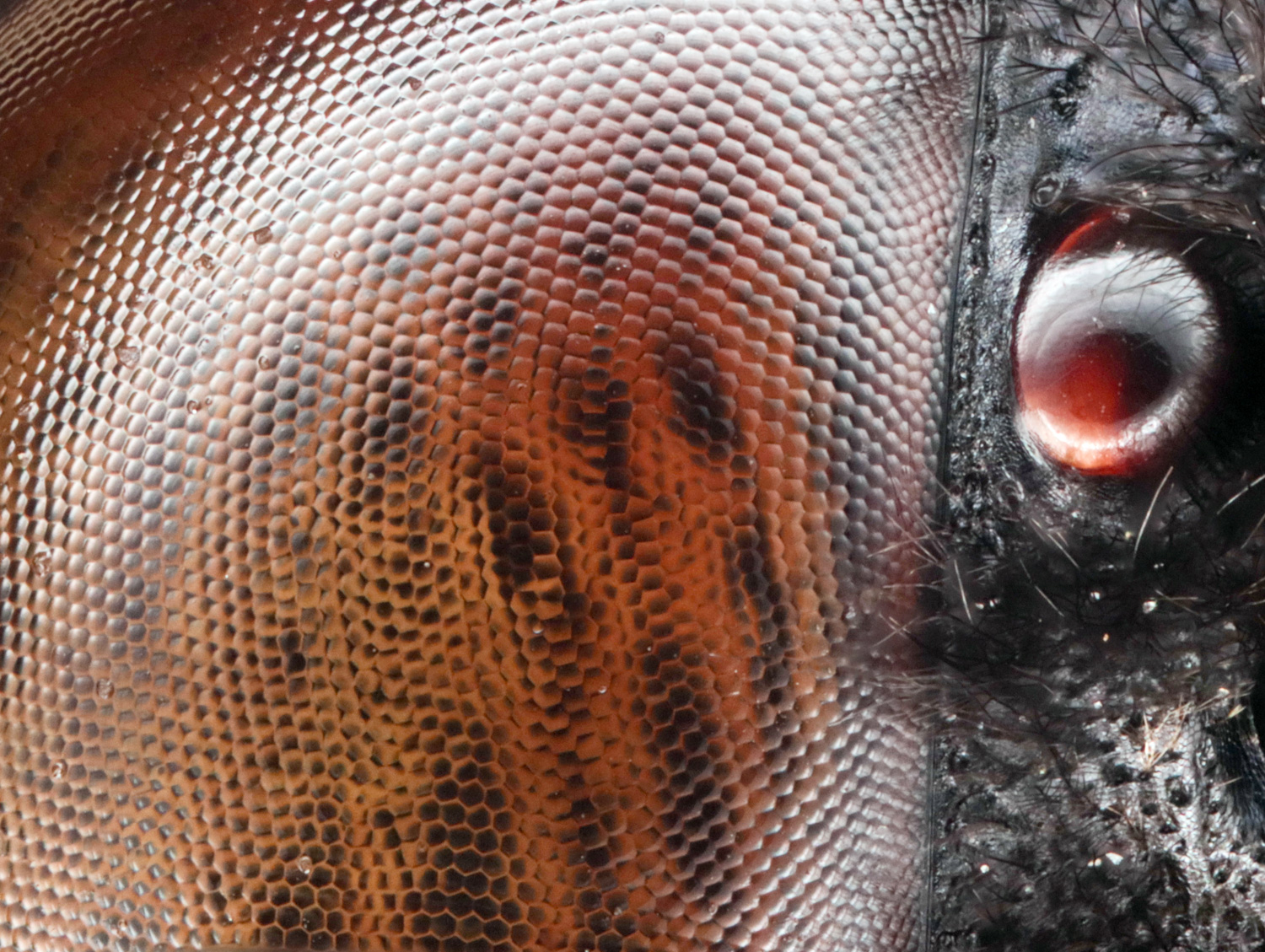
Looking closer, A portion of the thousands of "eyes" that comprise the compound eye.
|
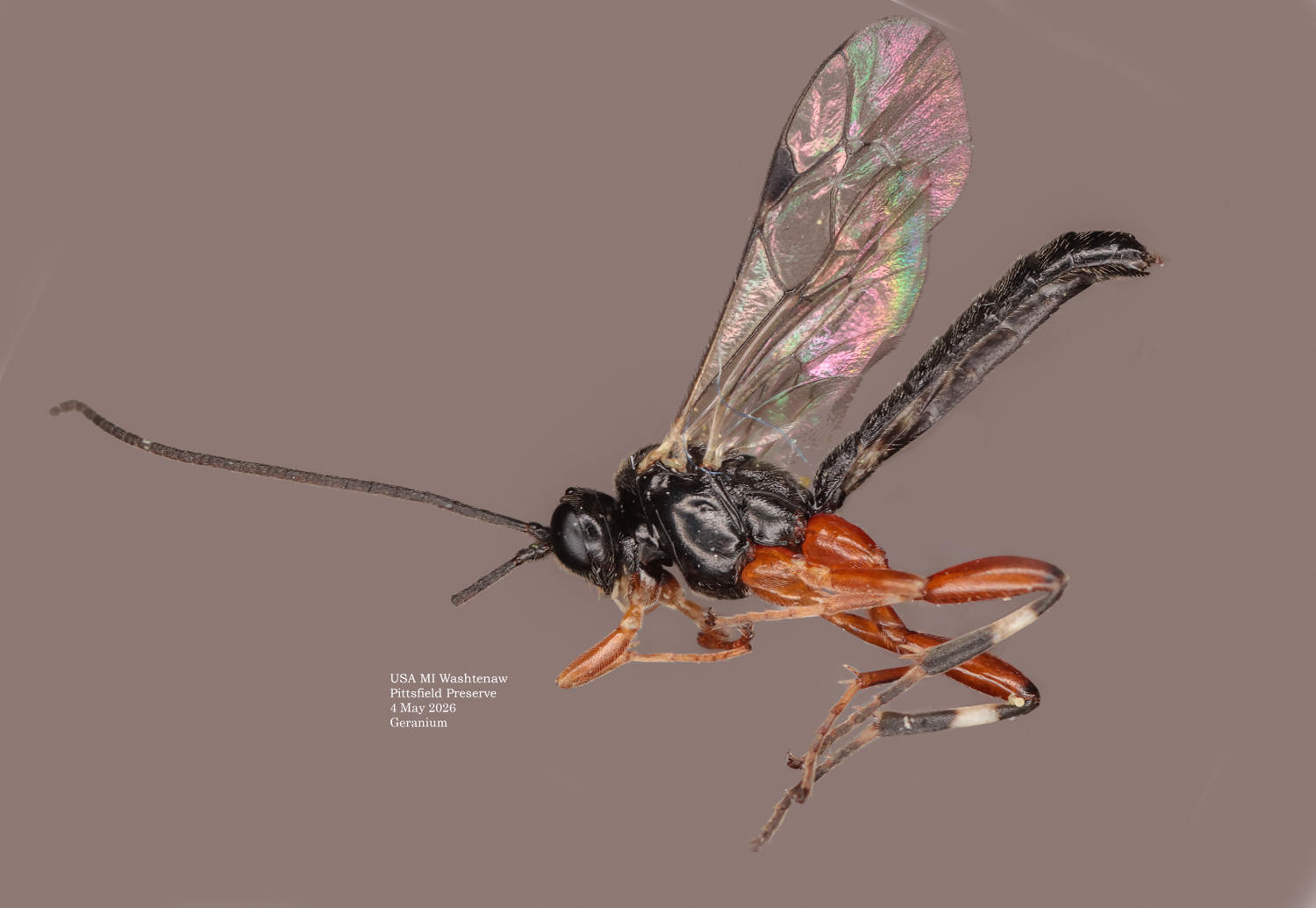
An ichneumonid, parasitic wasp collected from geranium. Many such wasps extend their lives with floral nectar.
|
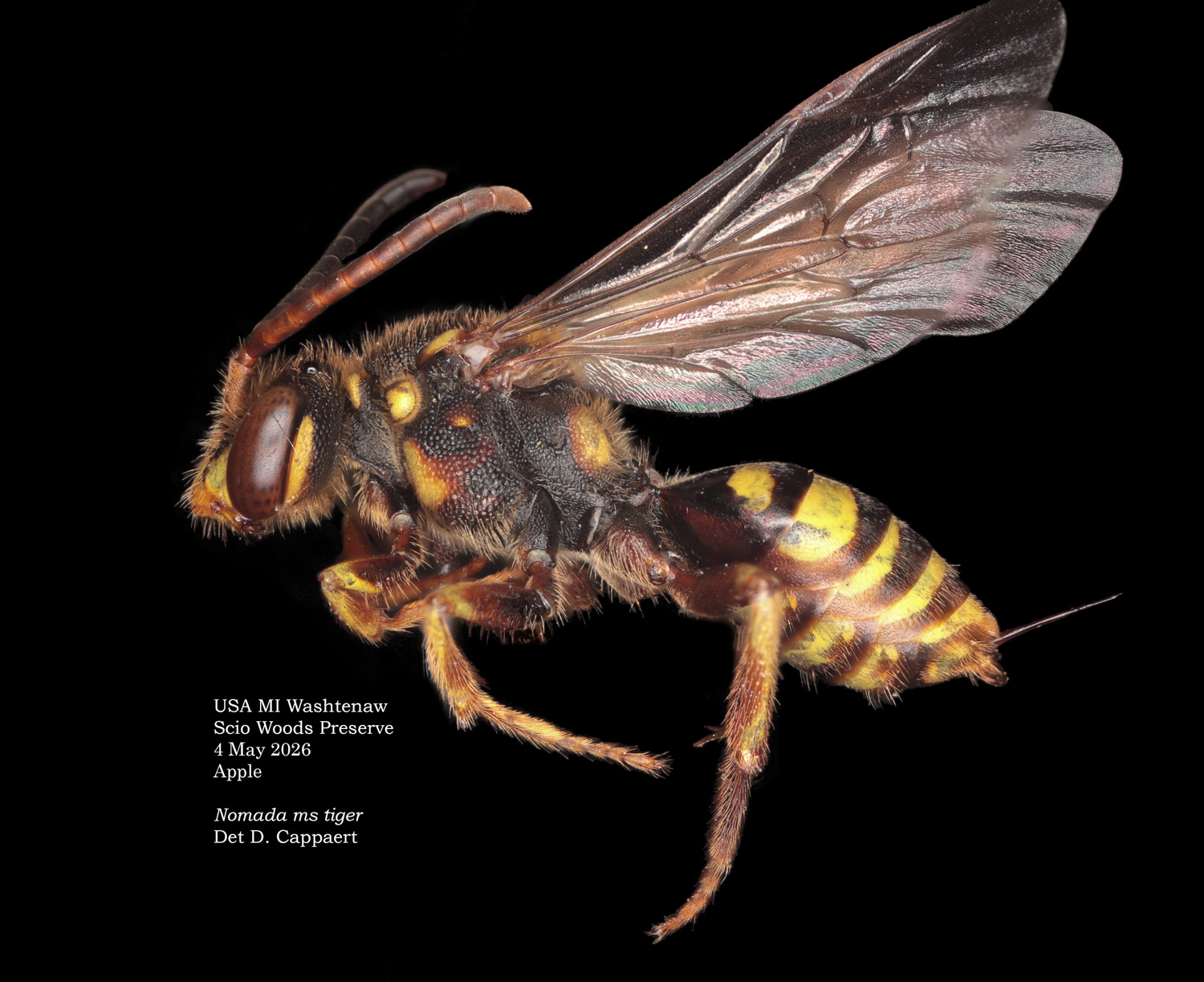
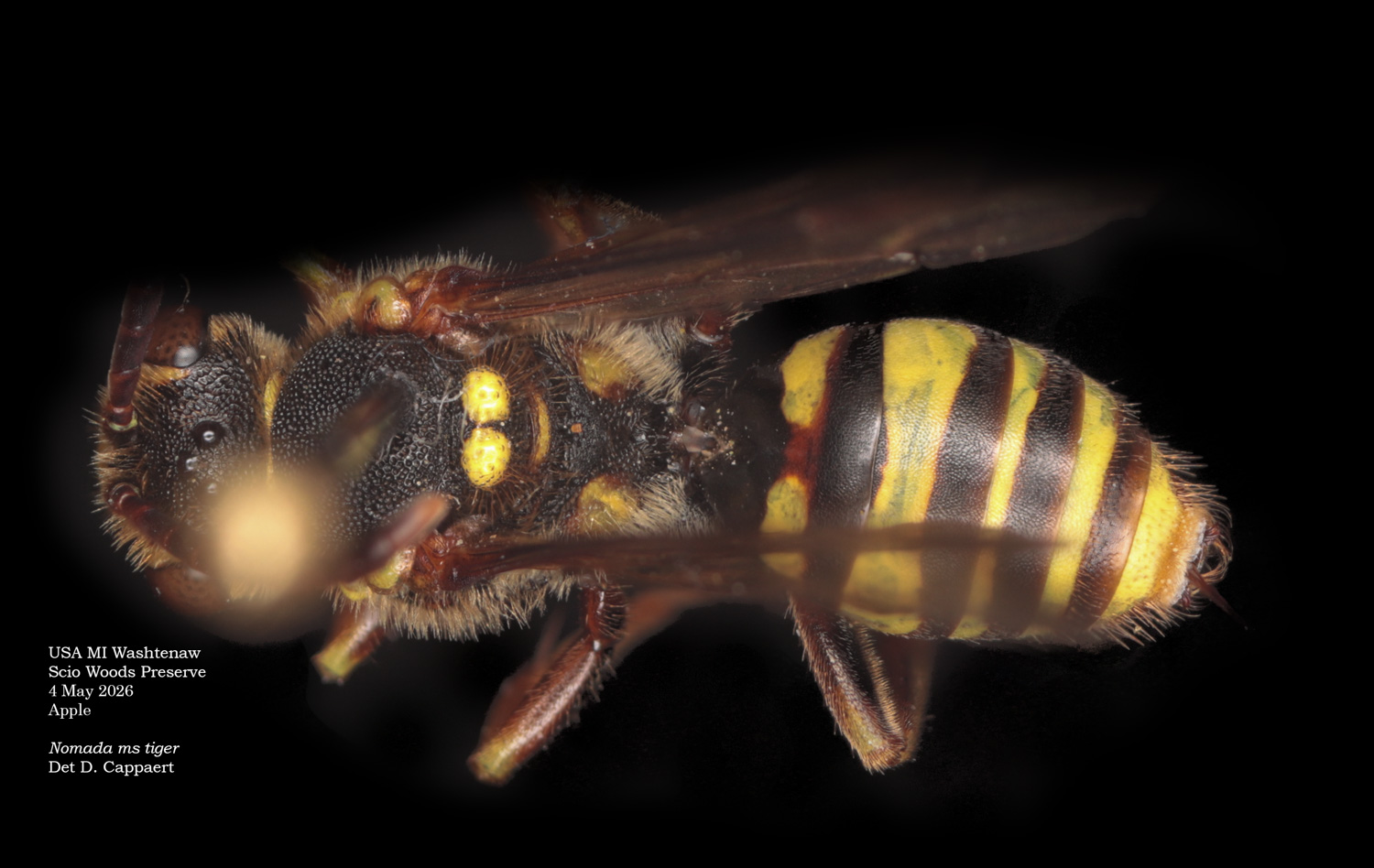
This and photos at right: A nomad bee, one of two species we've found in abundance. These "cuckoo bees" parasitize the nests of other bees, especially Andrena.
|
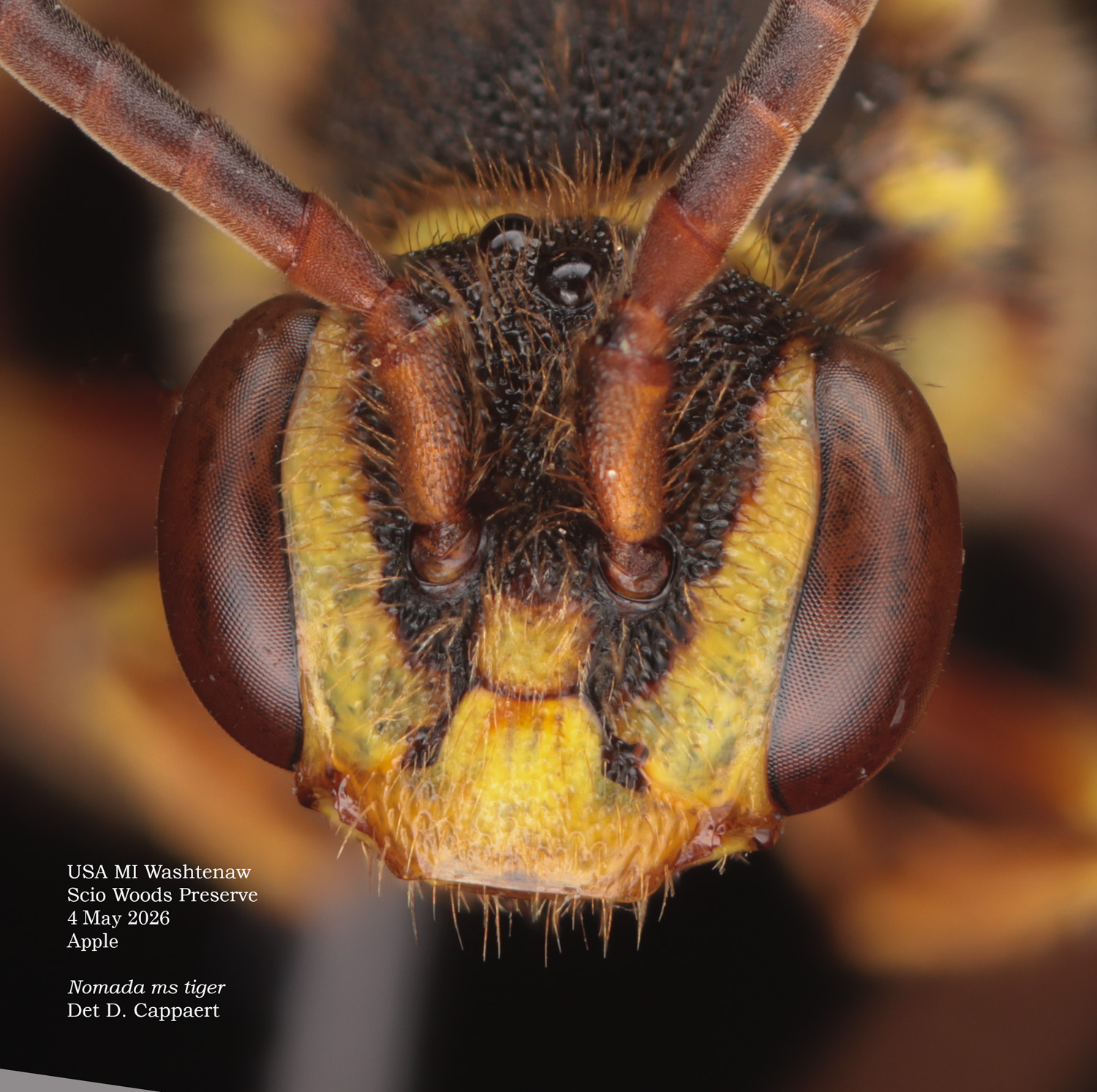
You would like to think that with detailed images there would be enough info for an ID. But these bees are poorly understood, and notoriously variable in coloration, so difficult to ID.
|
|
As of May 1We summarized findings to date in a zoom presentation - Link here. The 50 minute talk is about what we collected, and what our specimens tell us about the flowers and sites. This is followed by a discussion about the best ways to engage volunteers and the larger community. Our collection includes:
|
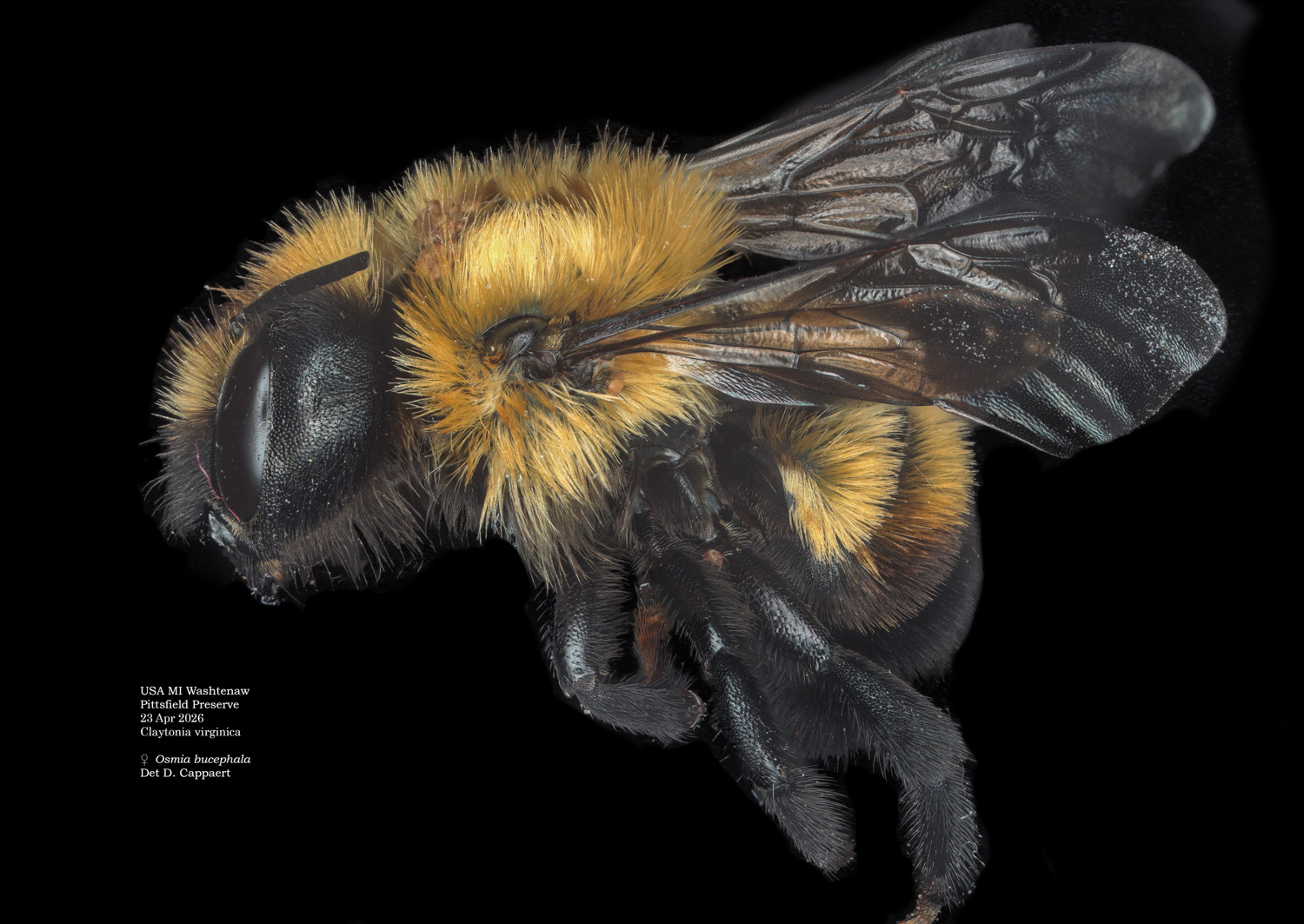
Photos here and to right: The bufflehead mason bee. A perfect mimic of a bumblee, which was the ID I initially gave it.
|
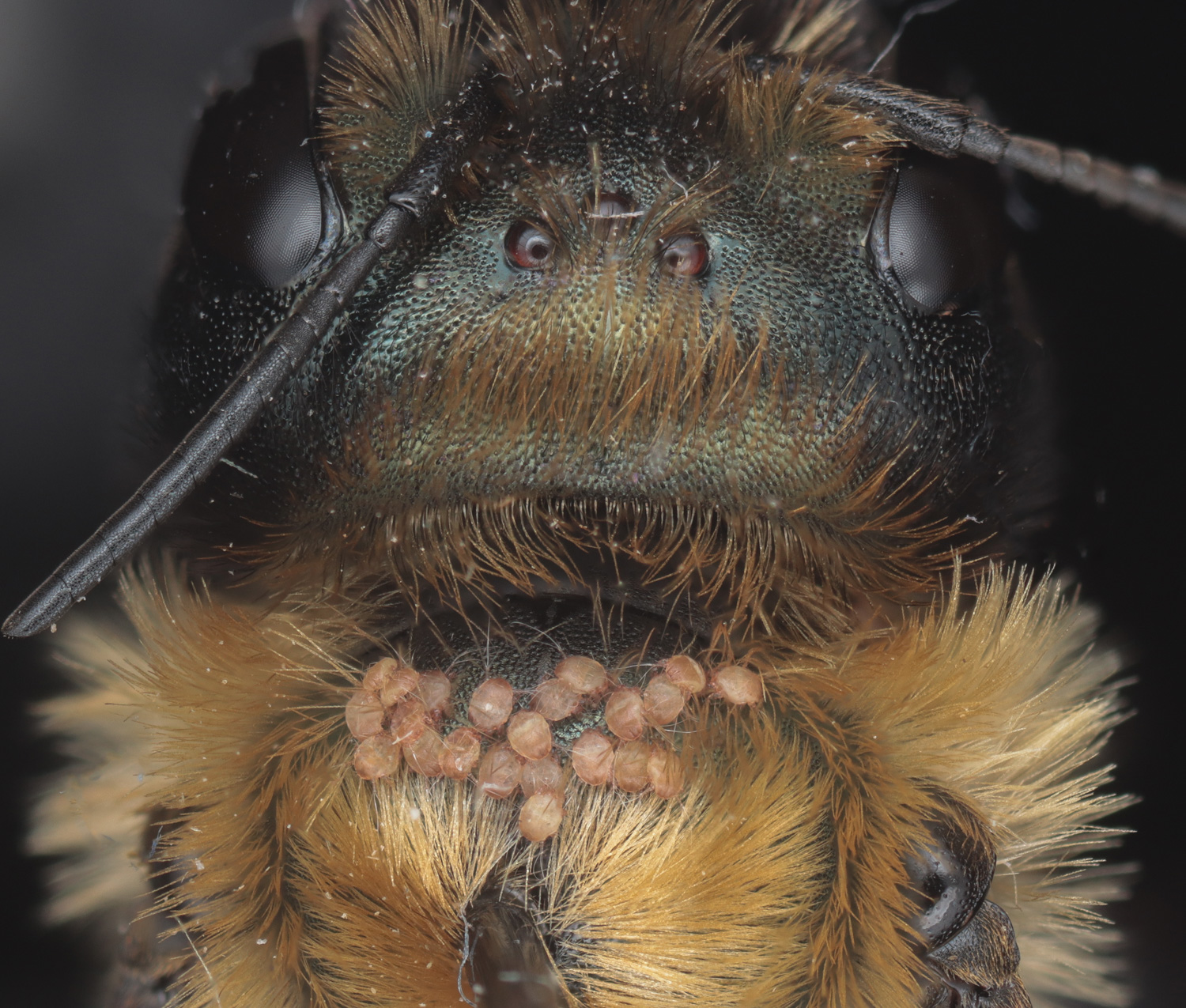
Looking closer, the greenish coloration is a typical mason bee trait. Then there are those pink things ...
|
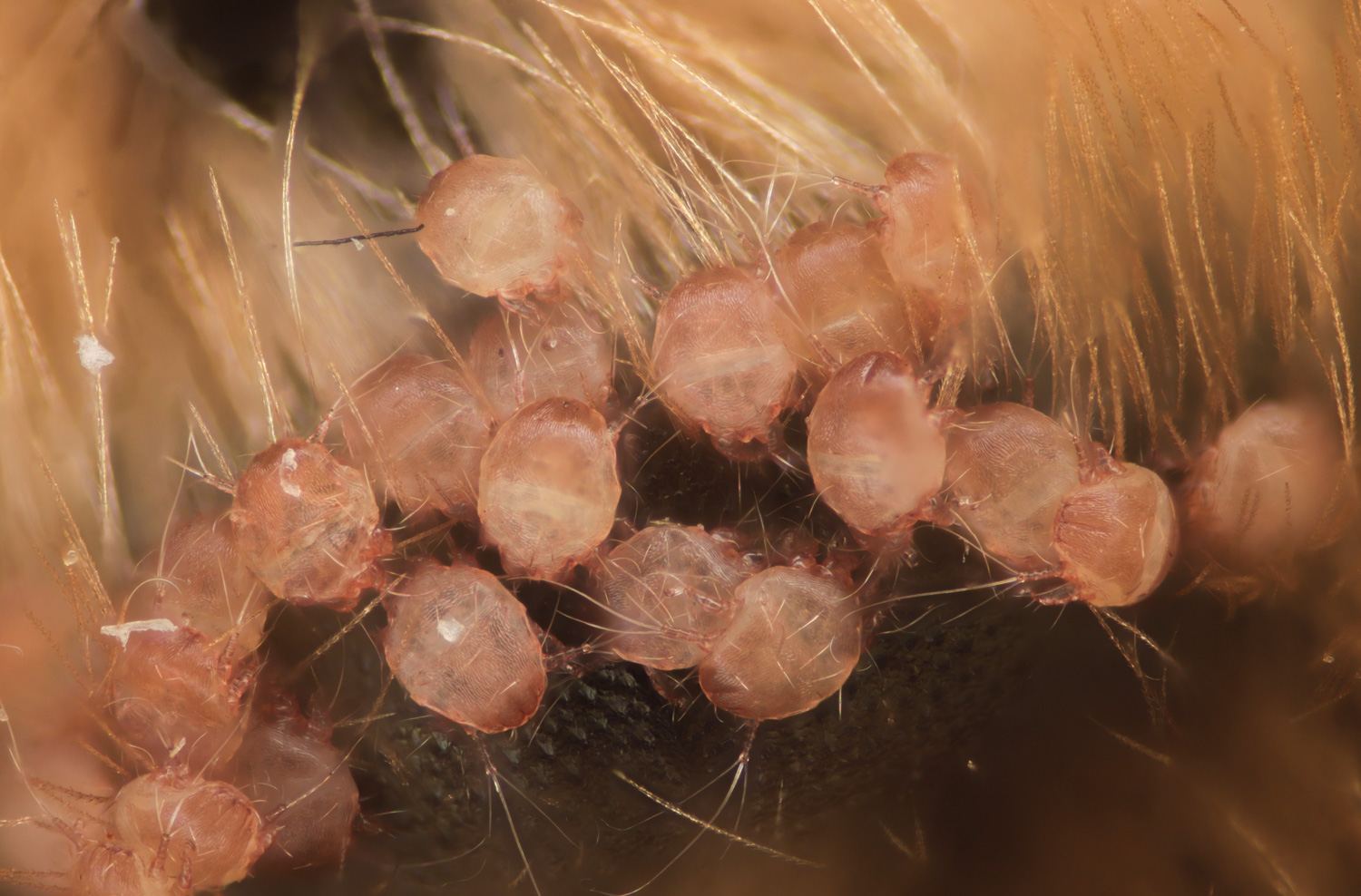
... which are mites. This is not uncommon; some bee species have bodies designed to carry mites. But I had never seen this on a mason bee.
|
This gallery: Draper-Houston Preserve Apr 19
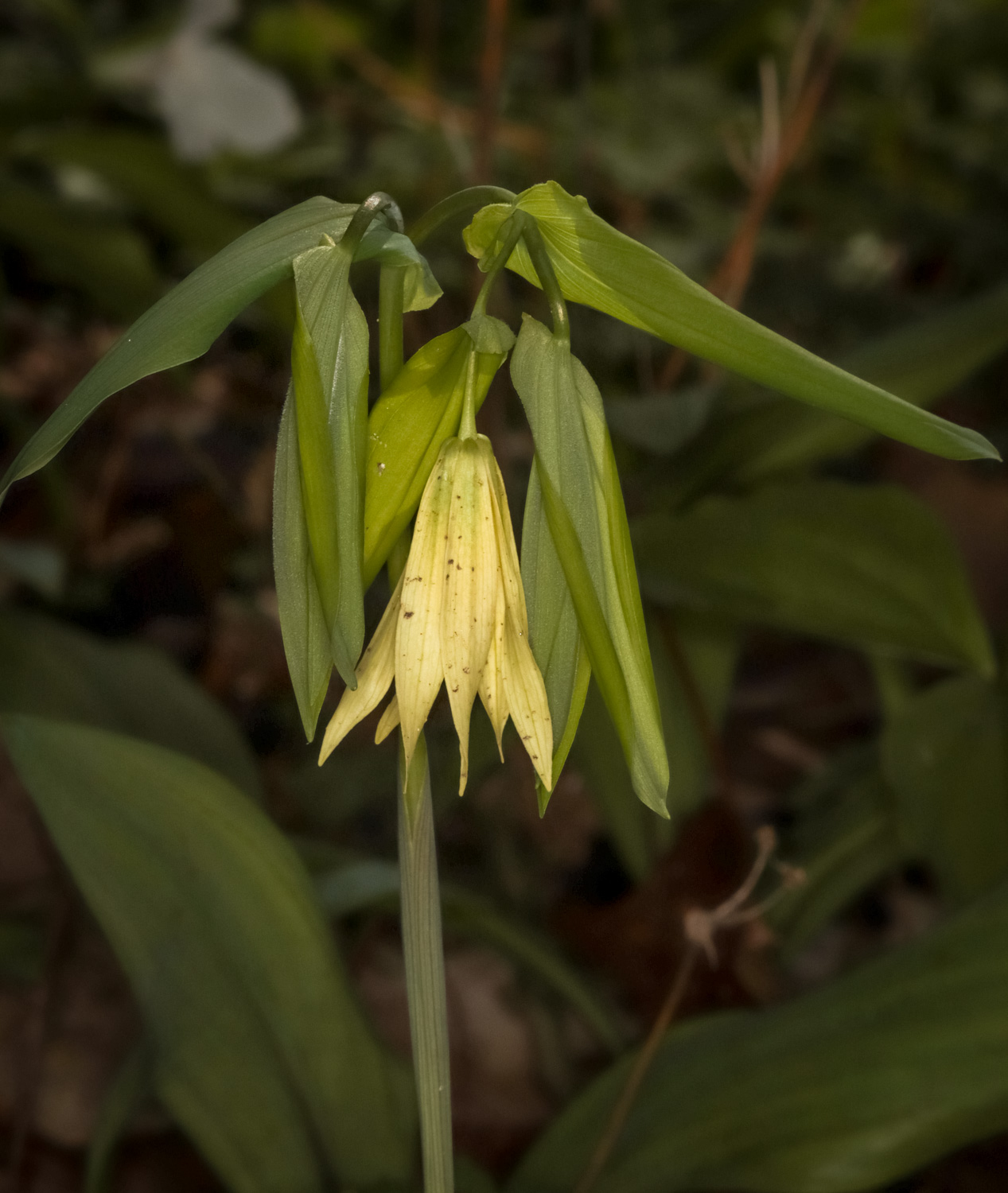
Bellwort
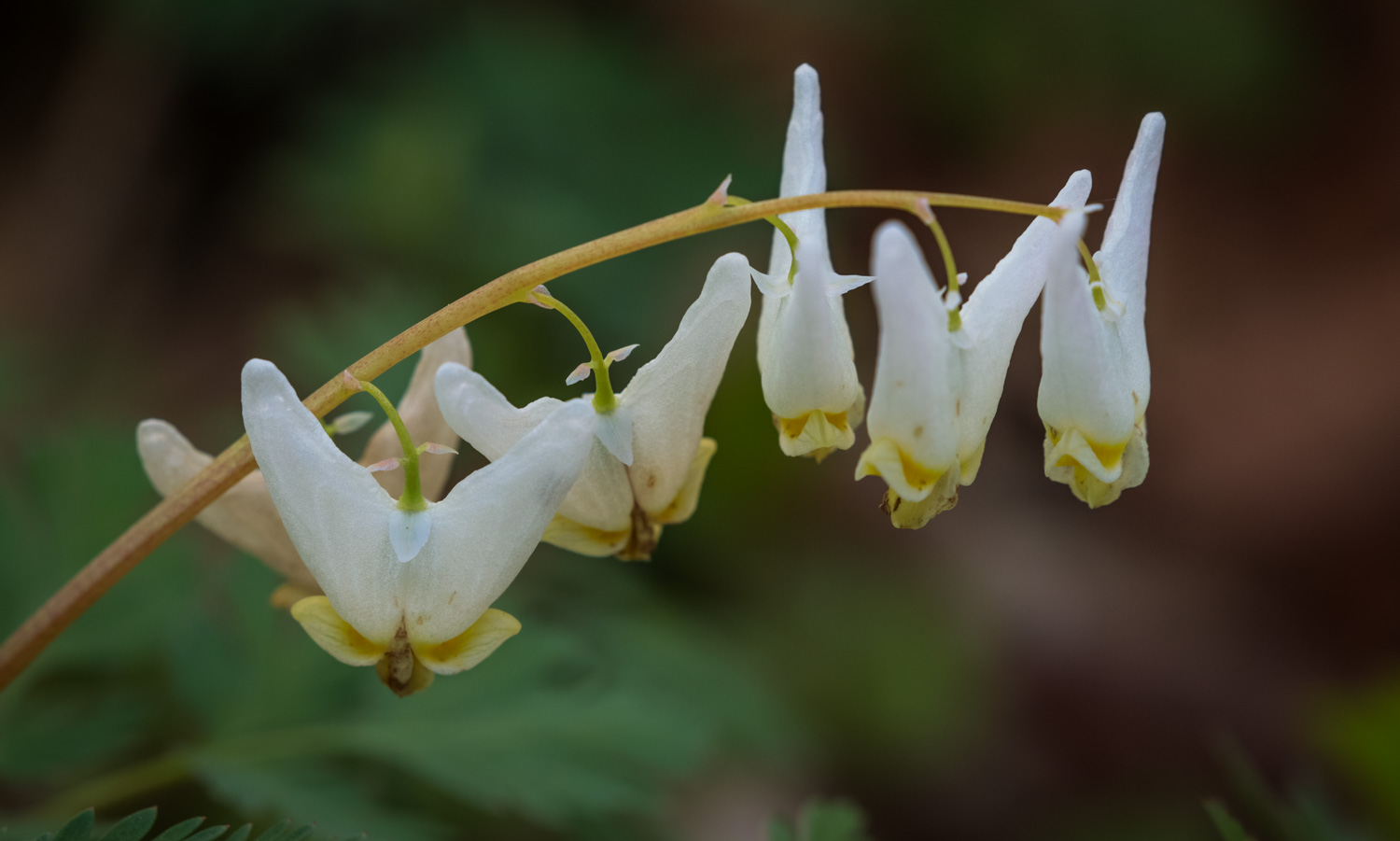
Dutchman's breeches
|
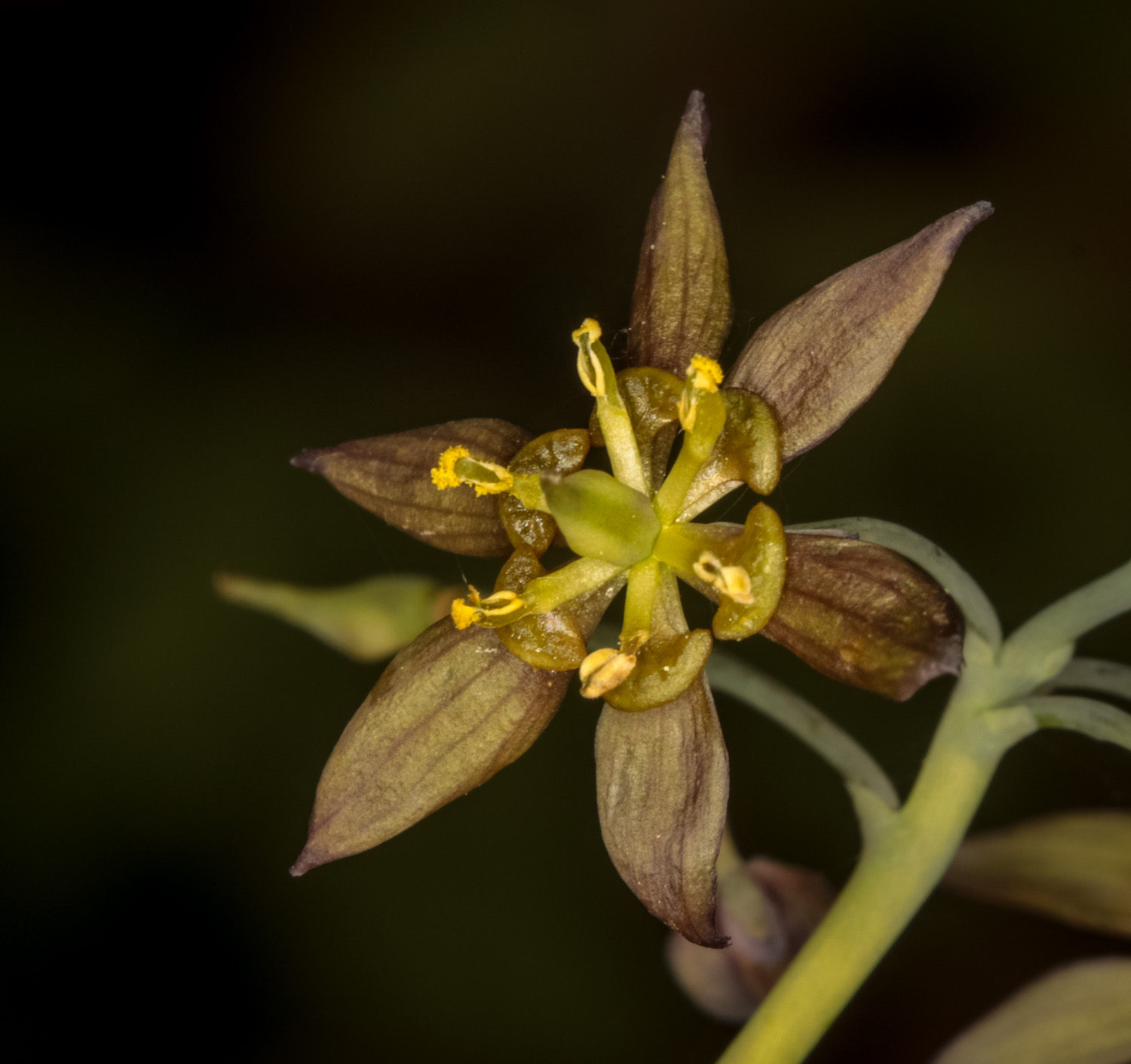
Blue cohosh
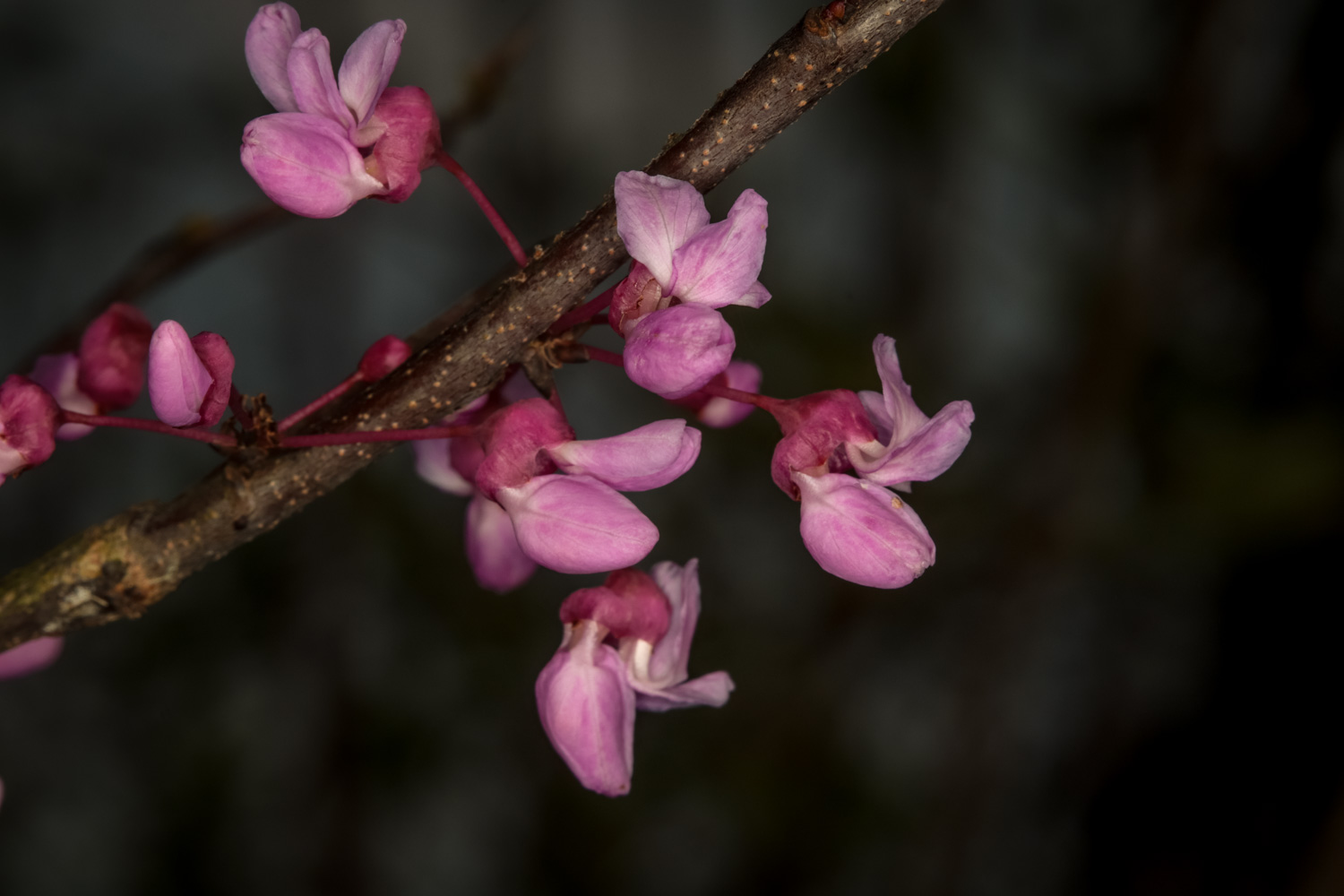
Redbud
|
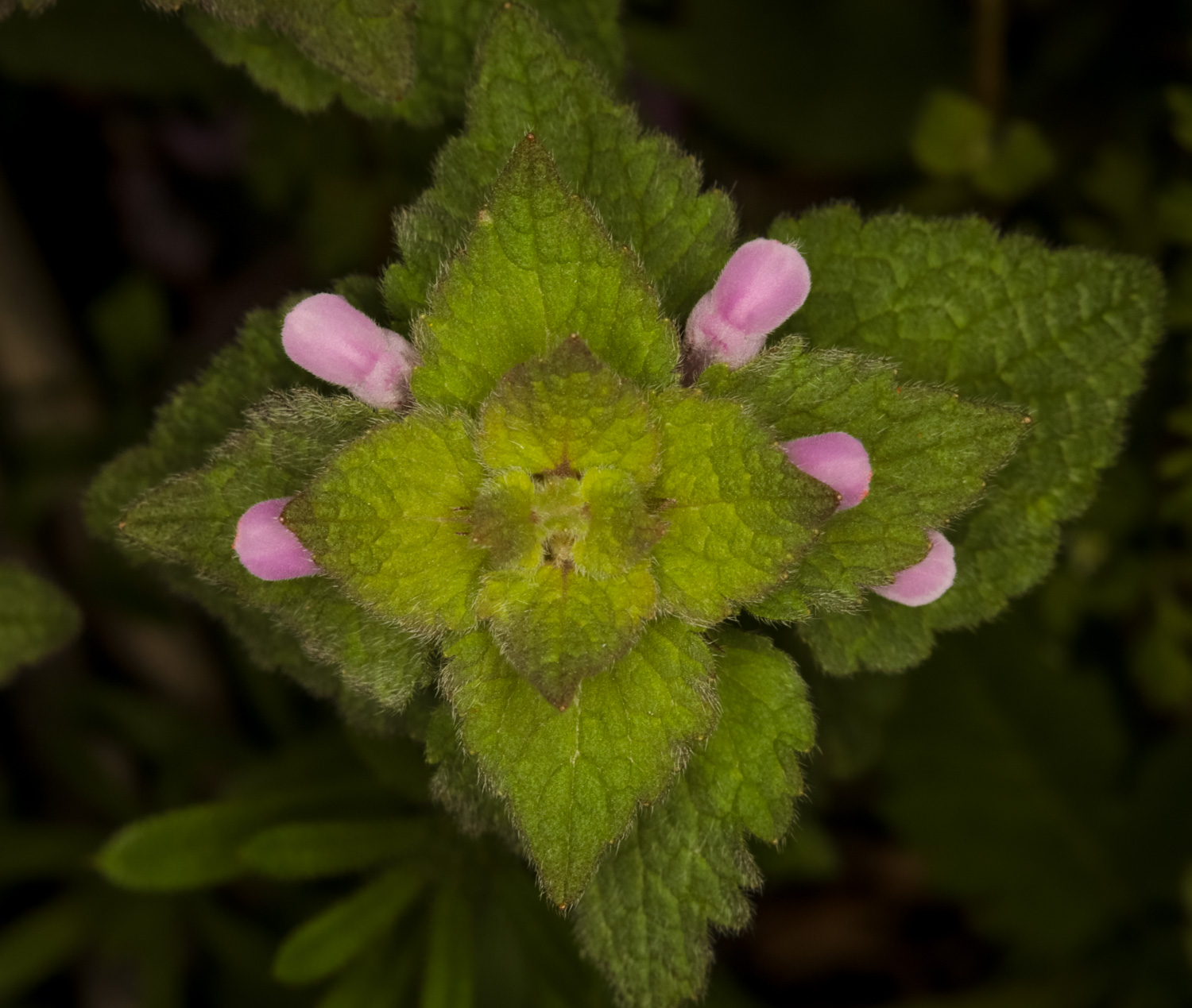
Deadnettle
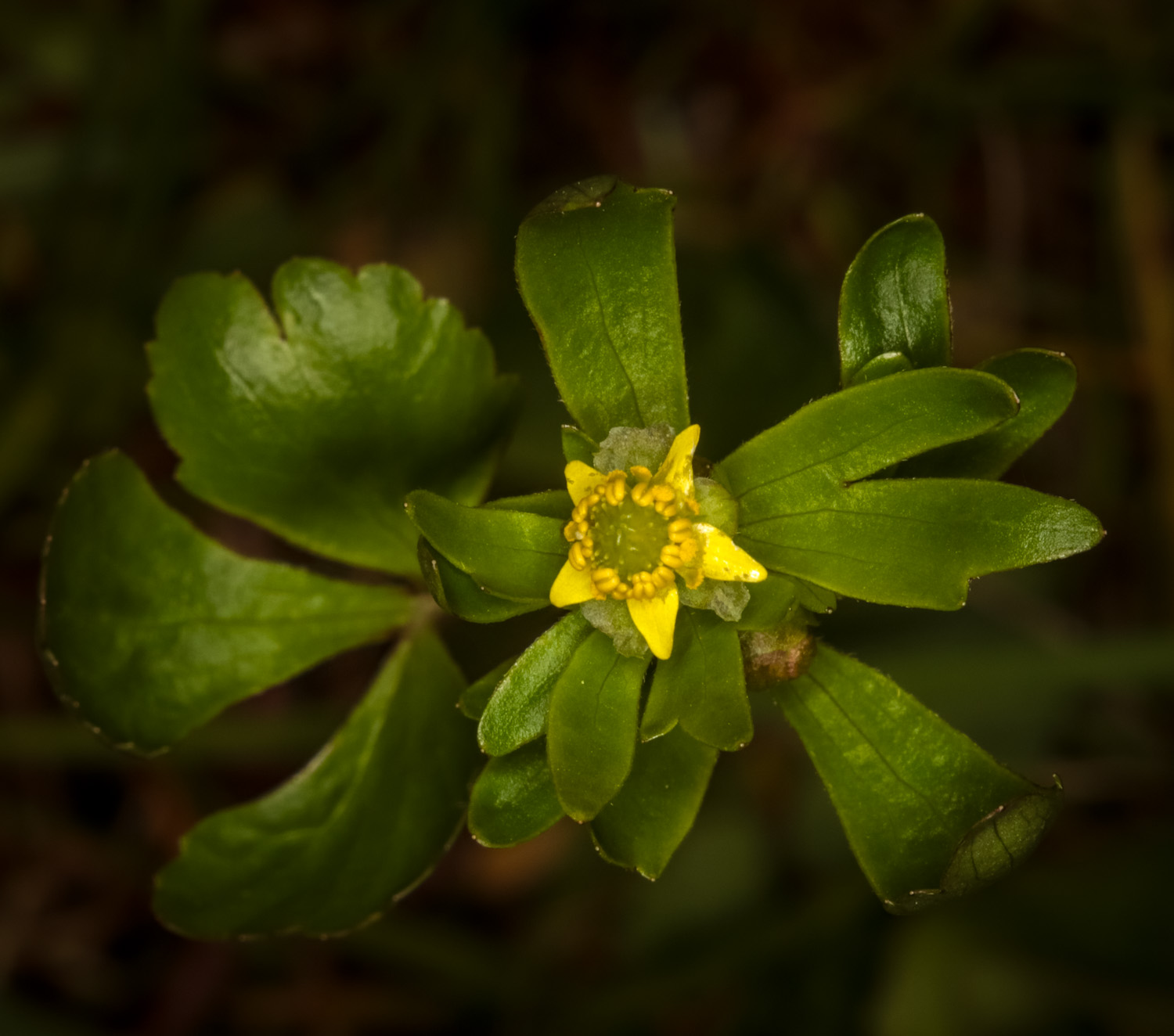
Buttercup
|
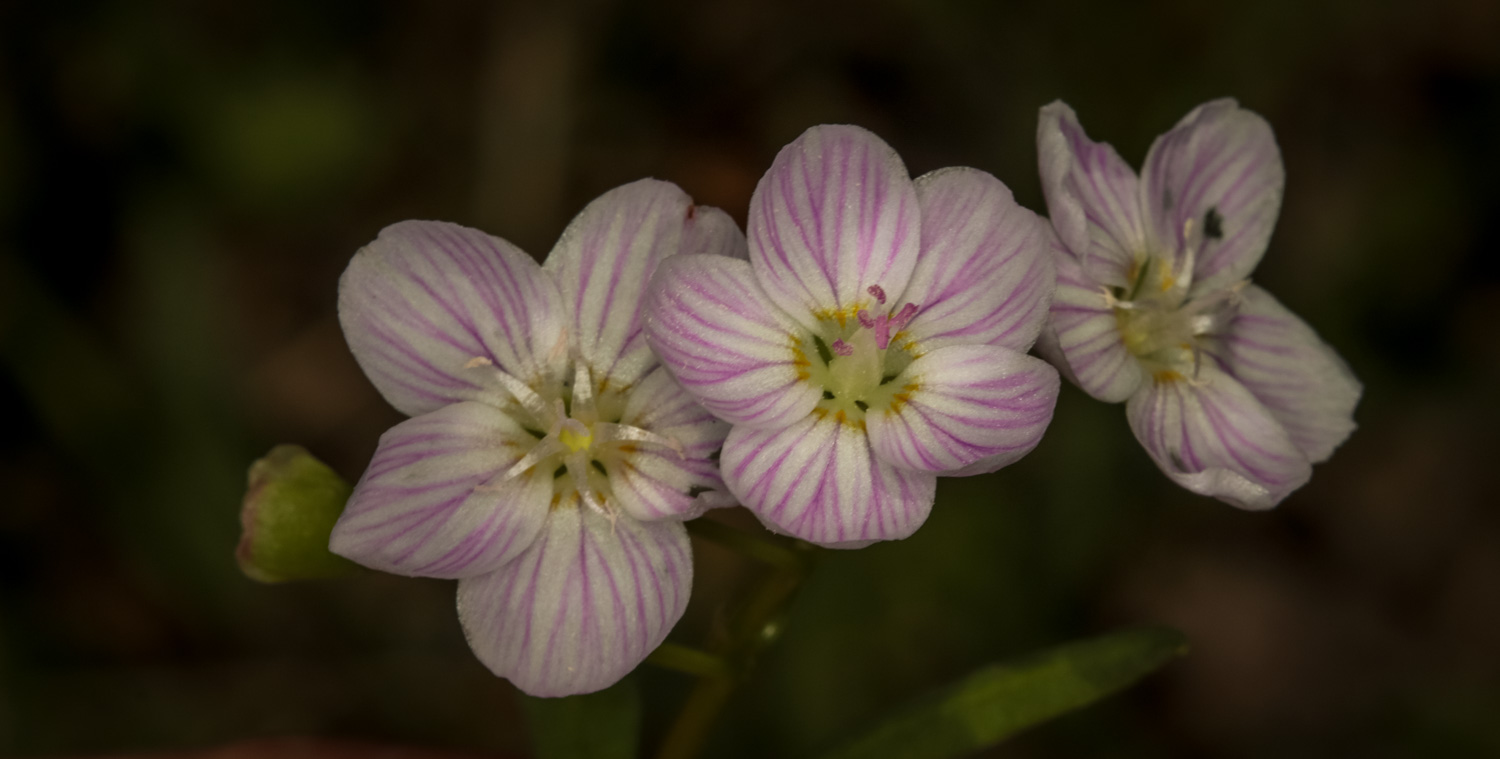
Spring beauty
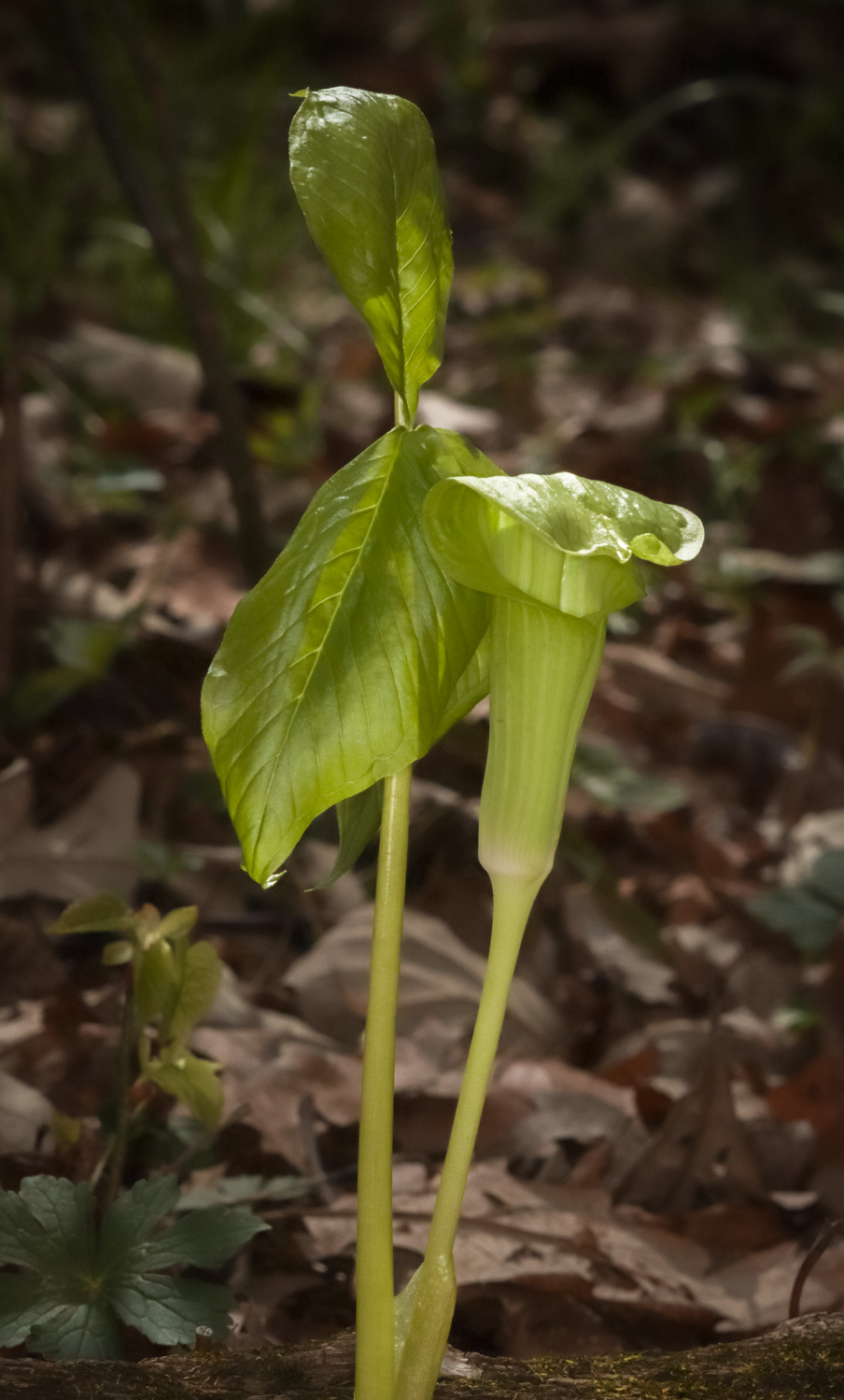
Jack-in-the-pulpit
|
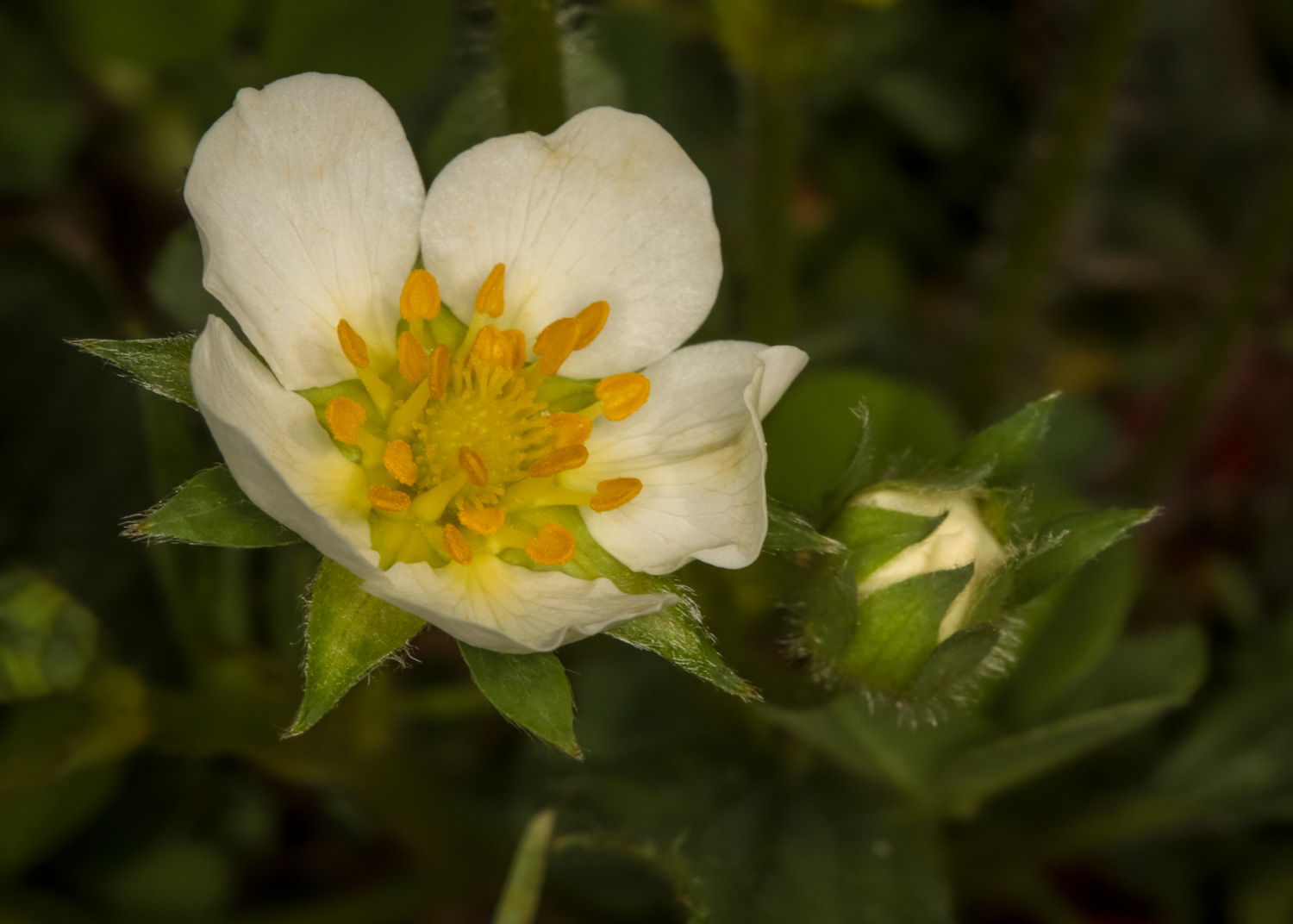
Strawberry
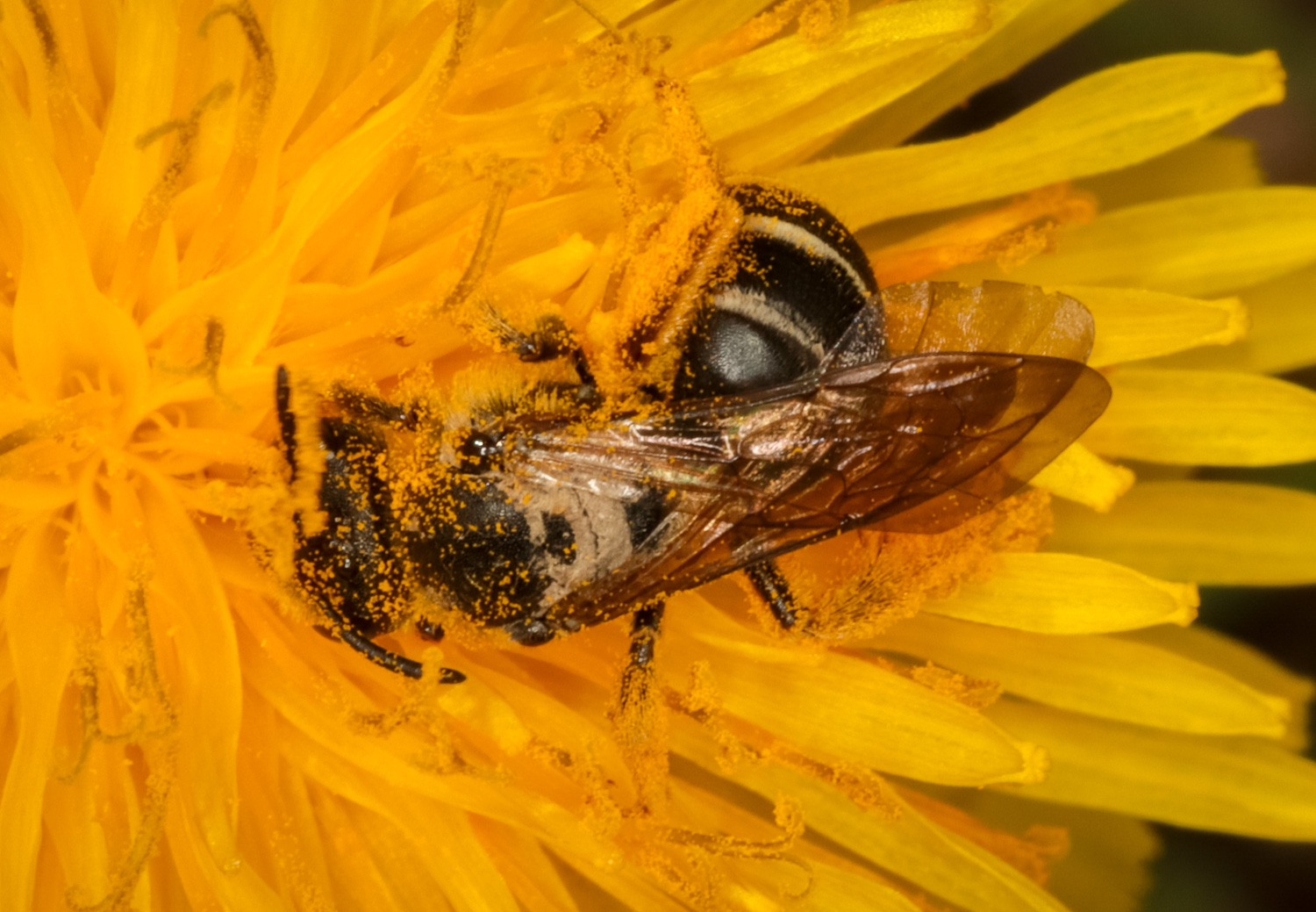
Dandelion (mining bee)
|
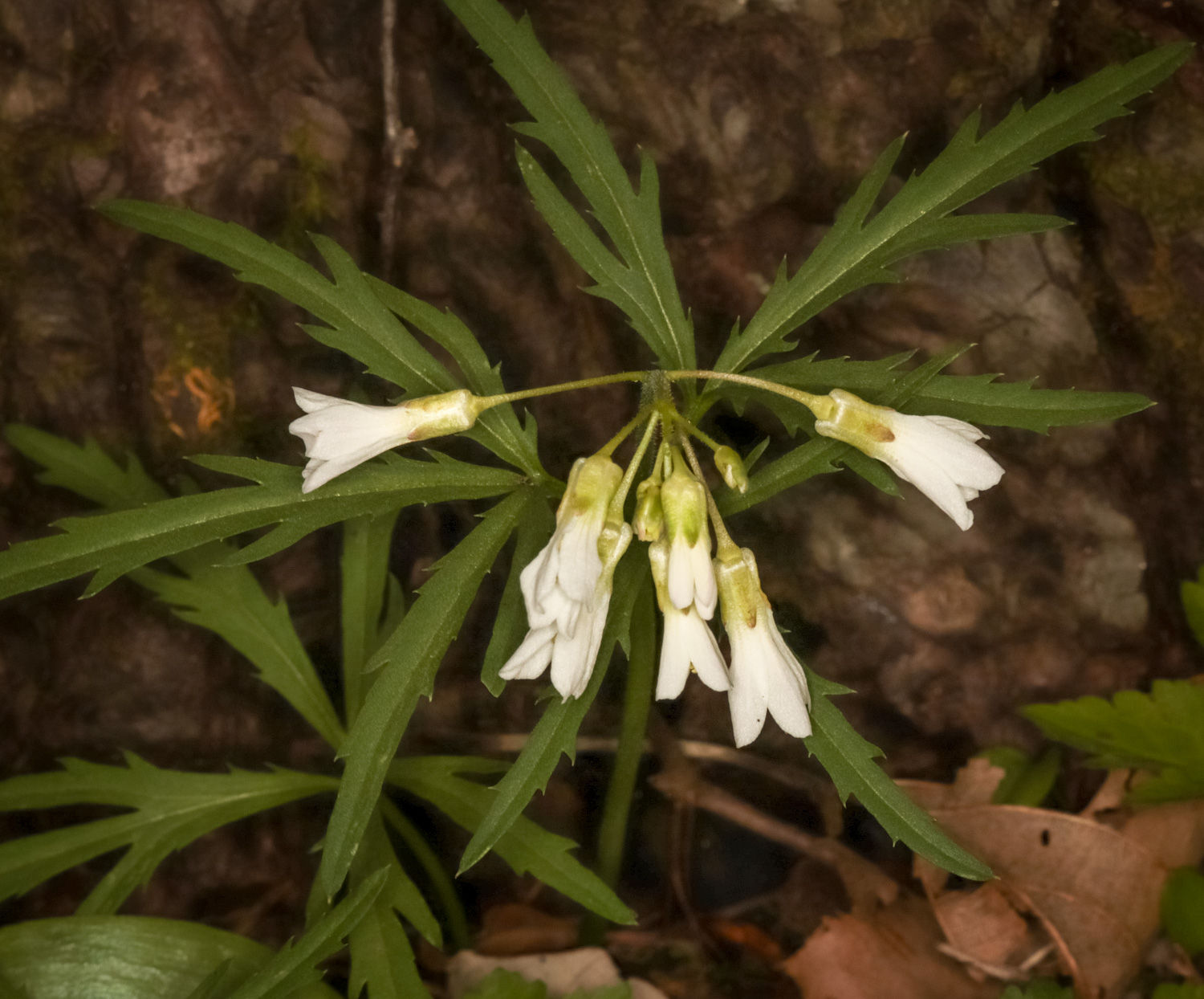
Toothwort
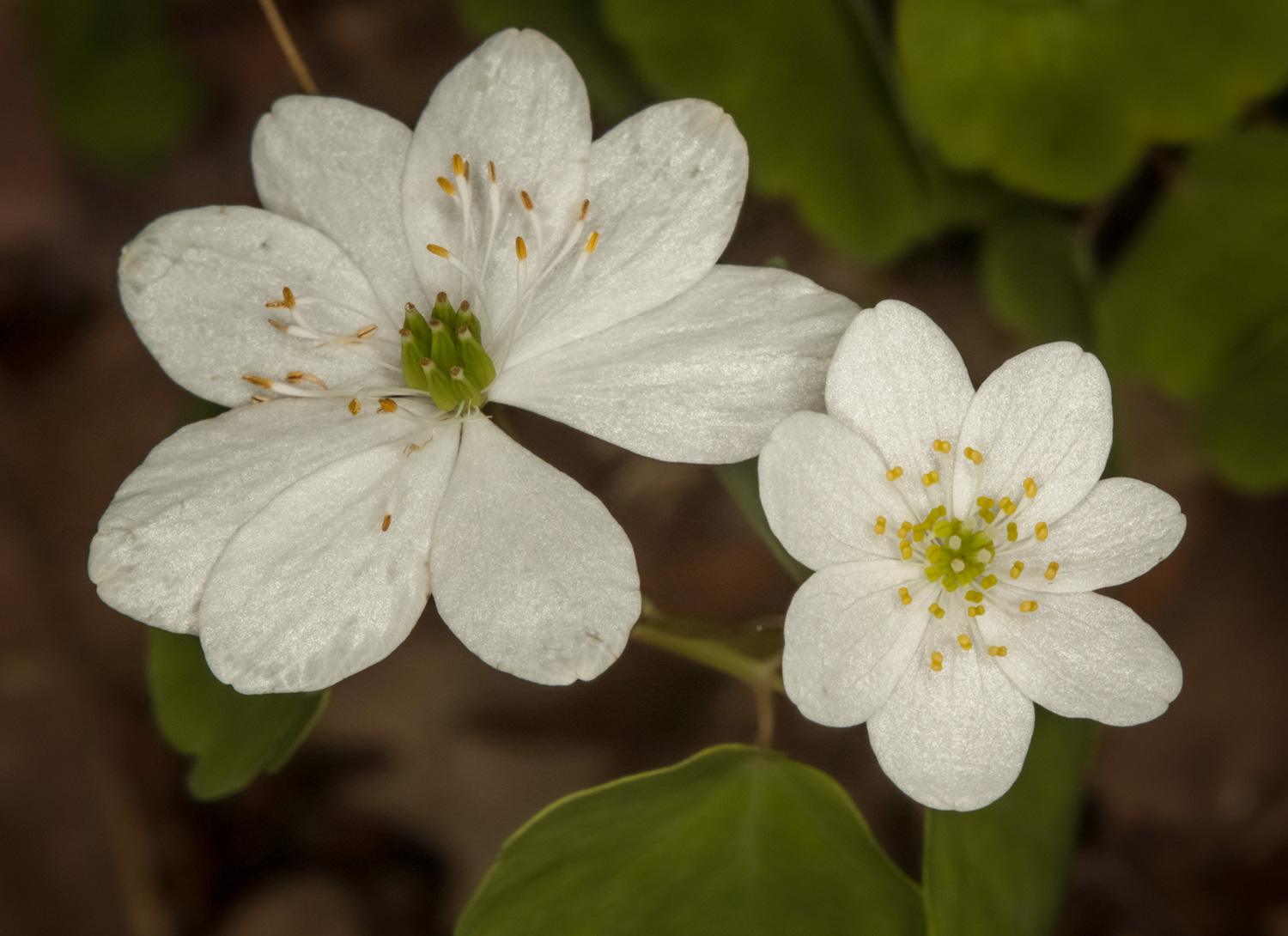
Rue anemone
|
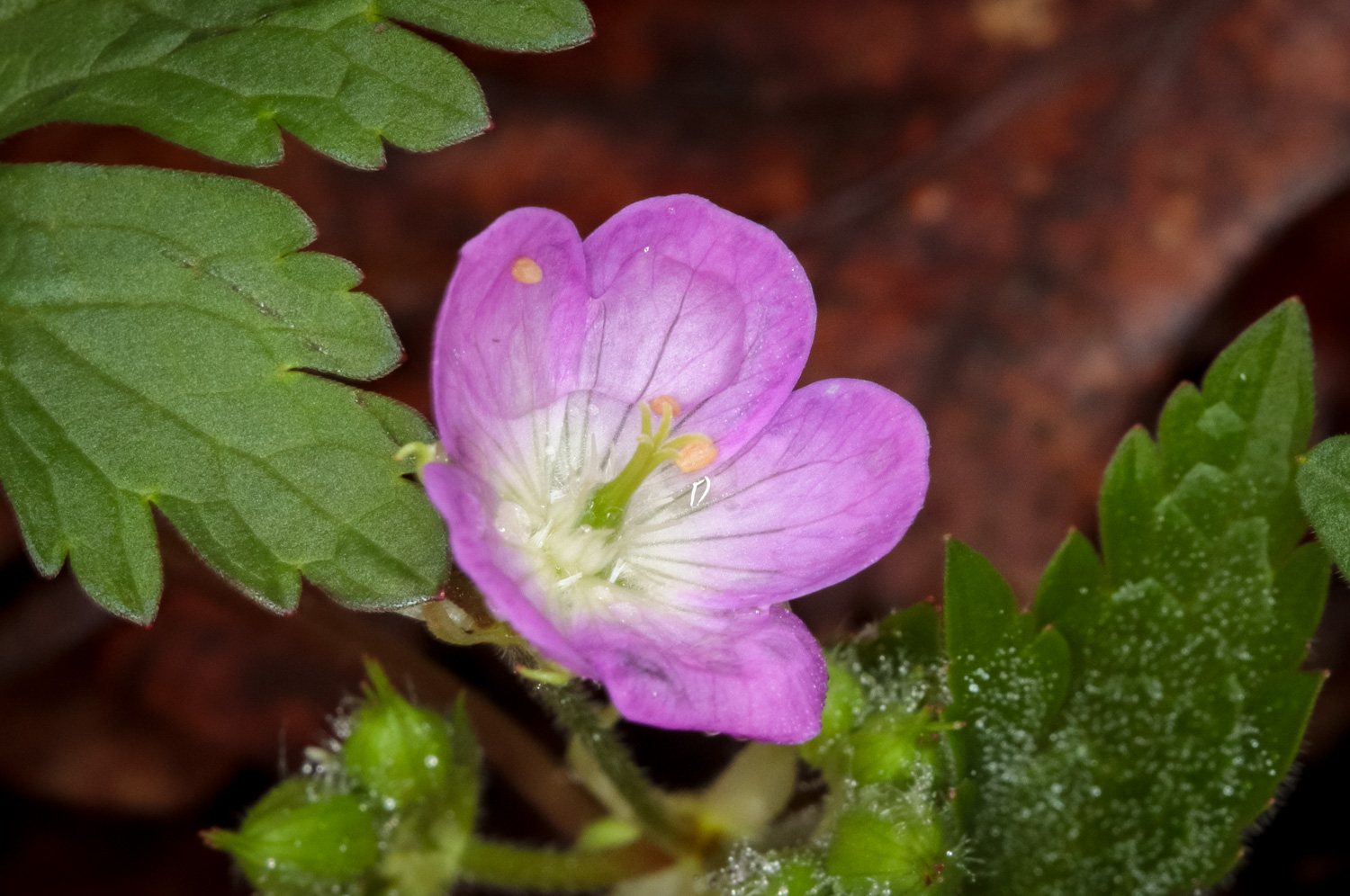
Early geranium at Scio Woods, Apr 17
|
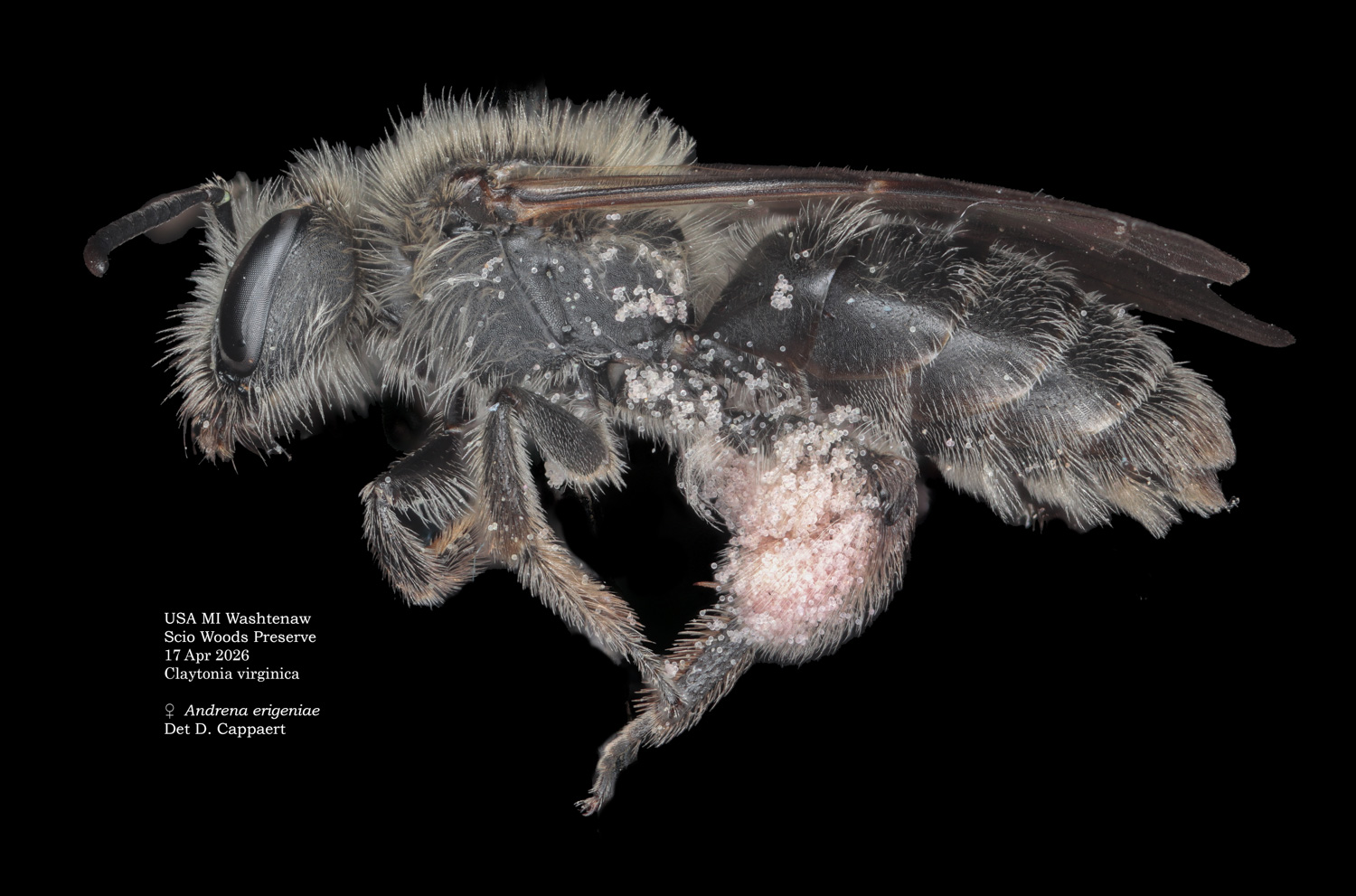
Spring beauty mining bee - pink pollen
|
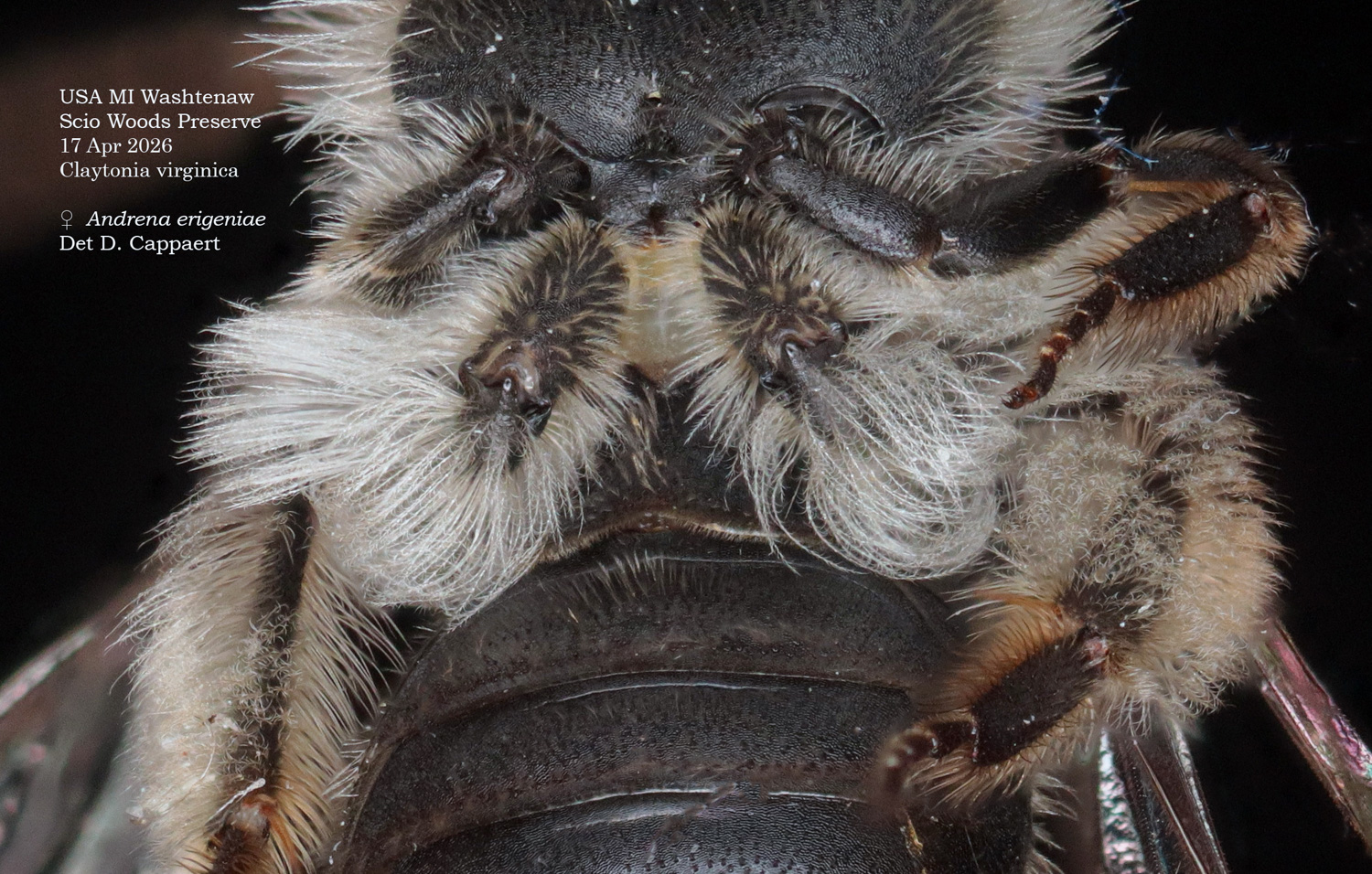
Pollen collecting hairs on the underside of the bee, with pollen removed.
|
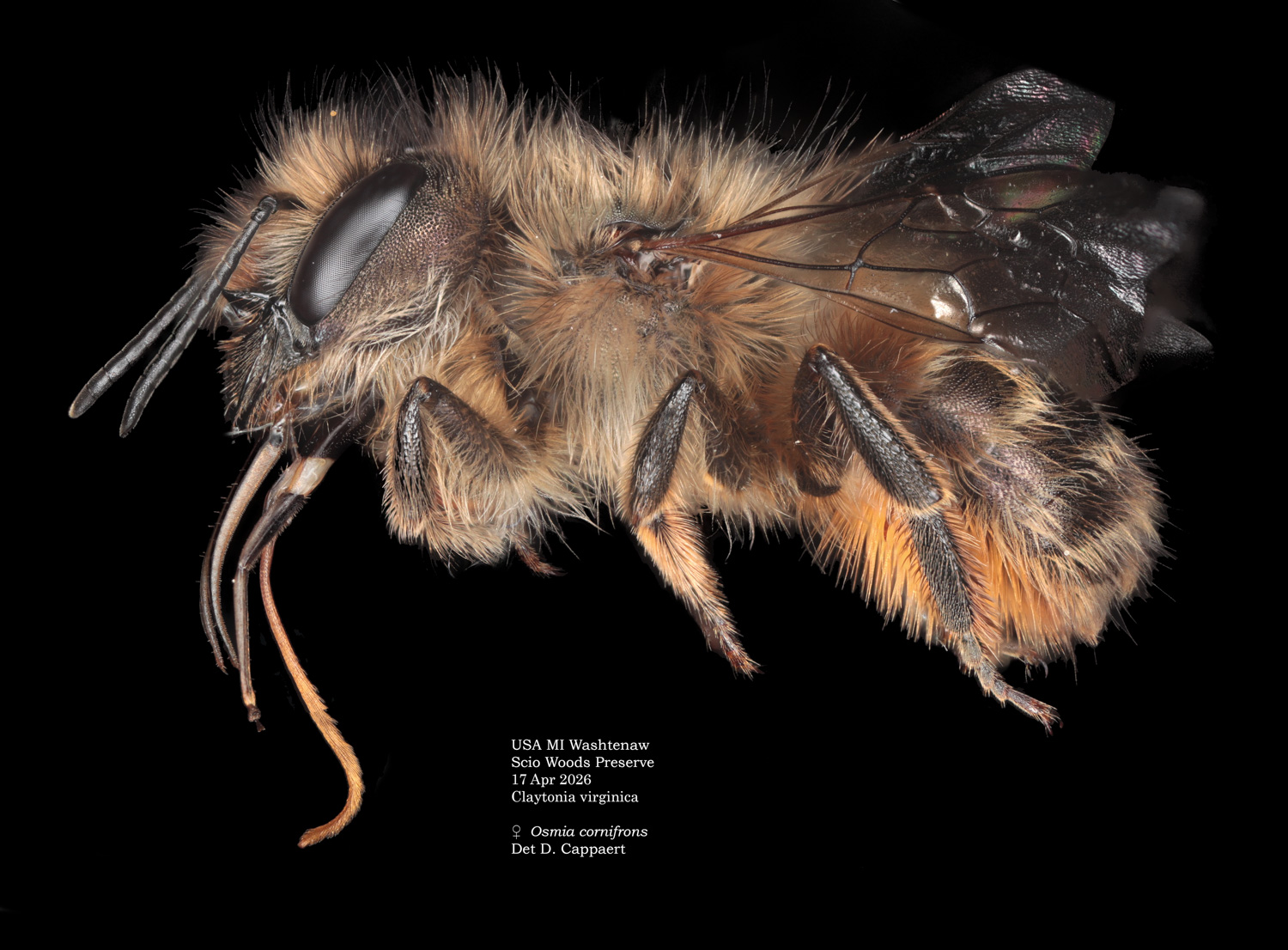
Horn-faced mason bee. The orange hairs under the abdomen are where this bee carries its pollen.
|
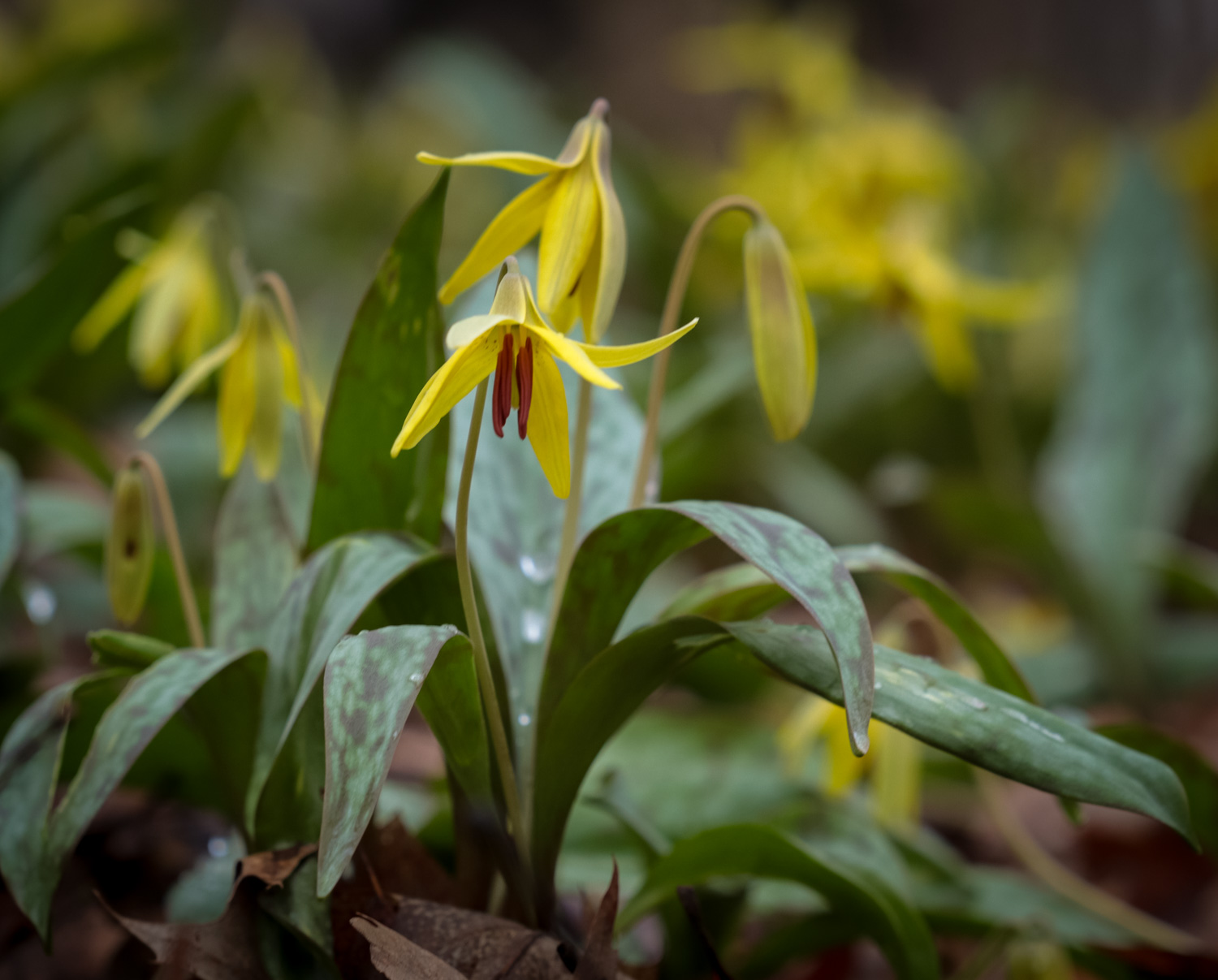
Apr 16: Eberwhite Woods is literally carpeted in blooming trout lily. |
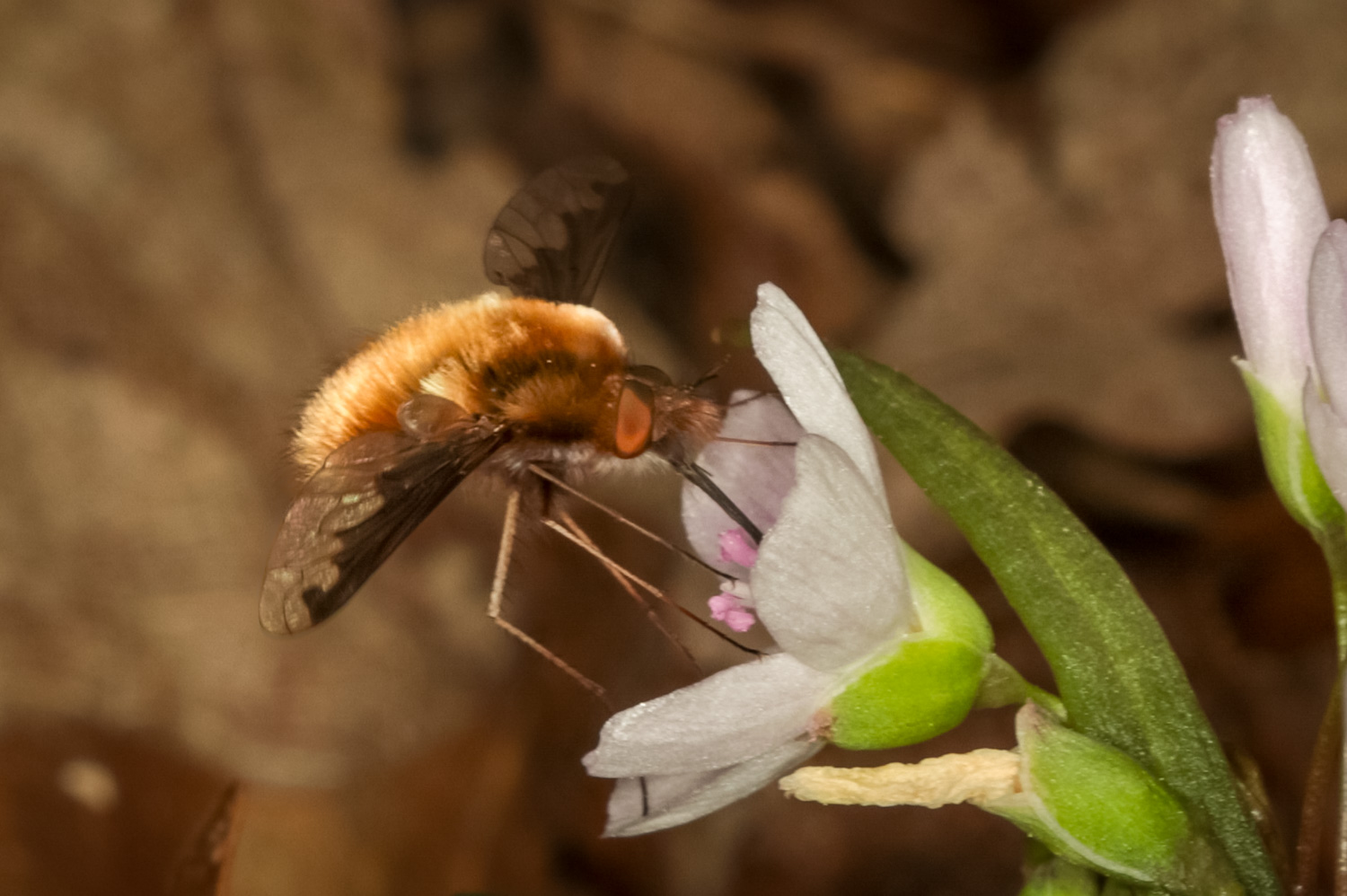
Don't need to collect beefly (above), or bumblebee, honeybee, or spring azure (pix at right).
|
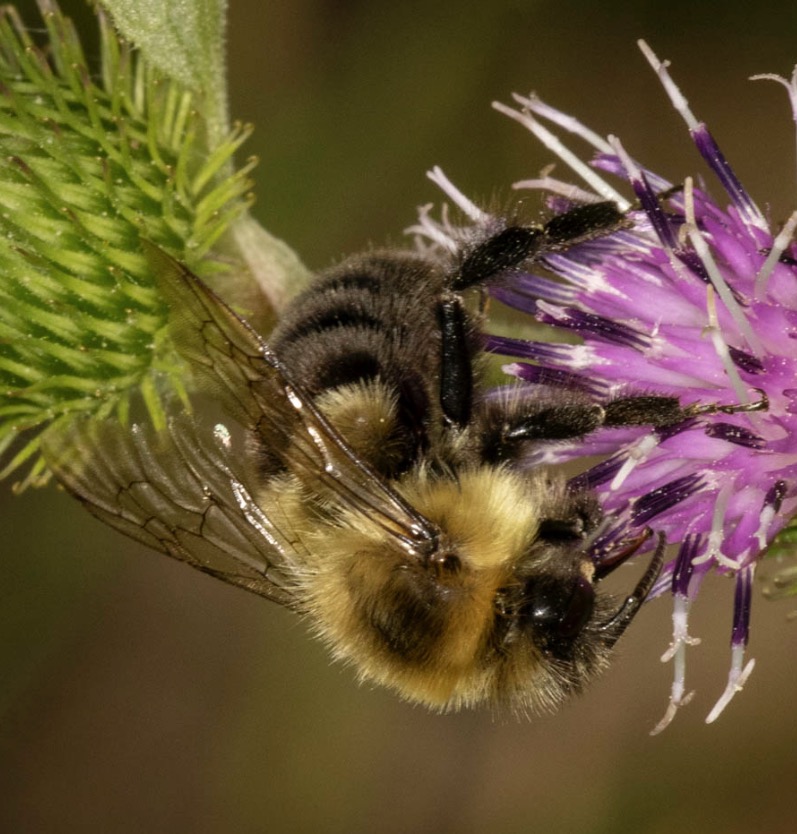
We don't need to collect bumblbees - we'll assume these are Bombus impatiens.
|
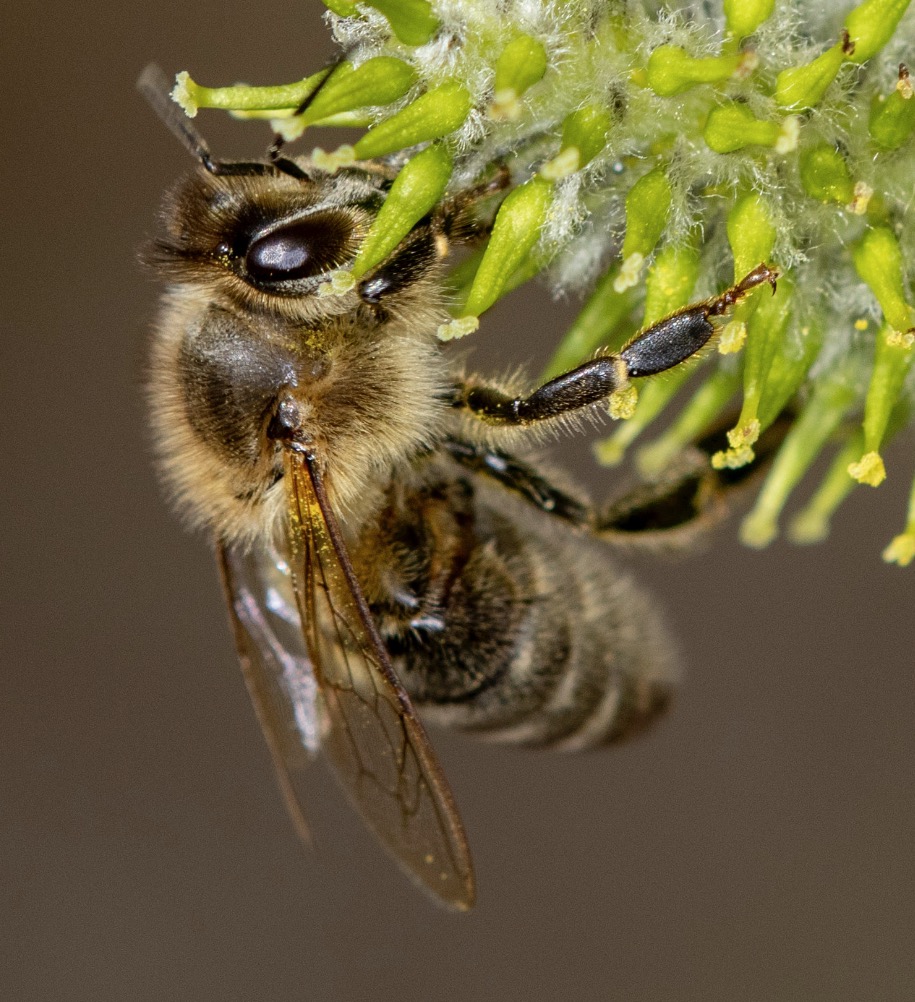
Honeybees - easily ID'd
|
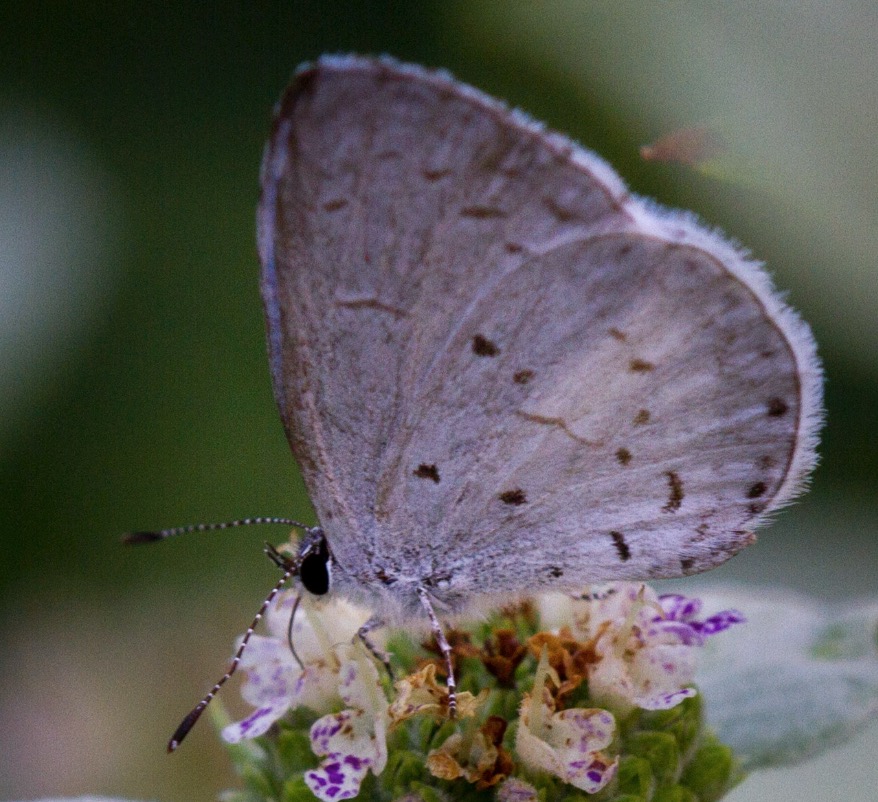
We'll assume tiny blue butterflies are spring azures.
|
Marshall Park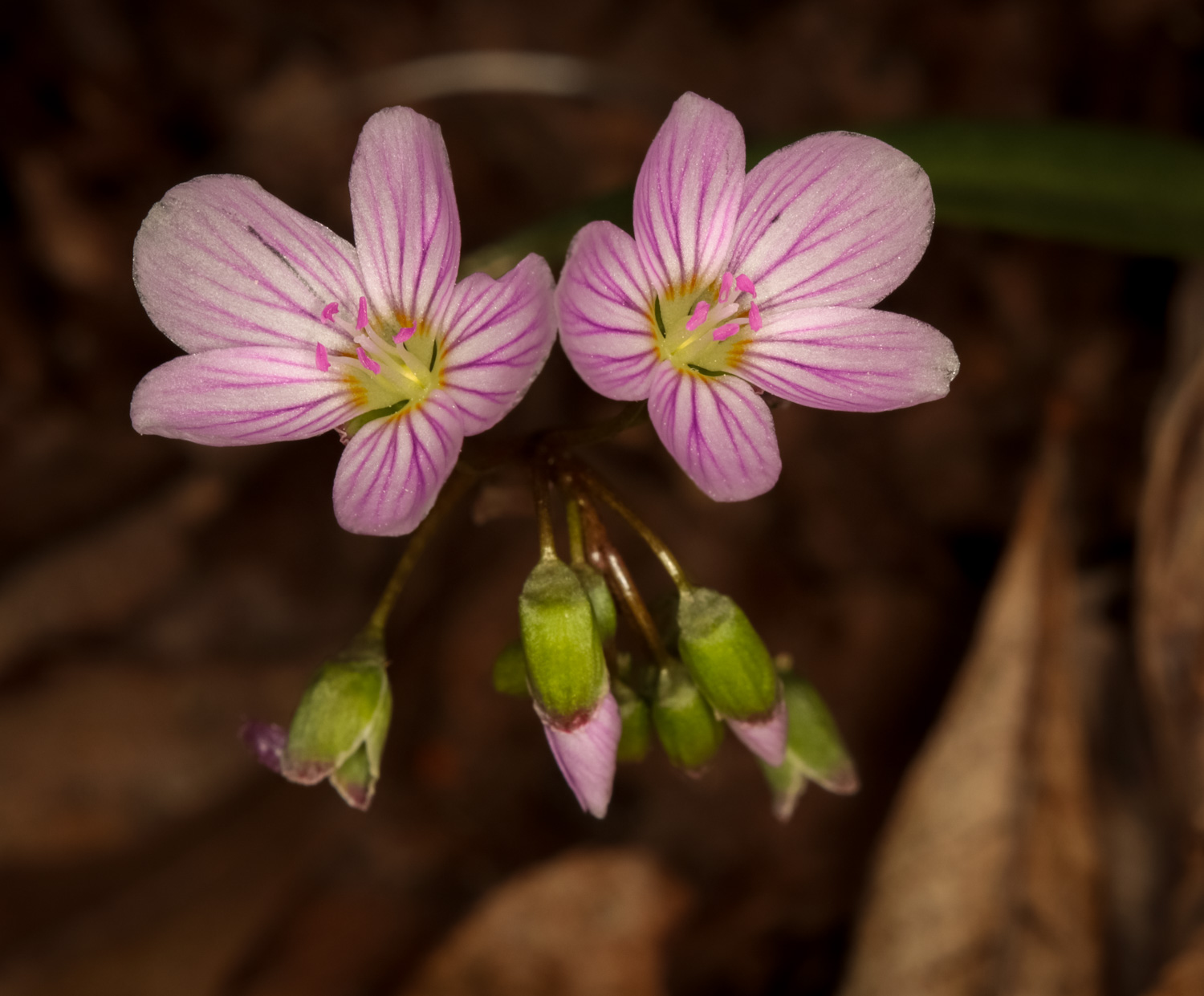
On April 13, spring beauty is in bloom, in considerable numbers. There are bloodroot flowers here and there. |
The most common spring beauty visitor I saw was the beefly, Bombyliius major. These are parasites of bee nests.
|
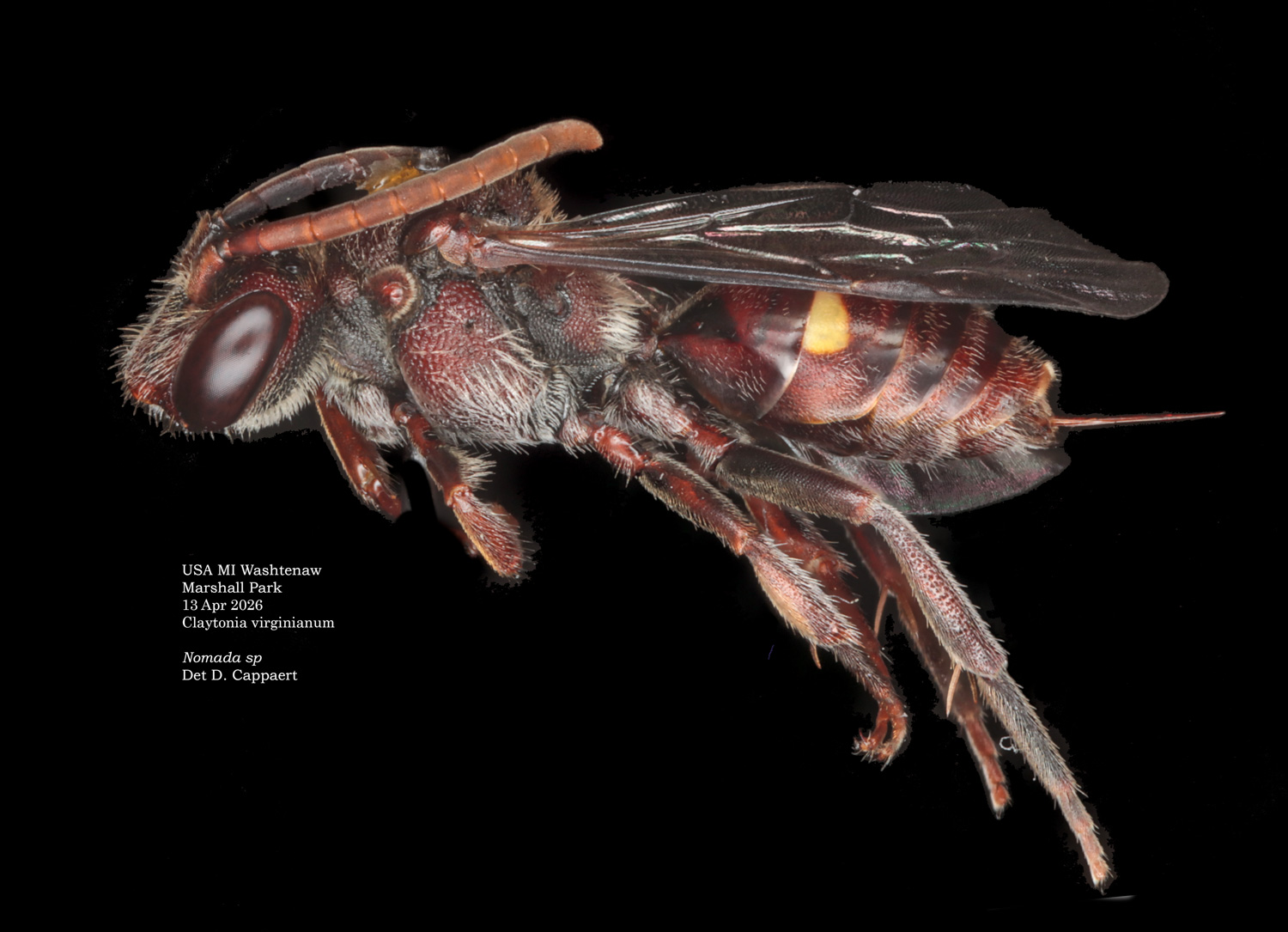
A Nomad bee female. These are cuckoo bees, that lay their eggs in the nests of mining bees, where they feed on the pollen stores.
|

Male nomad bee. There are many species in the genus Nomada, and very few people that can reliably ID them to species. I am not among them.
|
Pioneer Woods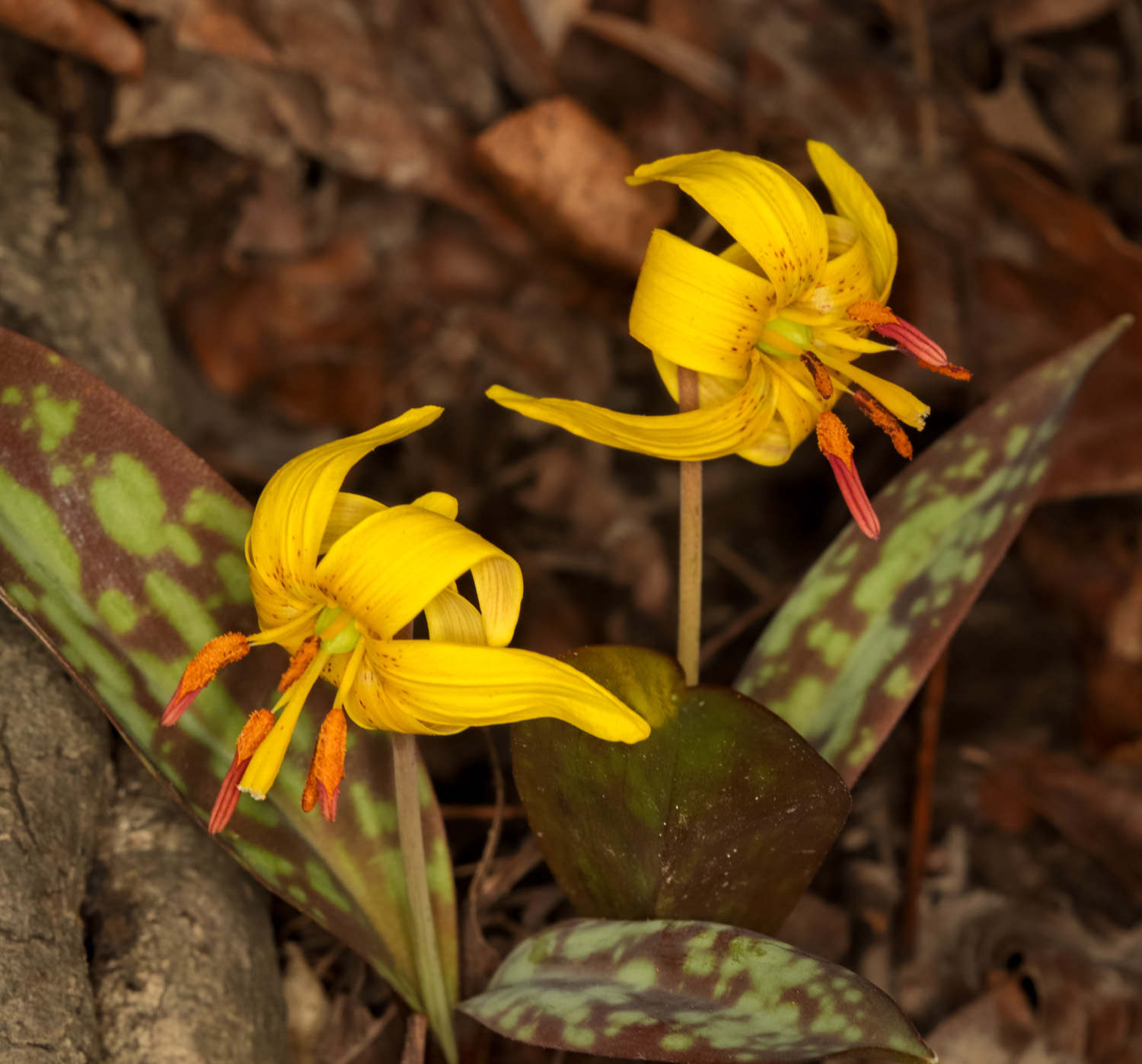
Apr 12 scouting report from Pioneer Woods - early flowers, and trout lily visitors. |
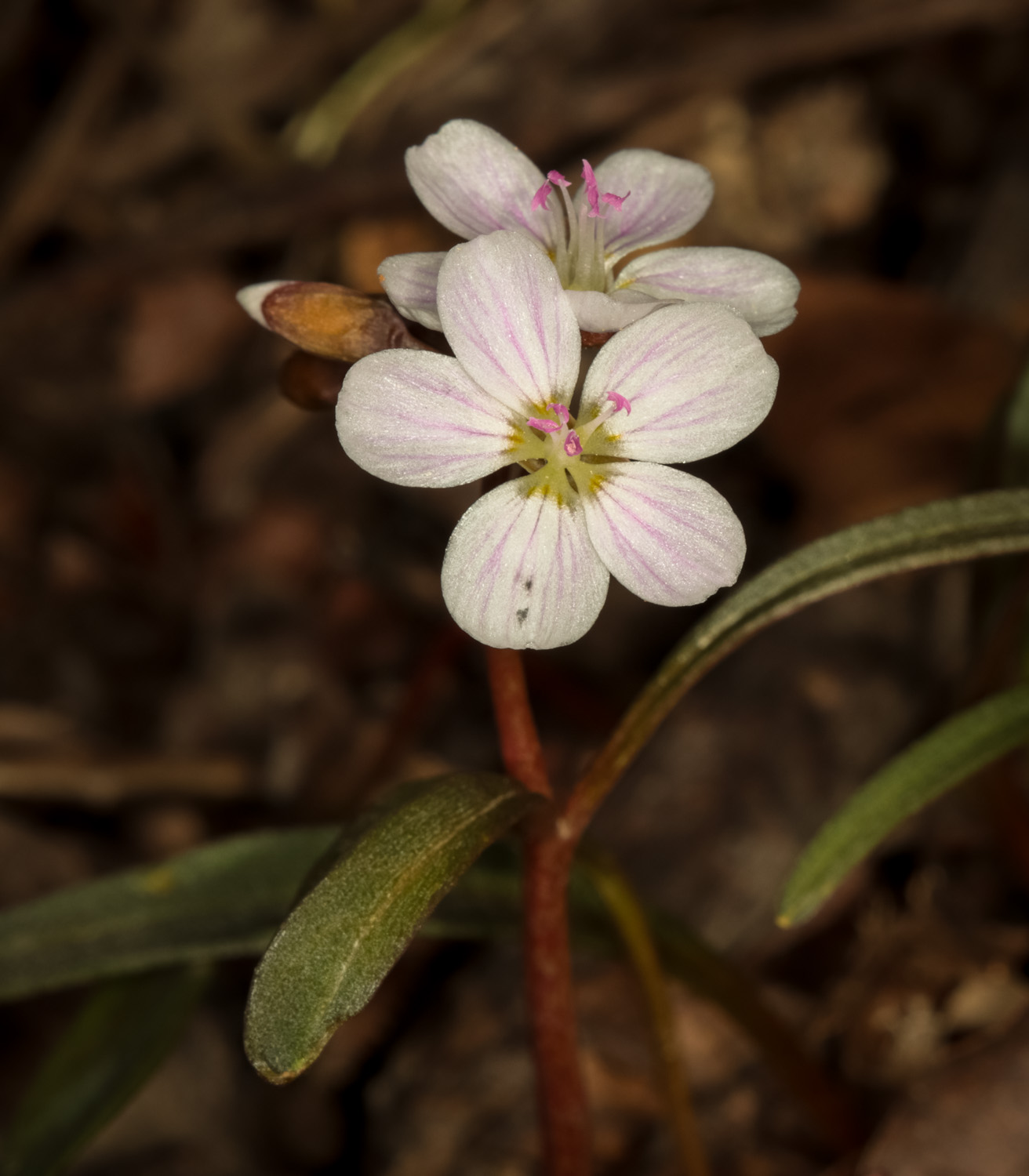
The only spring beauty seen on Apr 12.
|
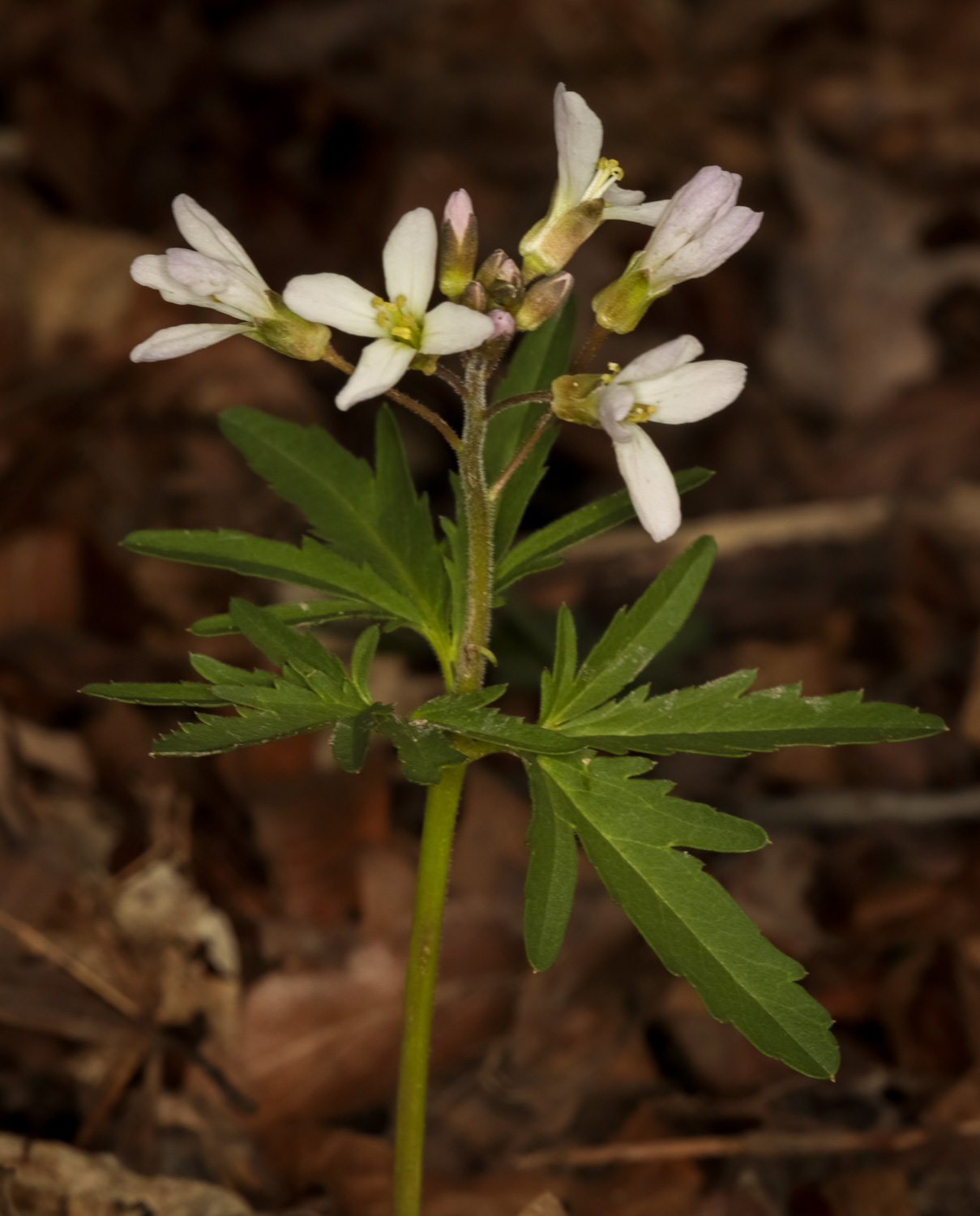
One of a few cut-leaf toothwort.
|
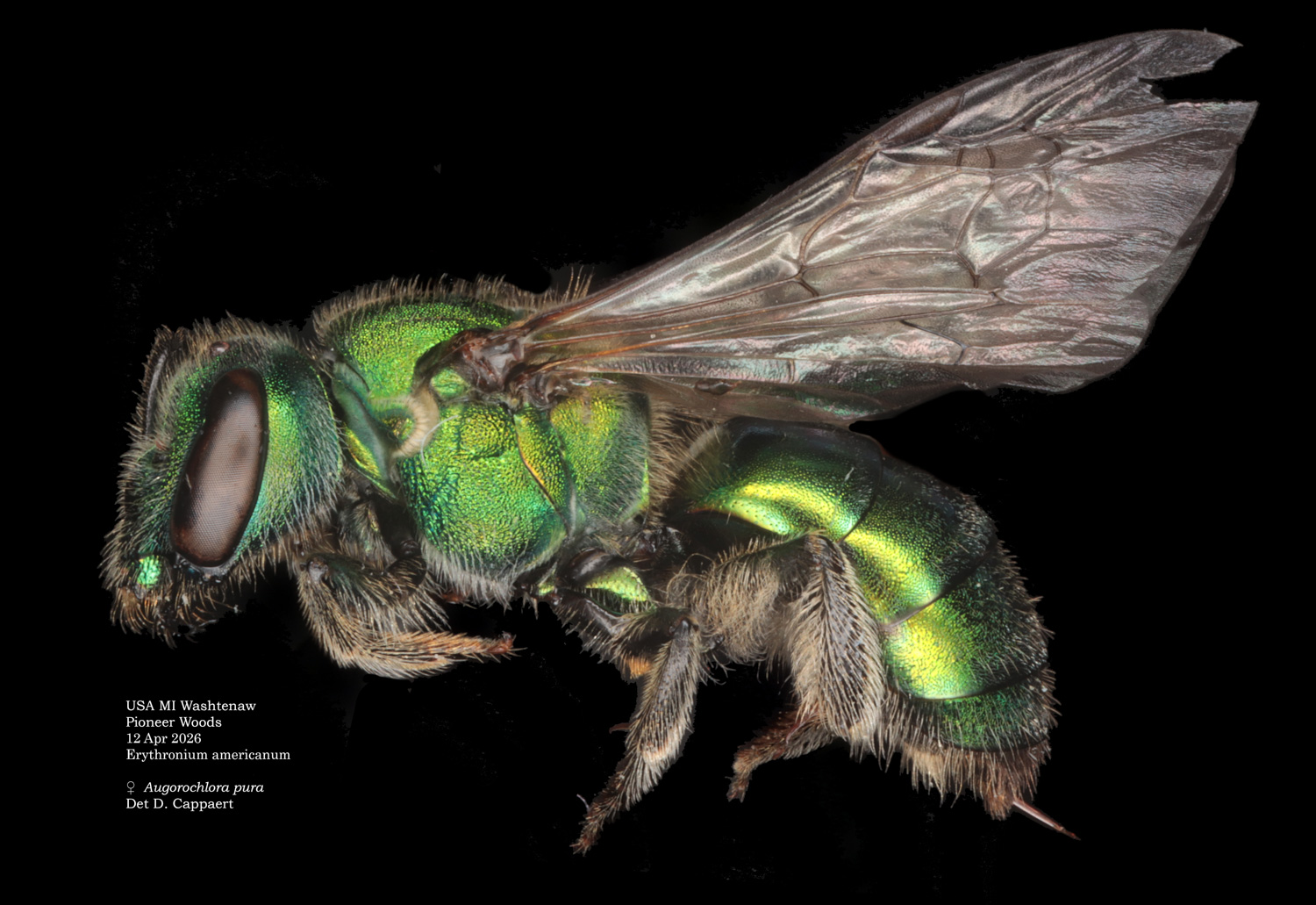
Sweat bee Augoprochlora pura. How do you know it is a female? Stinger.
|

Female mining bee, Andrena cf. dunningi. "cf." is term that says: looks like dunningi, but I could be wrong.
|
County Farm Park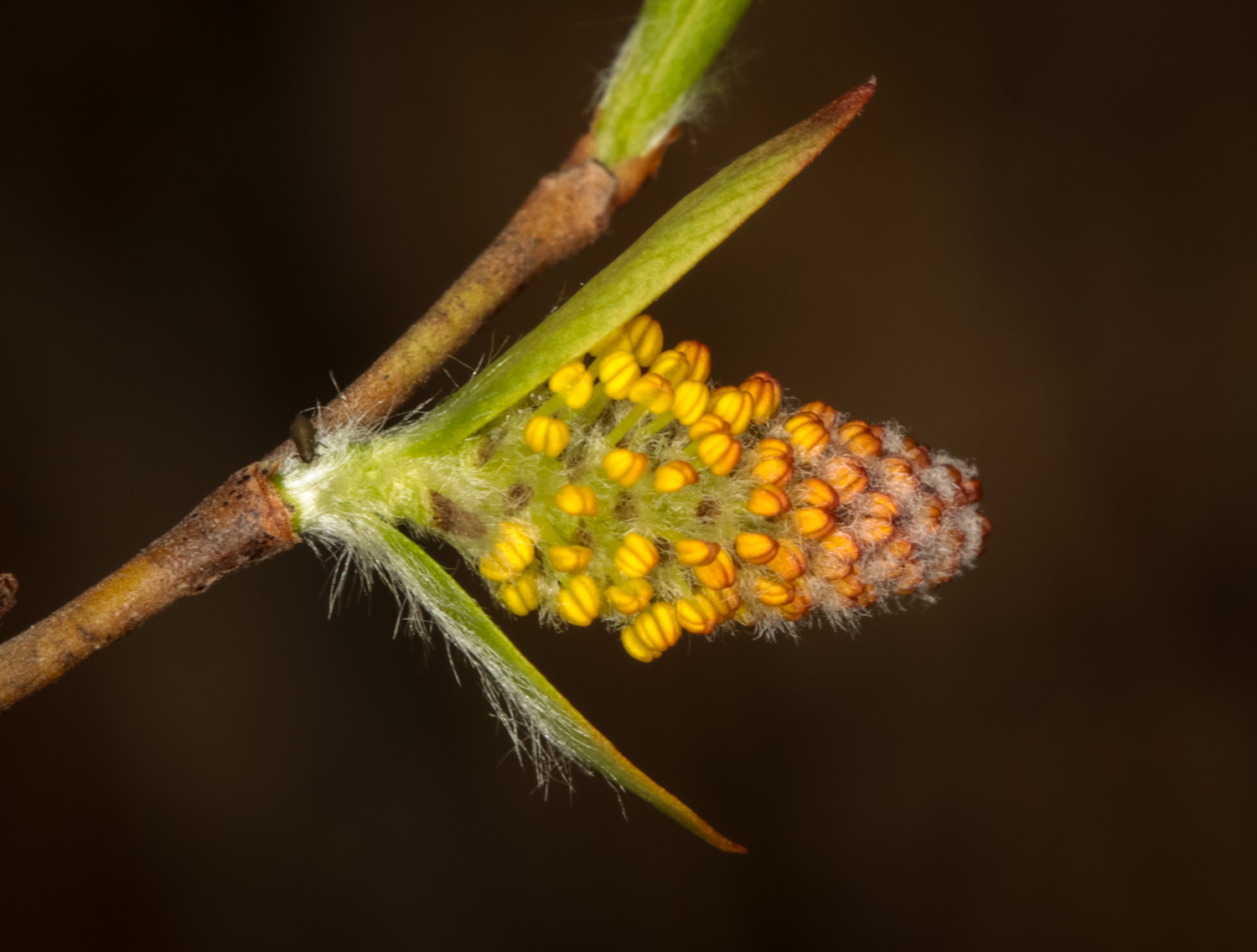
At our first training session April 9, we practiced netting on a set of willows, which were buzzing with insects. Many were beyond the reach of nets, but we did capture 47 specimens, that included 15 species. Standouts: Andrena and Colletes inaequalis males. |
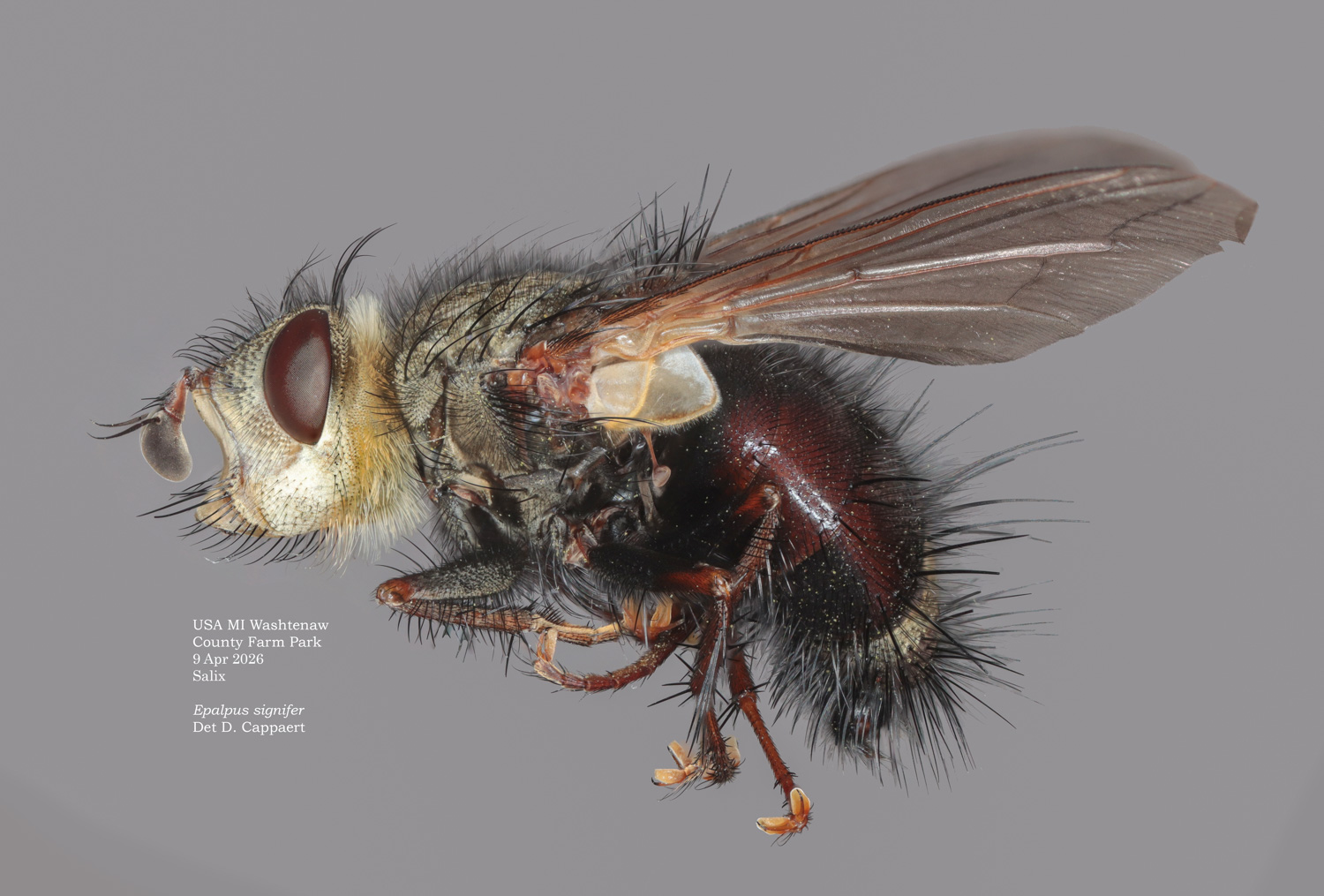
A tachinid, or bristle fly. Epalpus signifer is a parasitoid of cutworms.
|
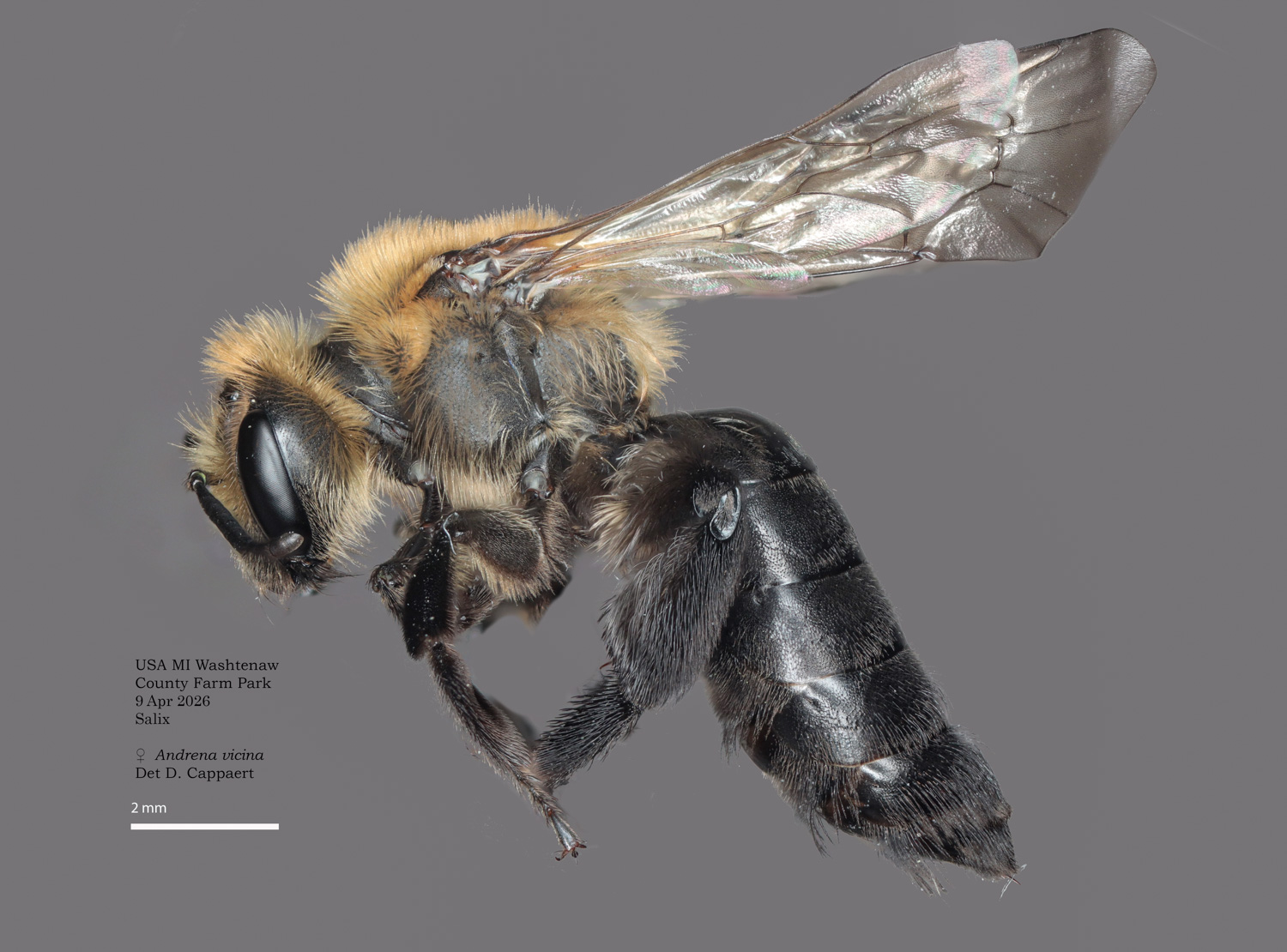
A mining bee, Andrena vicina. This is a female.
|
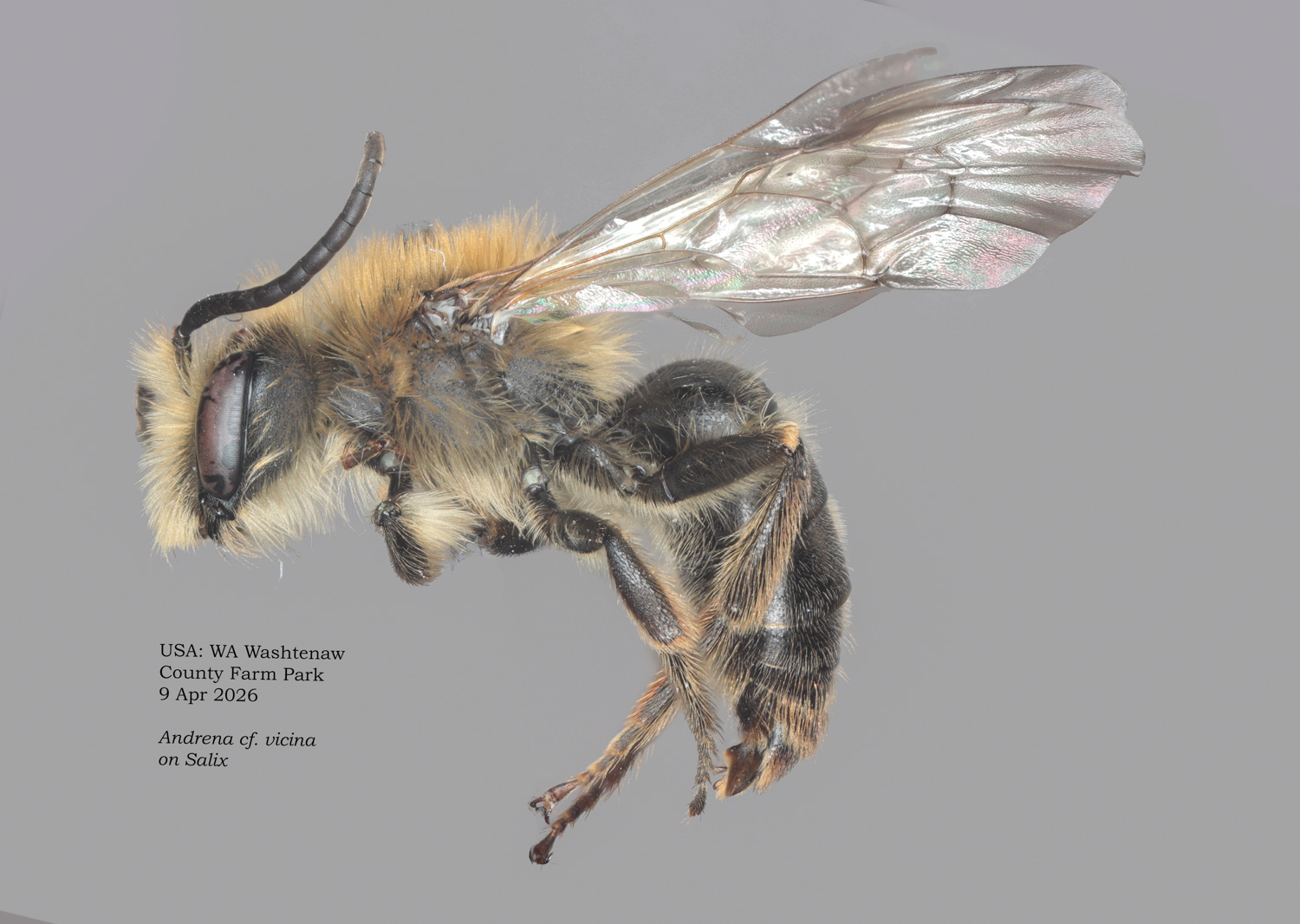
A male mining bee, likely also Andrena vicina.
|
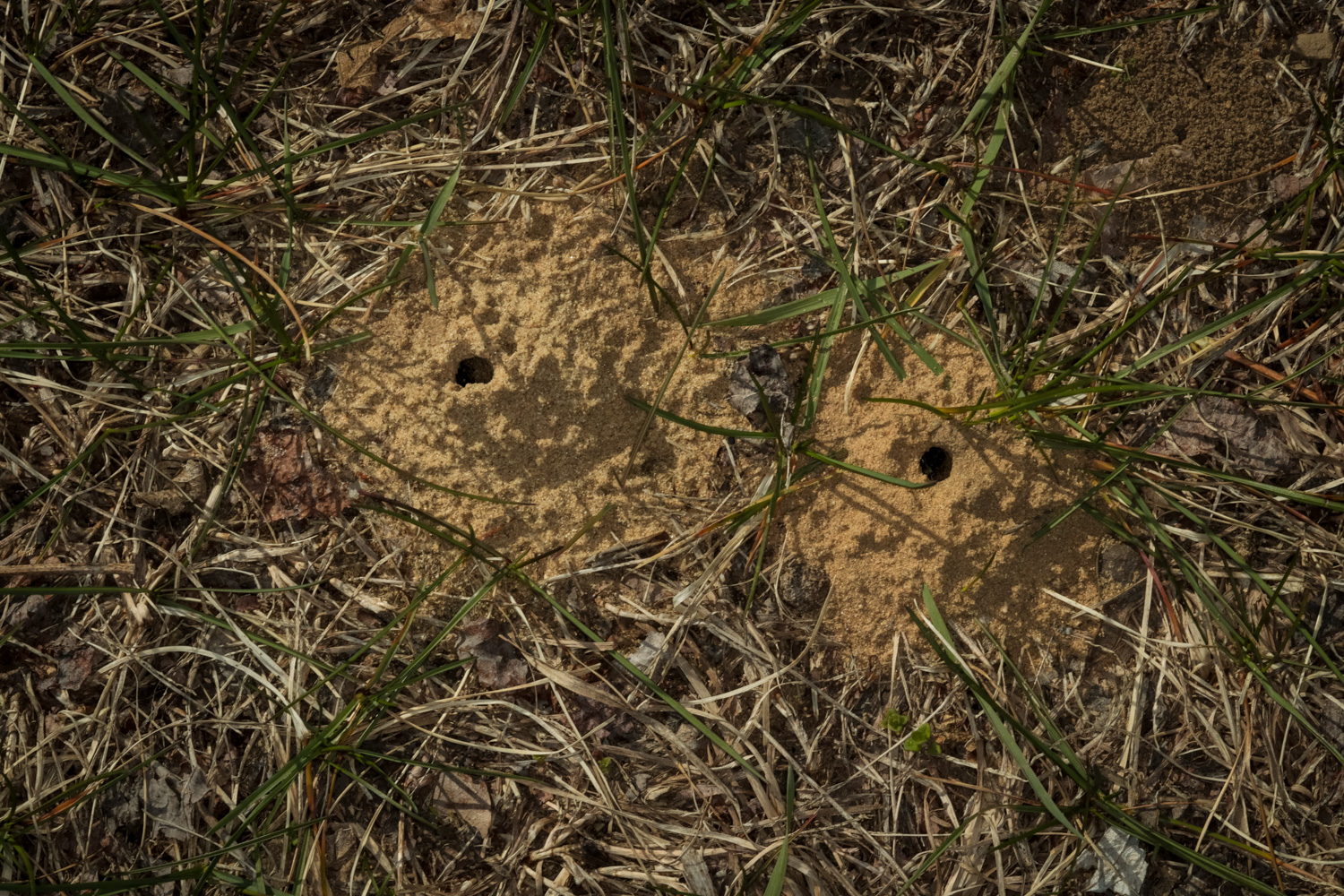
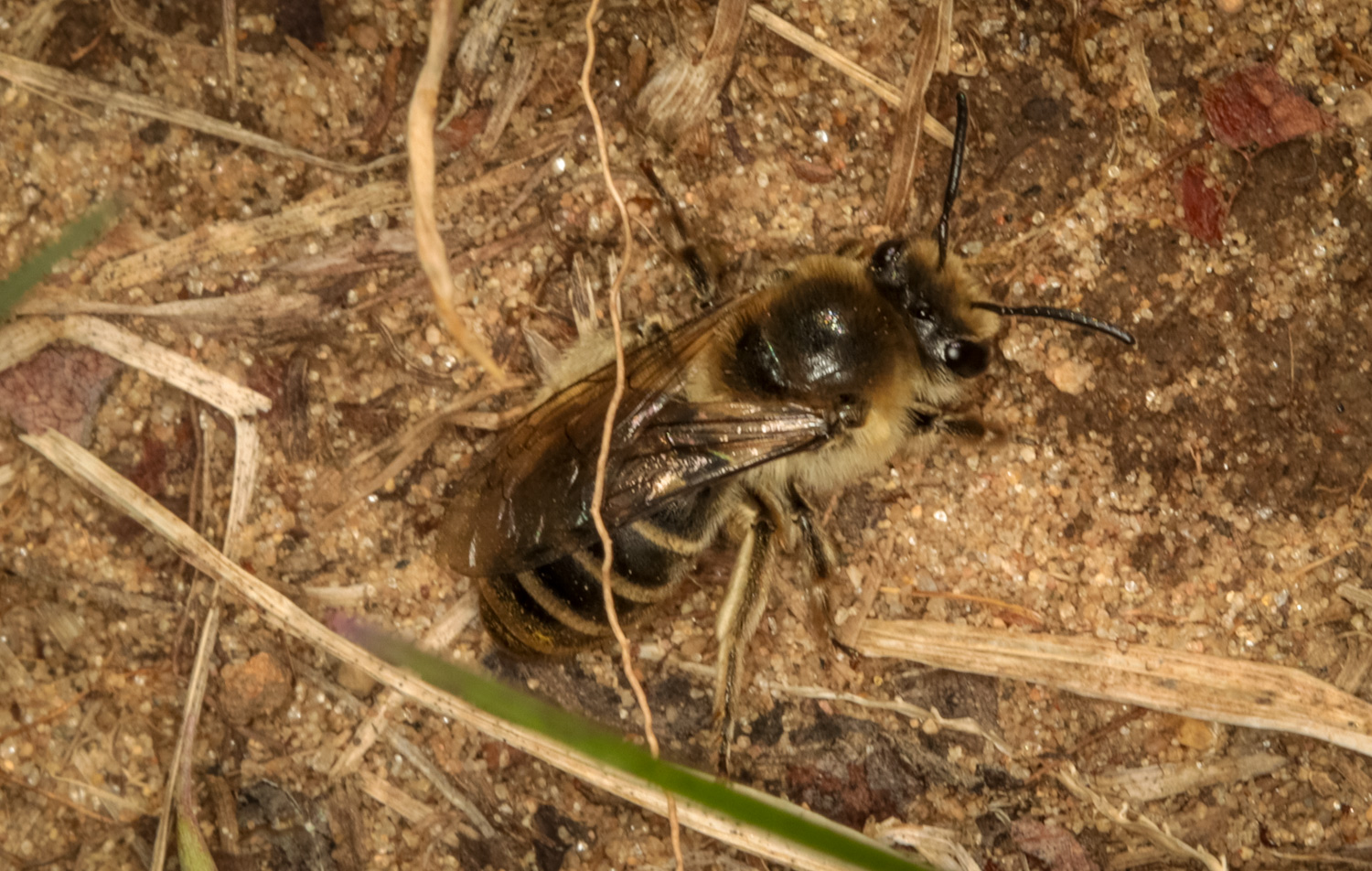
At County Farm, the ground nests of the cellophane bee are easy to find (if Shawn points them out).
|
Willow, Salix sppWillows are one of the main nectar/pollen resources for pollinators that emerge early, before most spring wildflowers are in bloom. 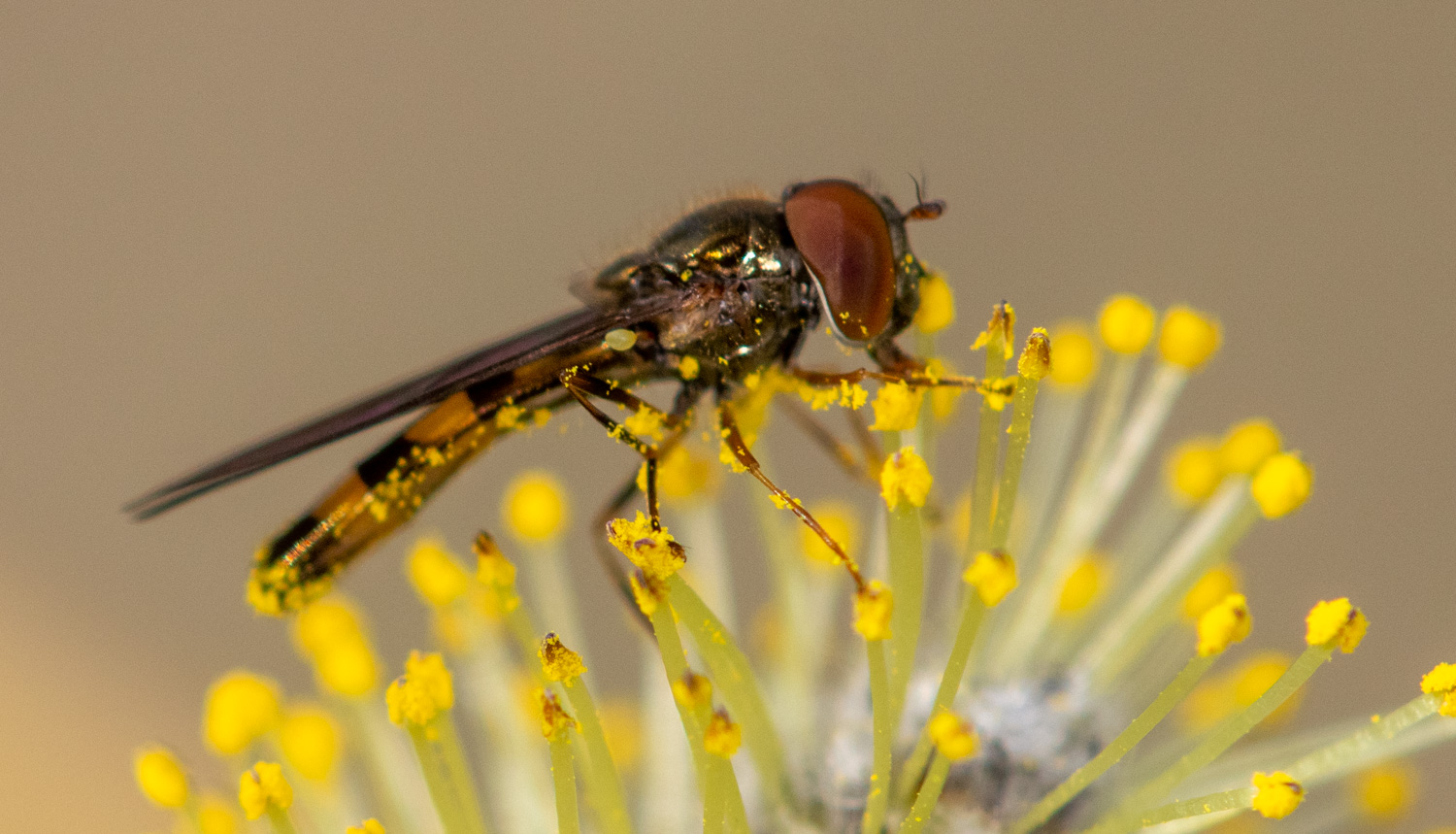
Hoverfly on willow
|
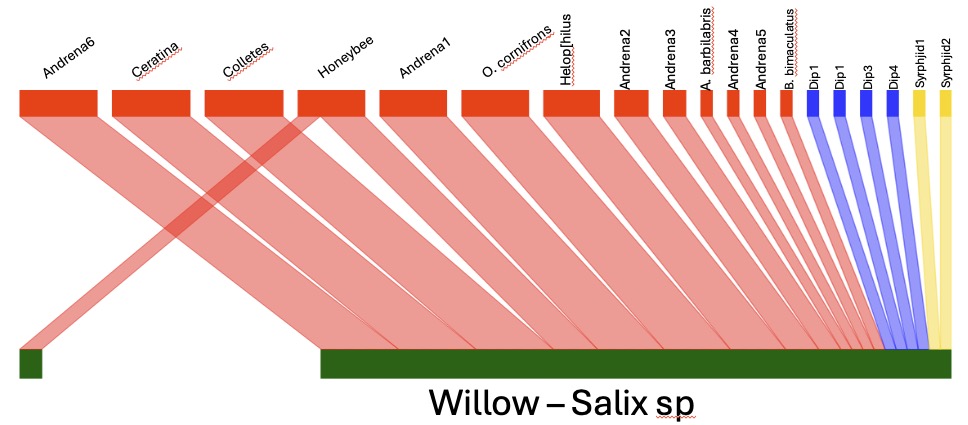
A representation of the visitation frequency of visitors to Willow, from 15 minutes of collecting.
|
Willow visitorsThis gallery: 19 species collected from Willow on Apr 3. 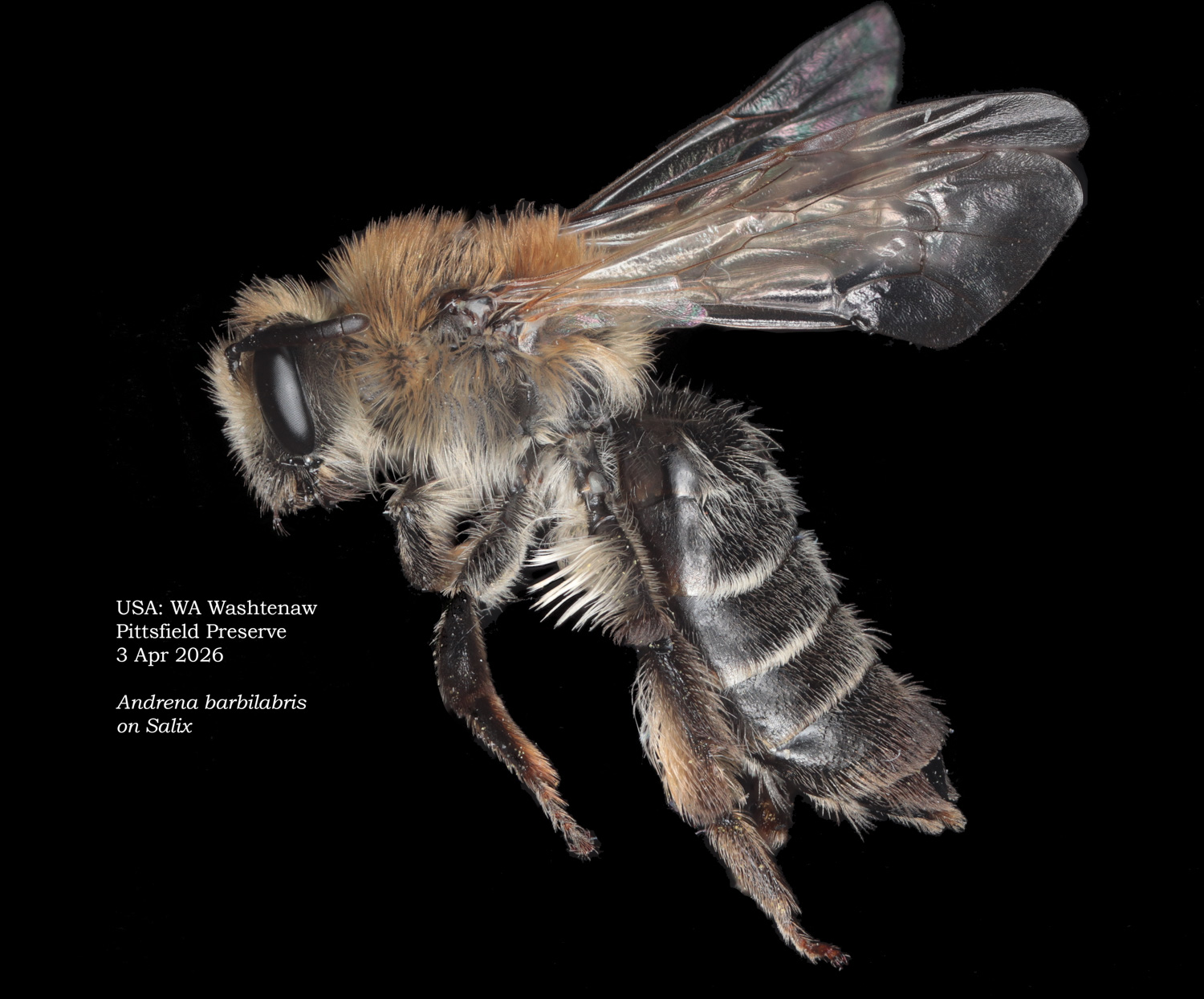
Andrena barbilabris
|
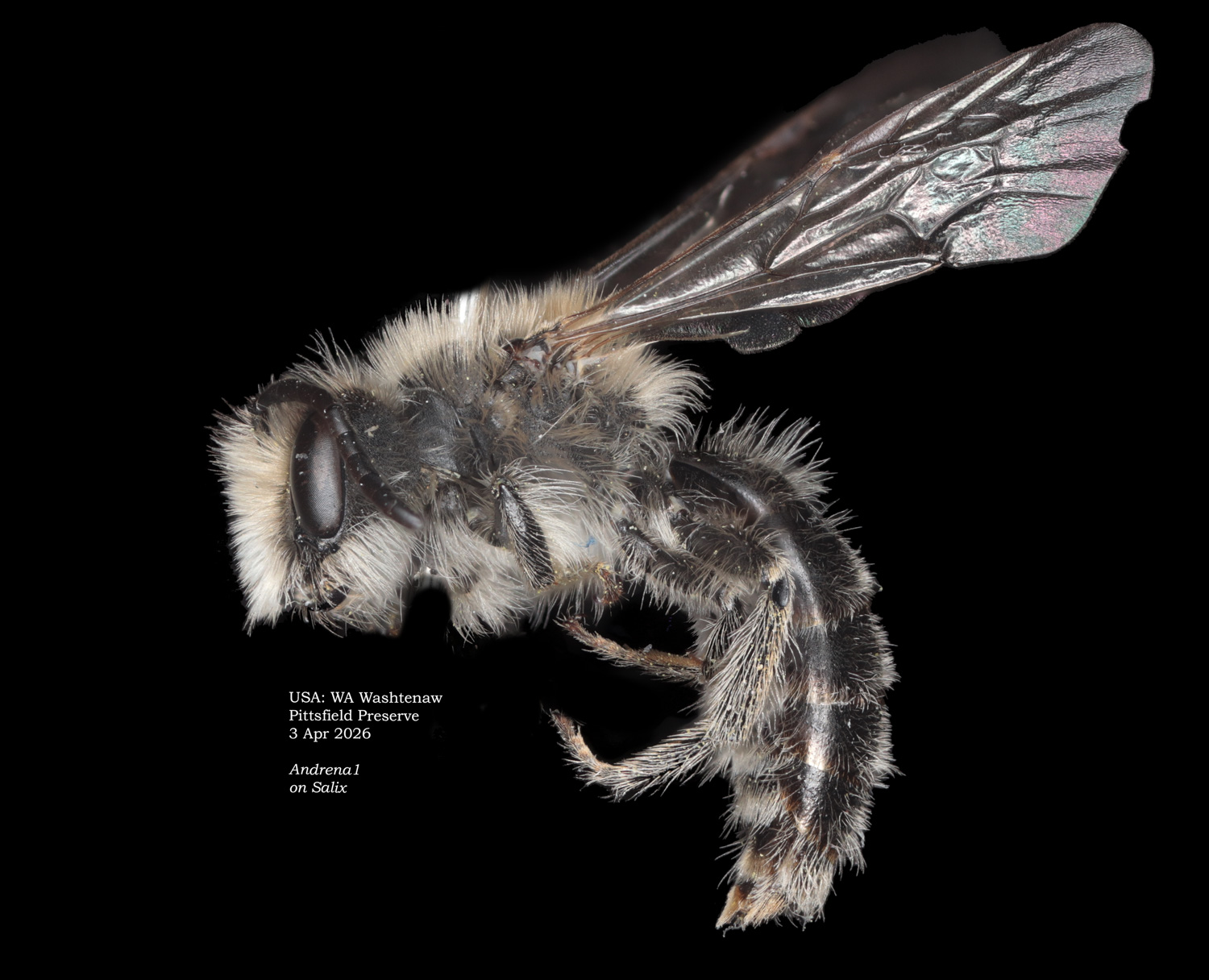
Andrena1
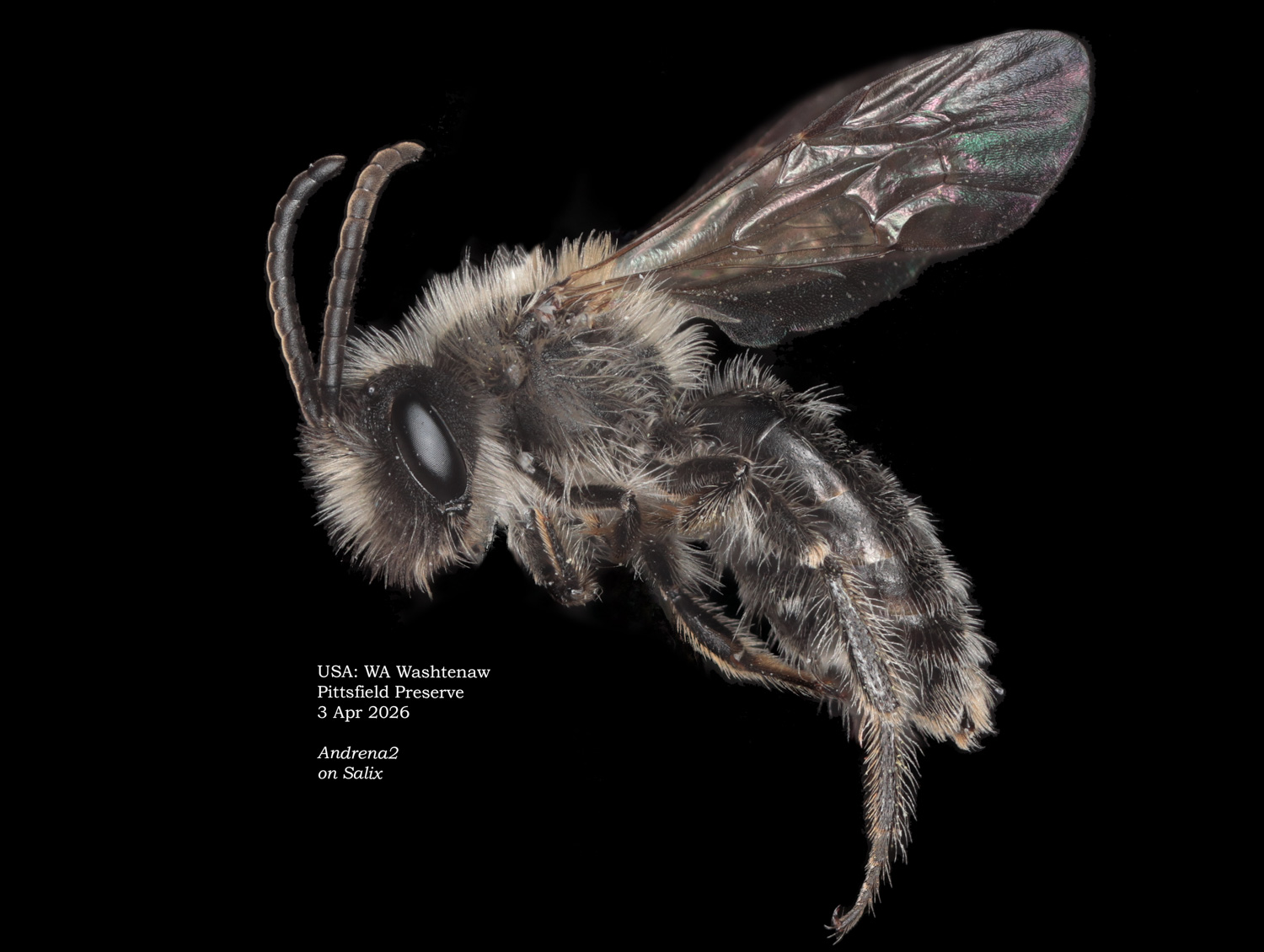
Andrena2
|
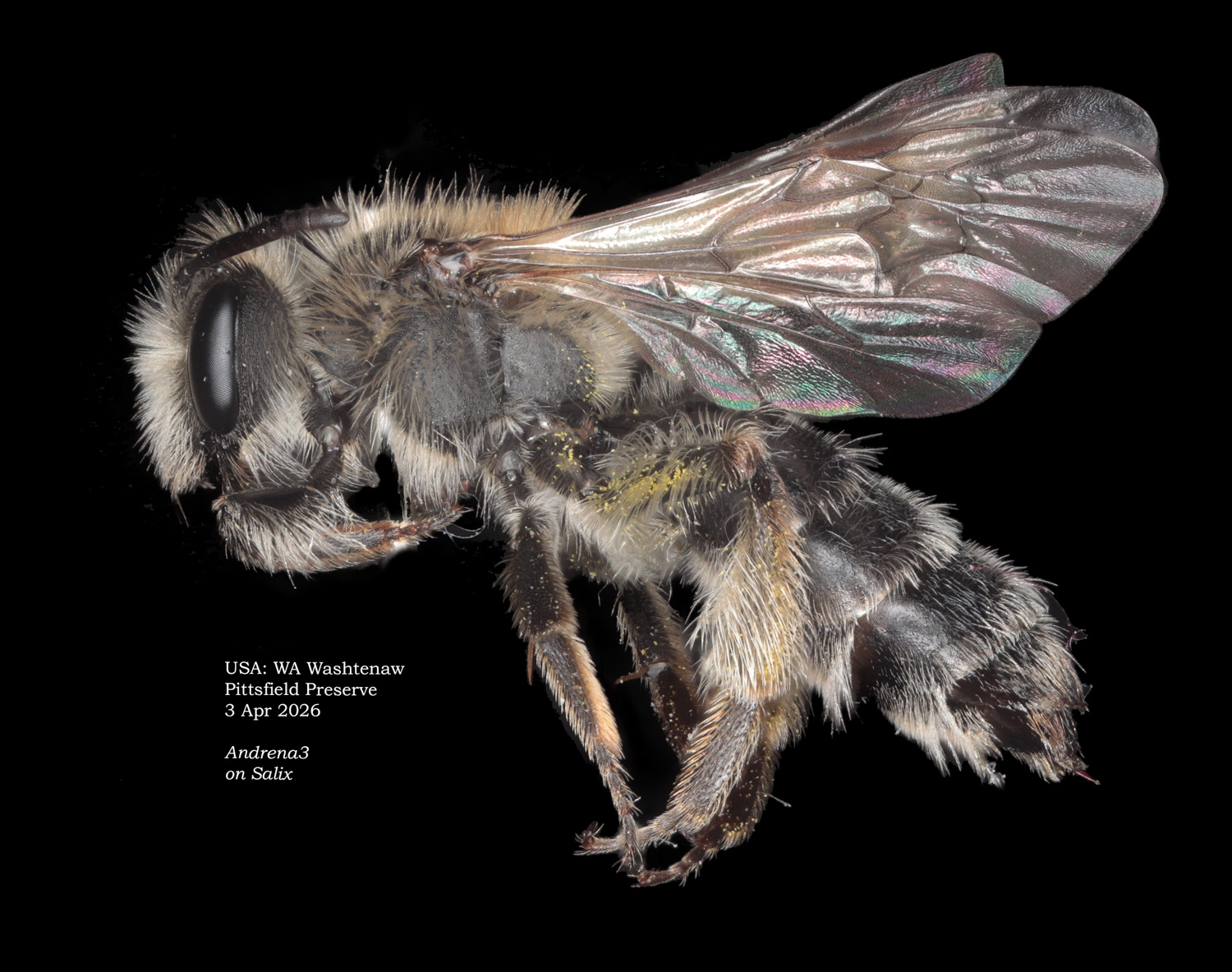
Andrena3
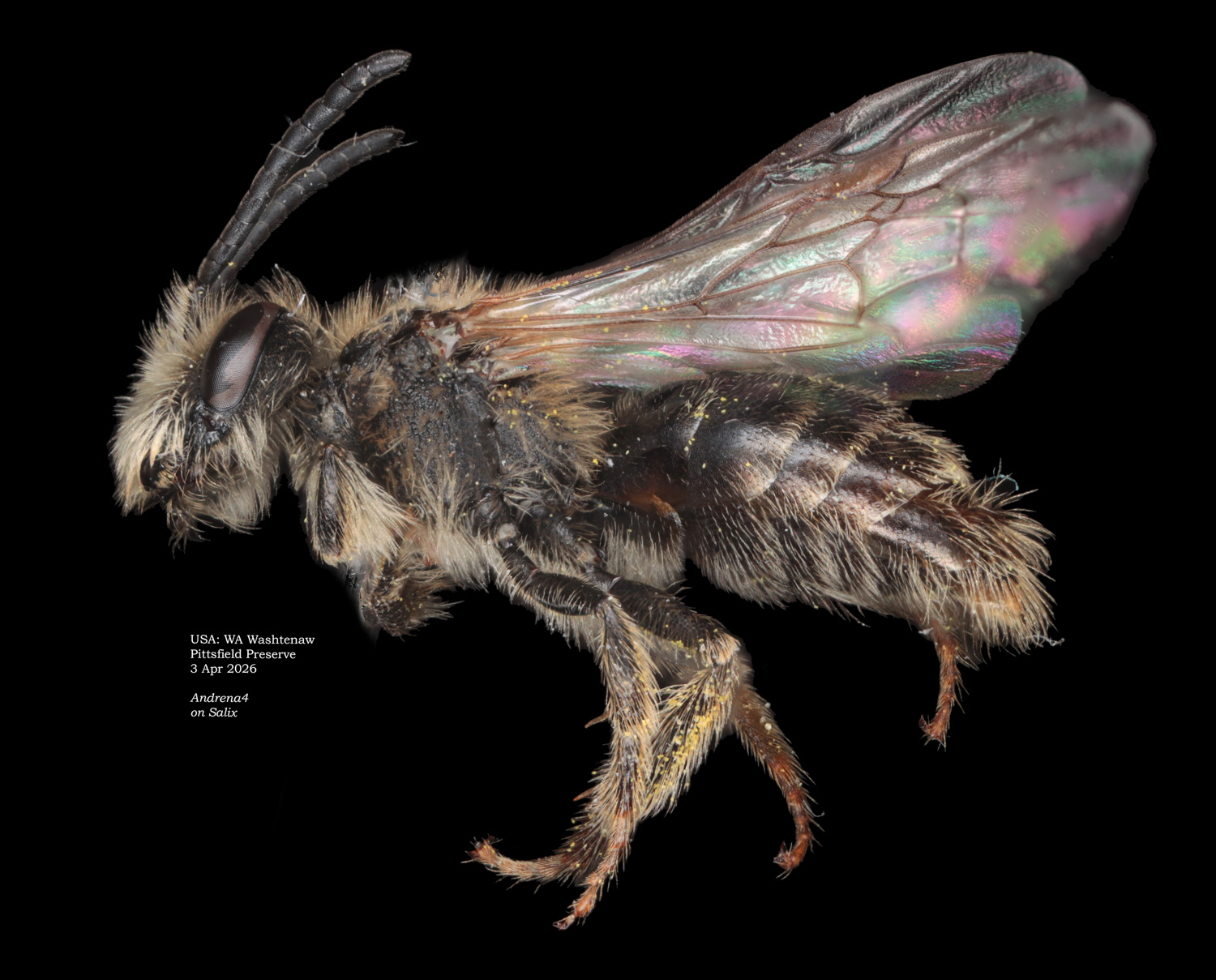
Andrena4
|
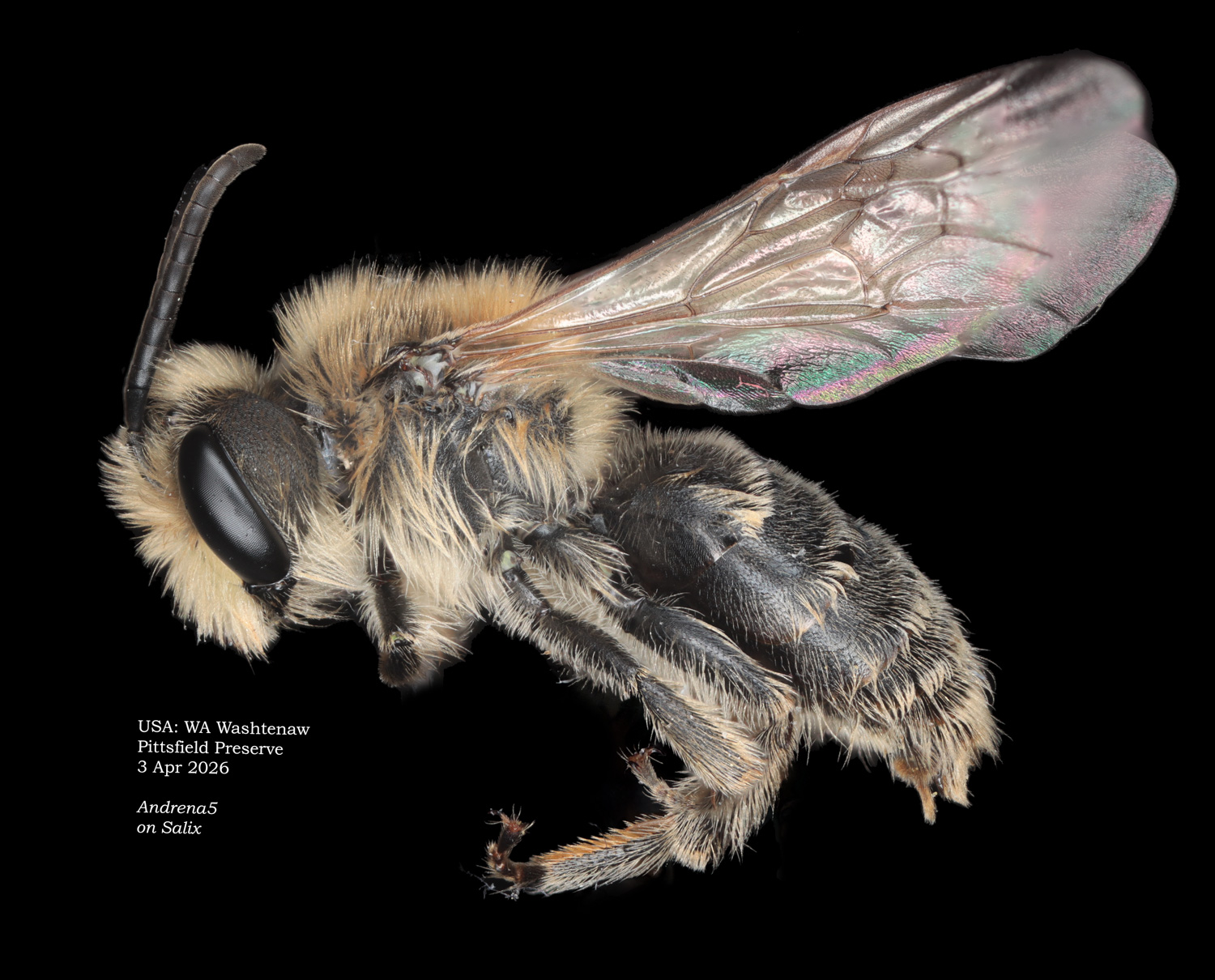
Andrena5
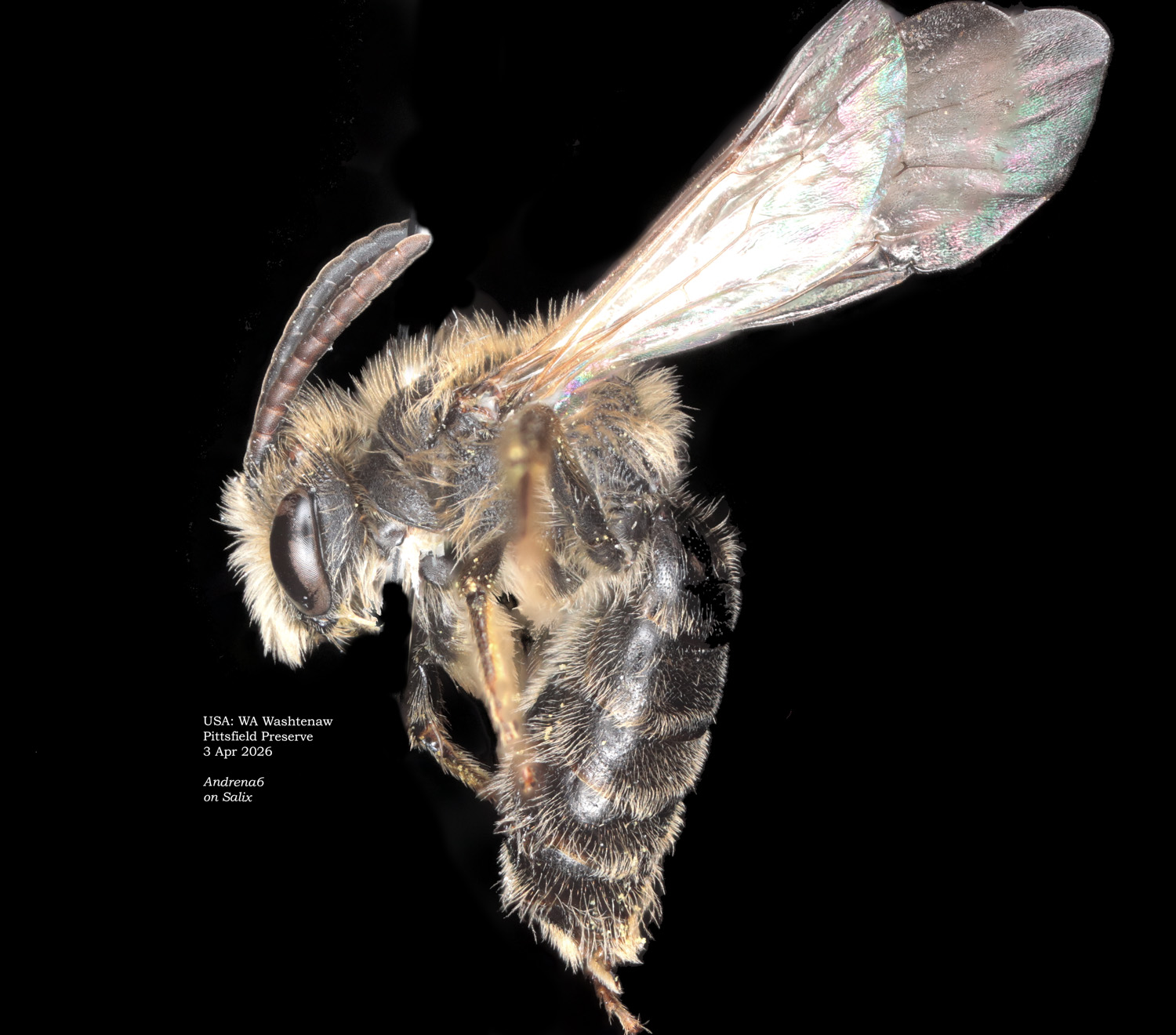
Andrena6
|
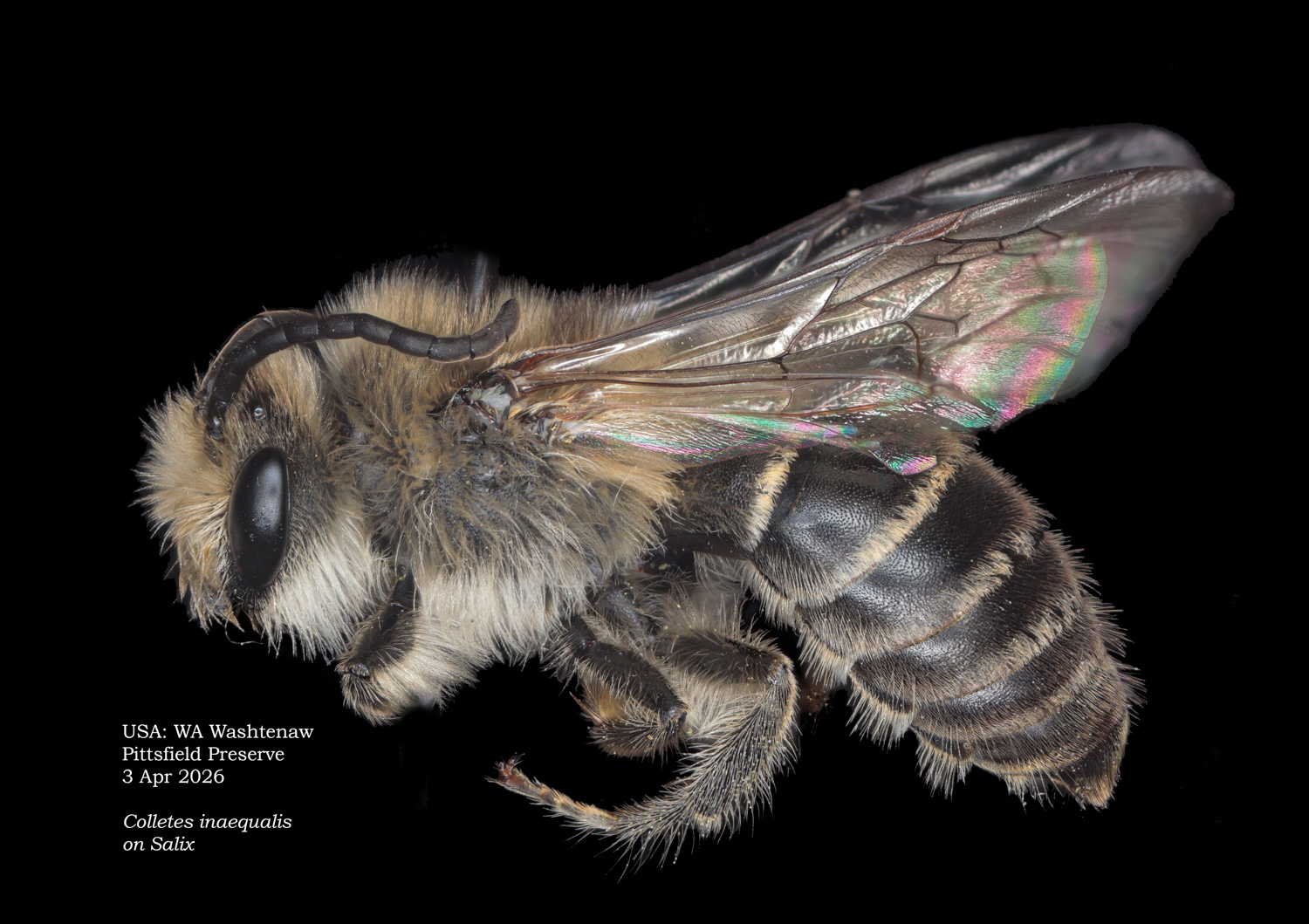
Colletes inaequalis
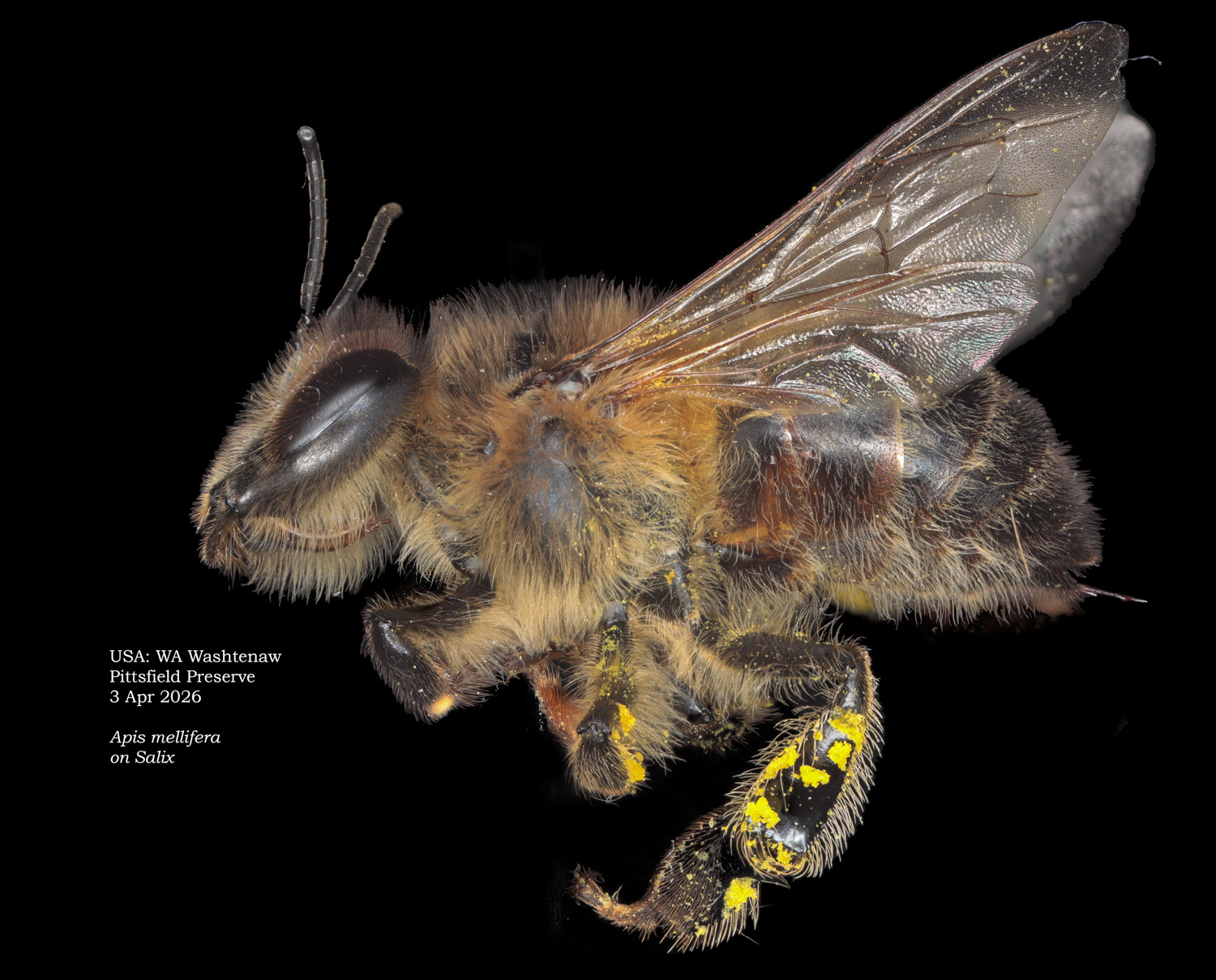
Viceroy
|
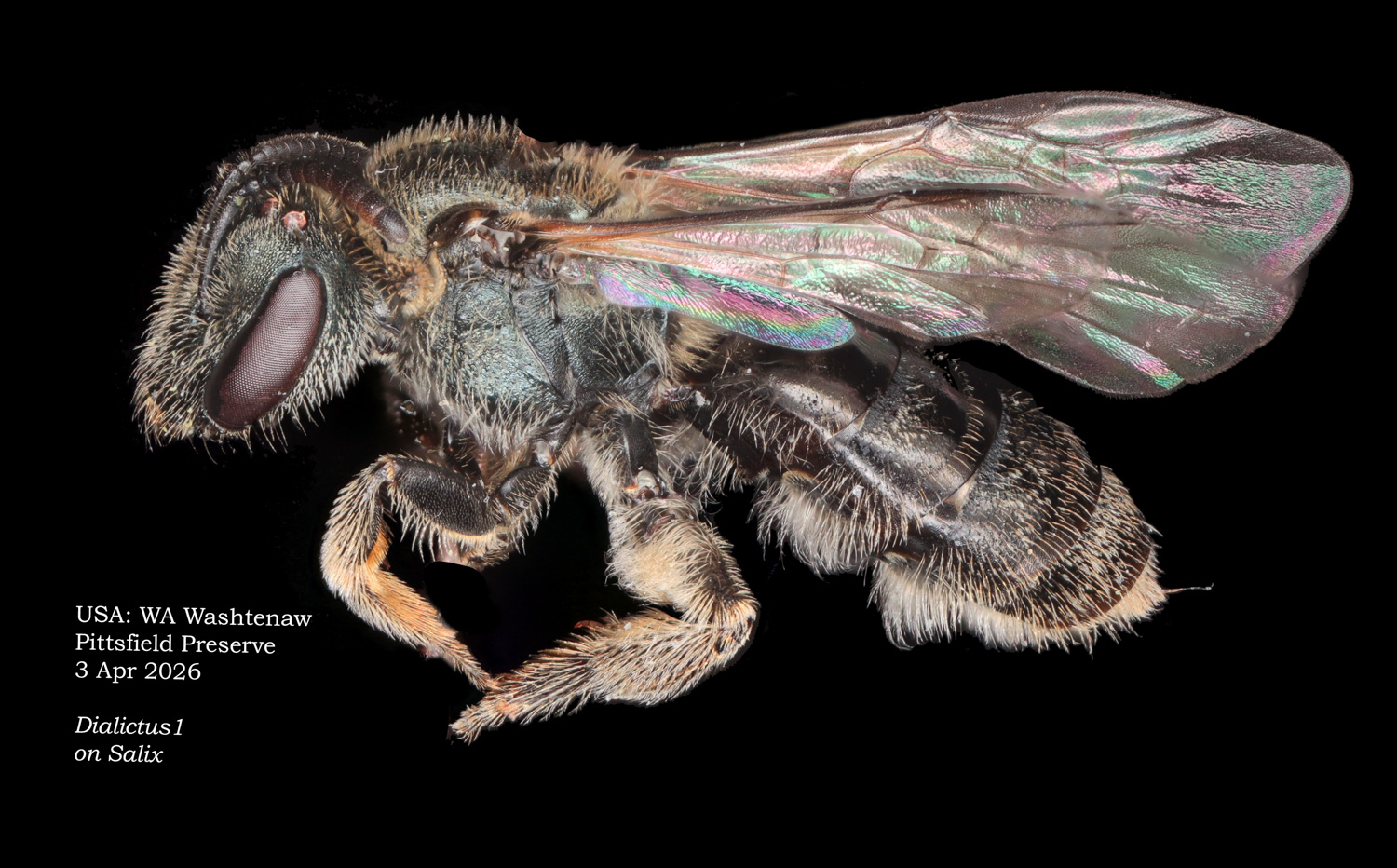
Lasioglossum - dialictus
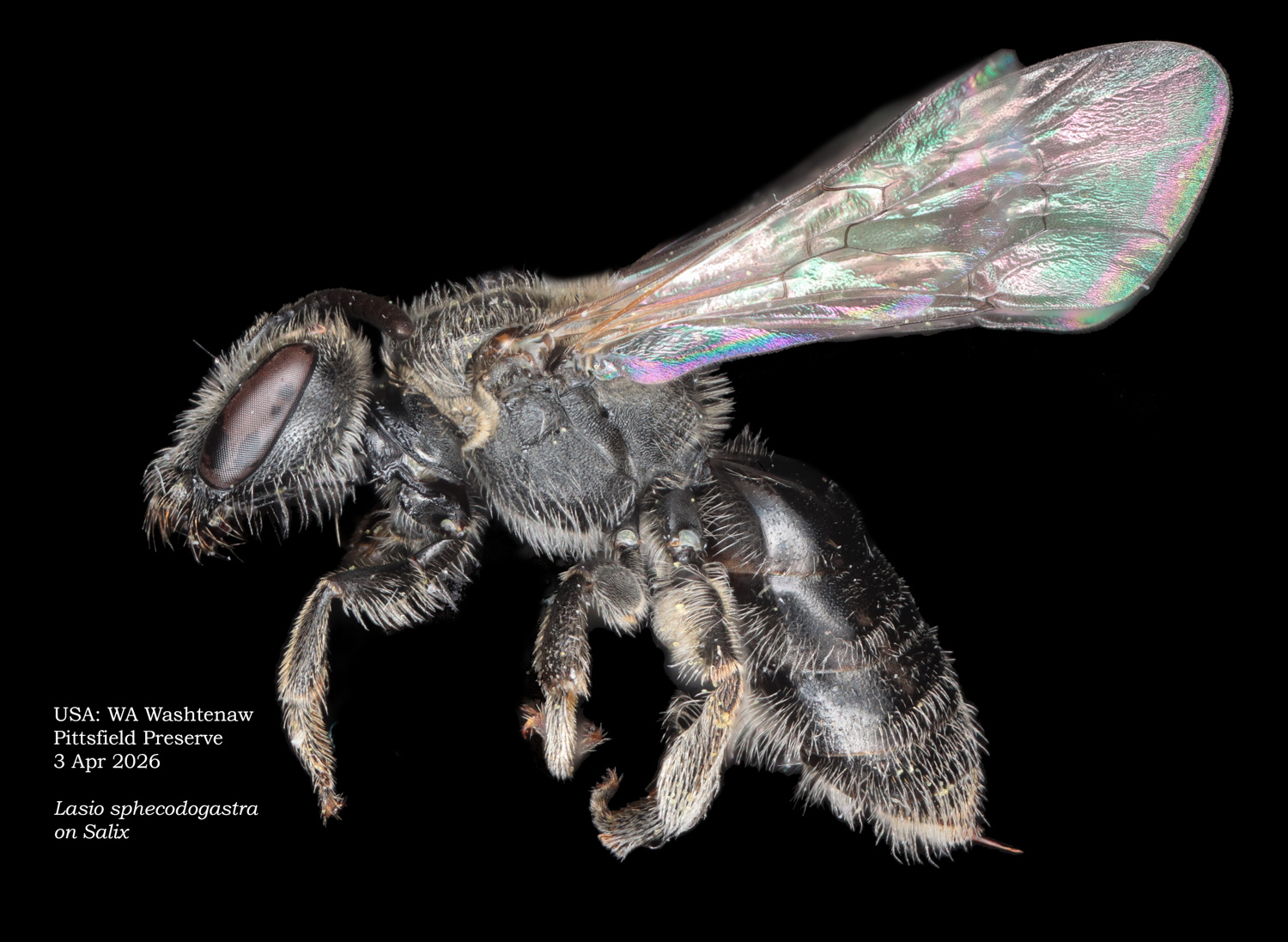
Lasioglossum - sphecodogastra
|
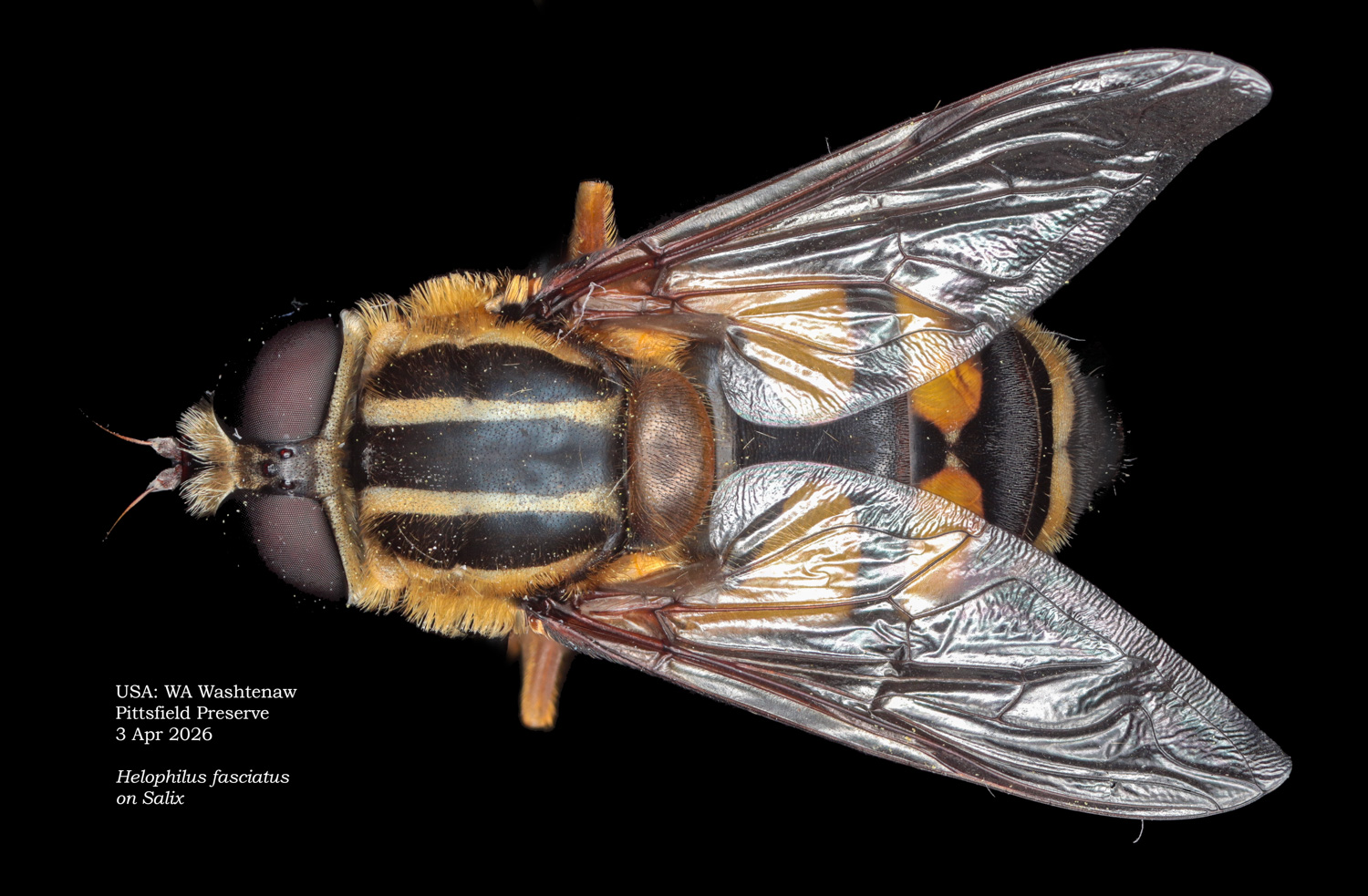
Helophilus fasciatus
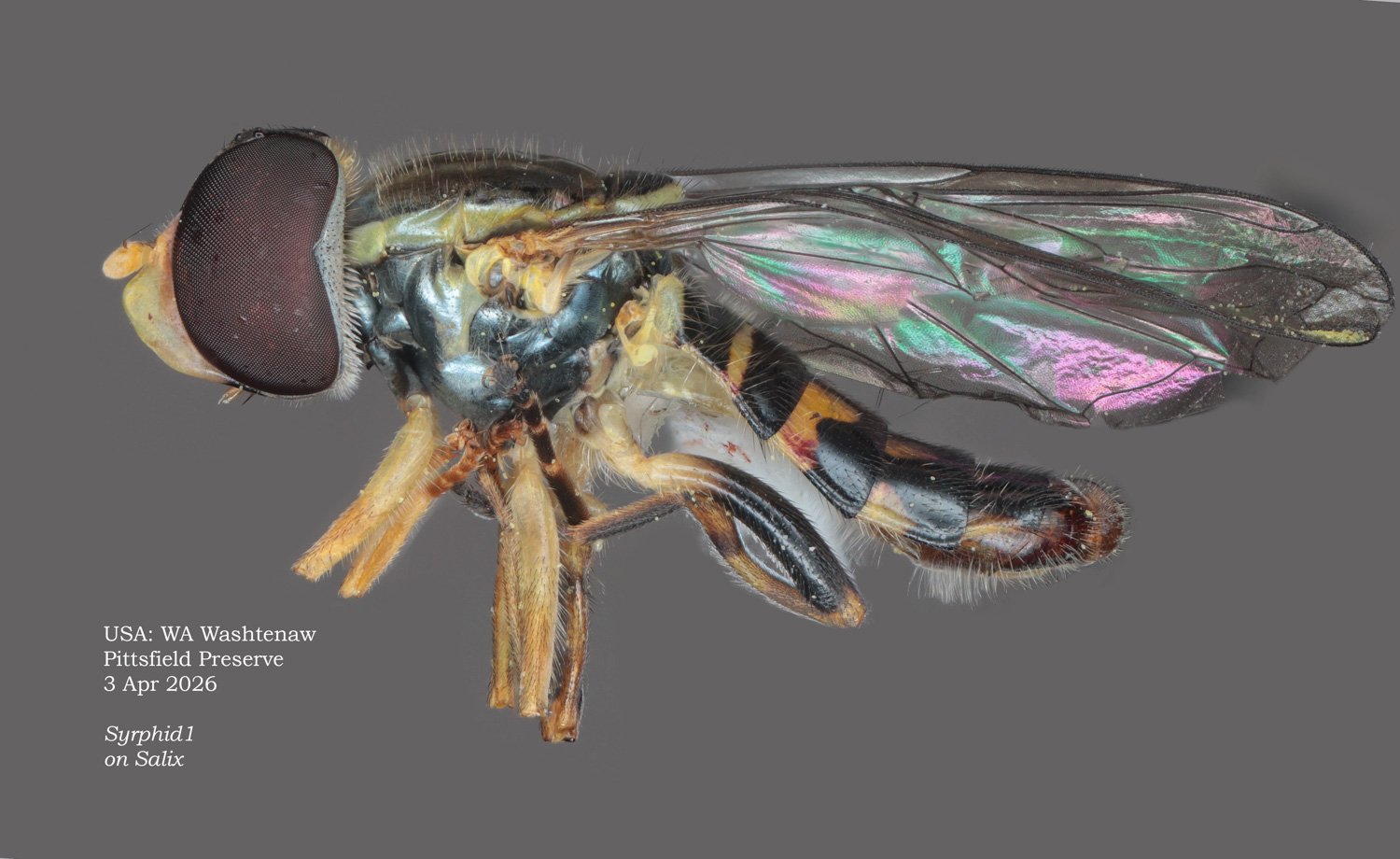
Syrphid1
|
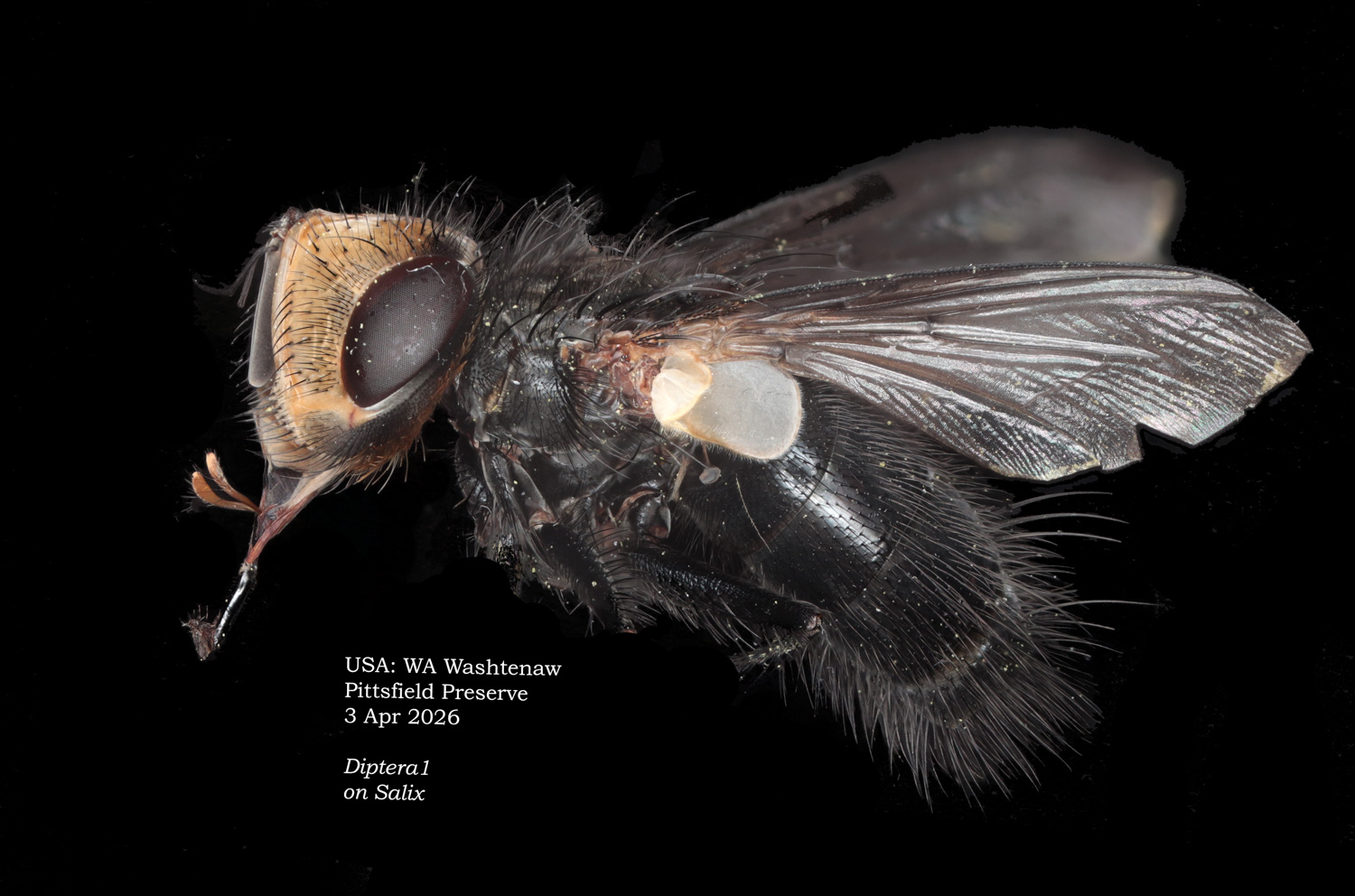
Diptera1
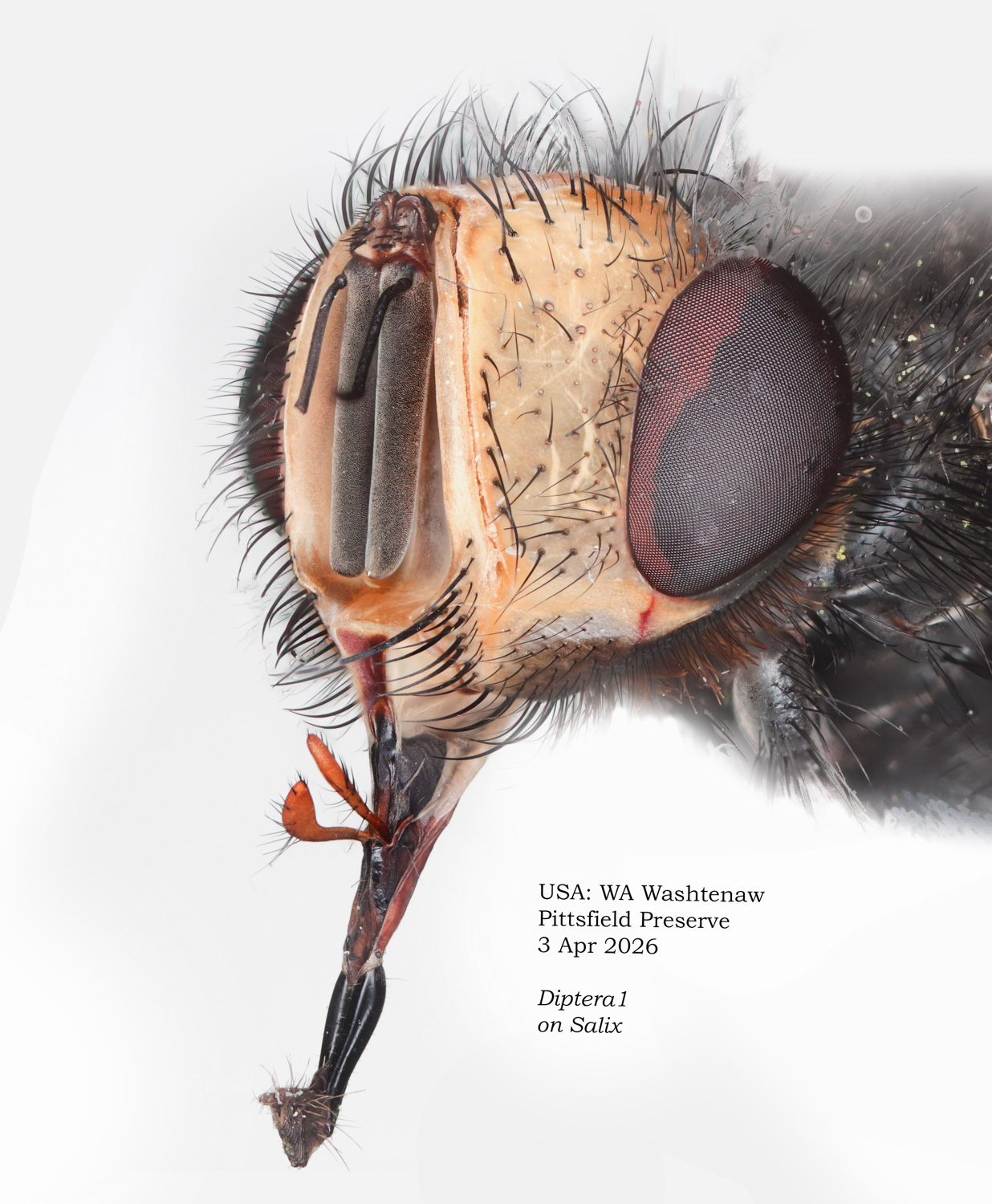
Diptera1
|
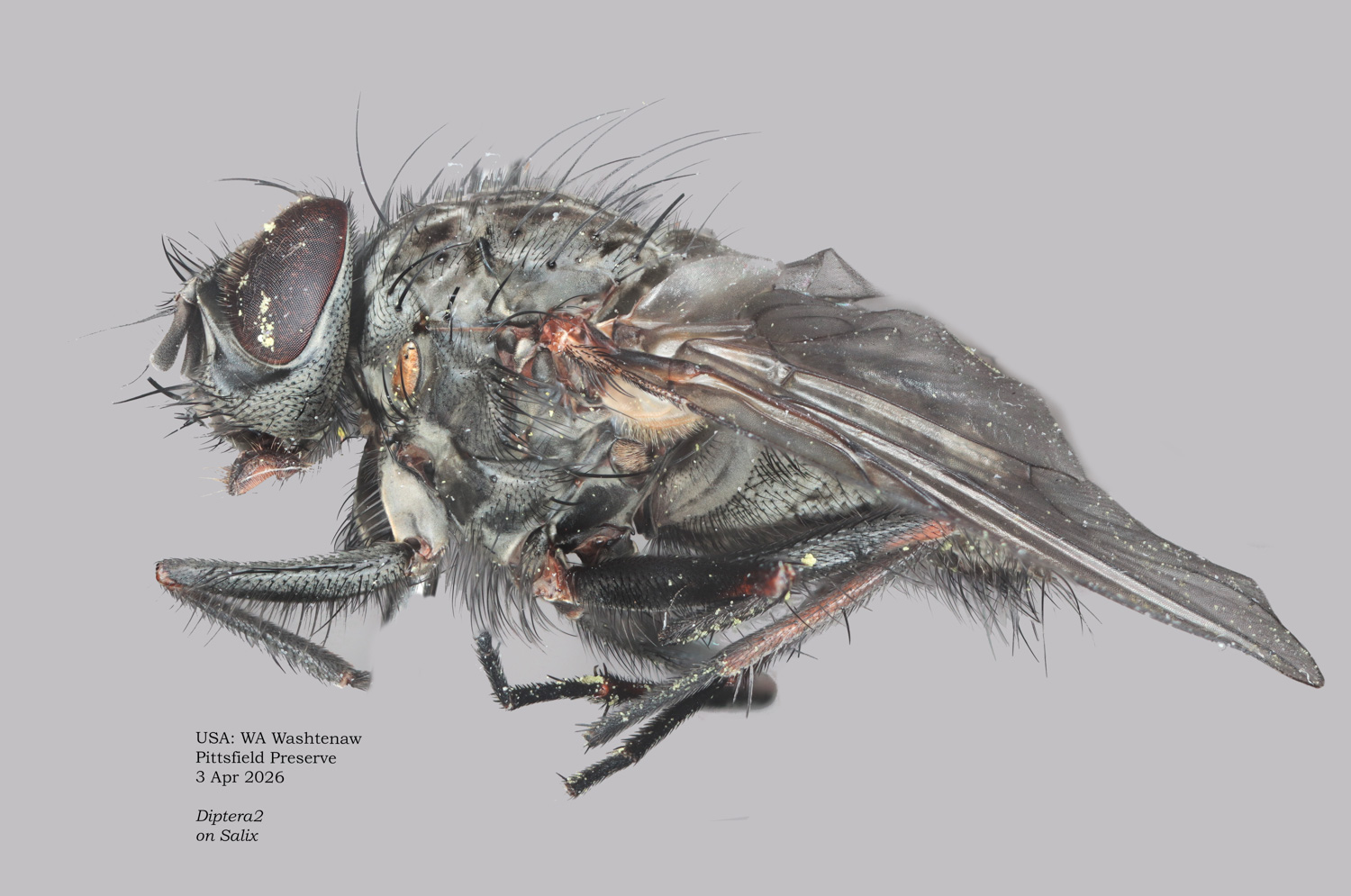
Diptera2
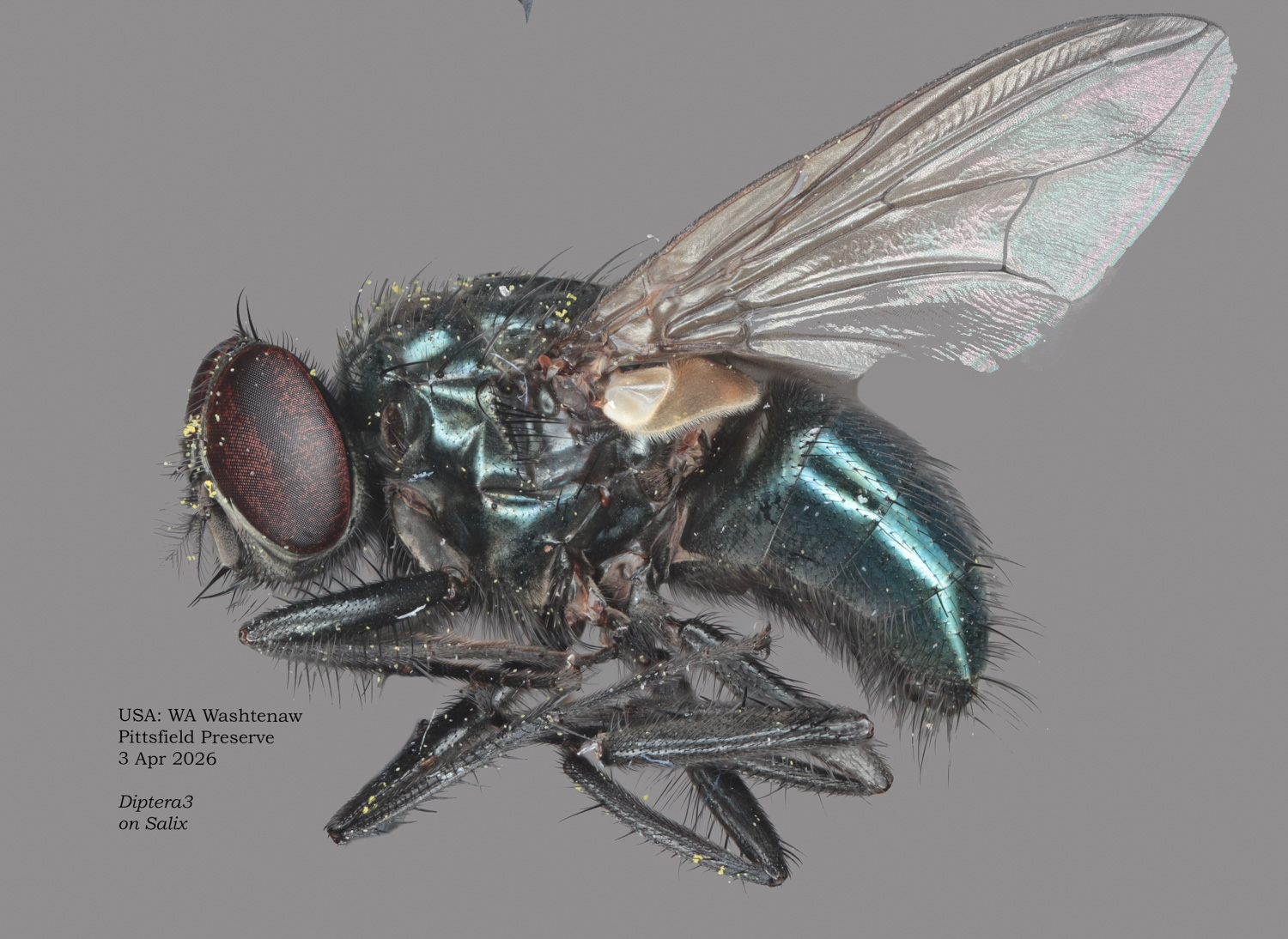
Diptera3
|
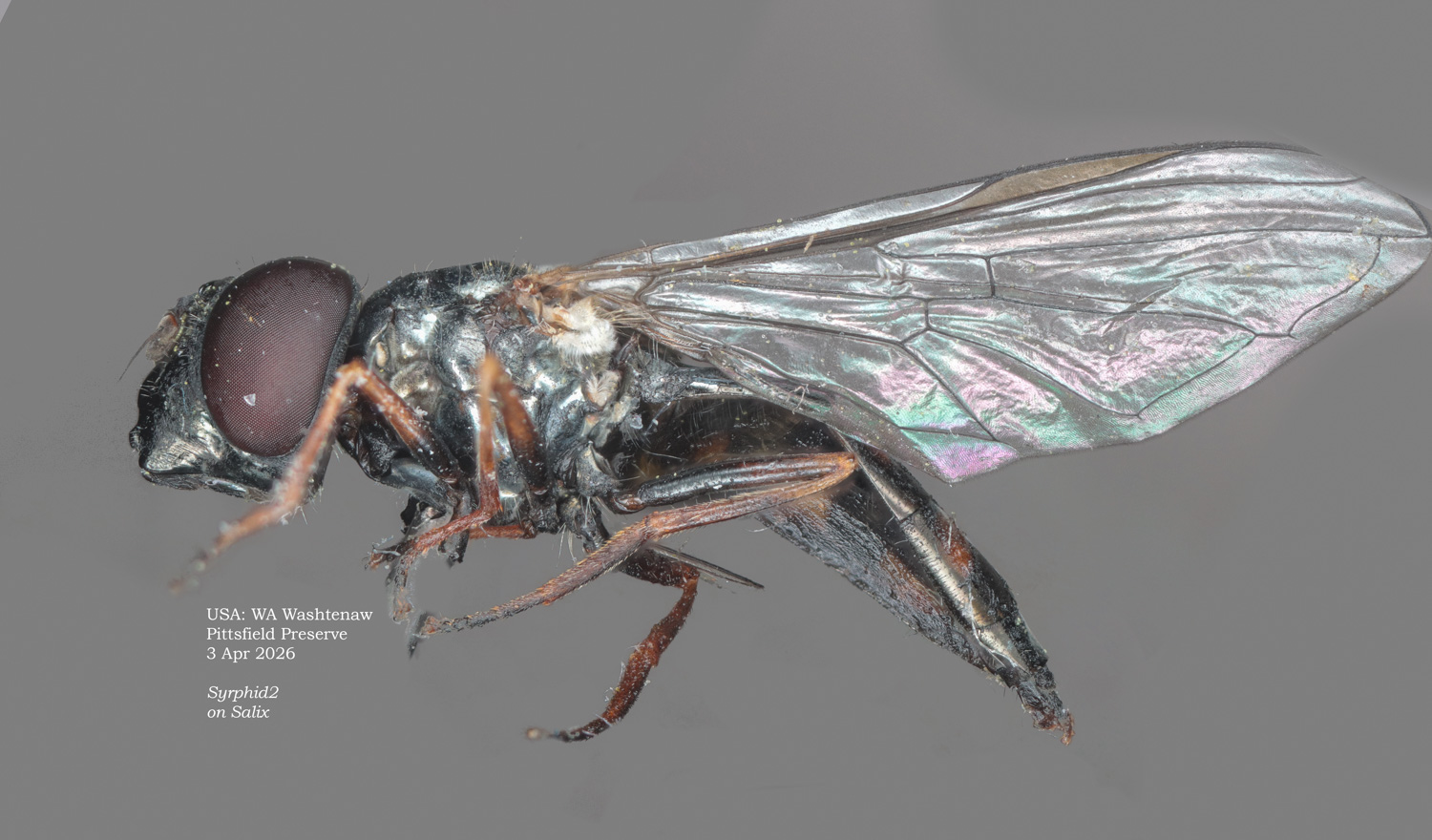
Syrphid2
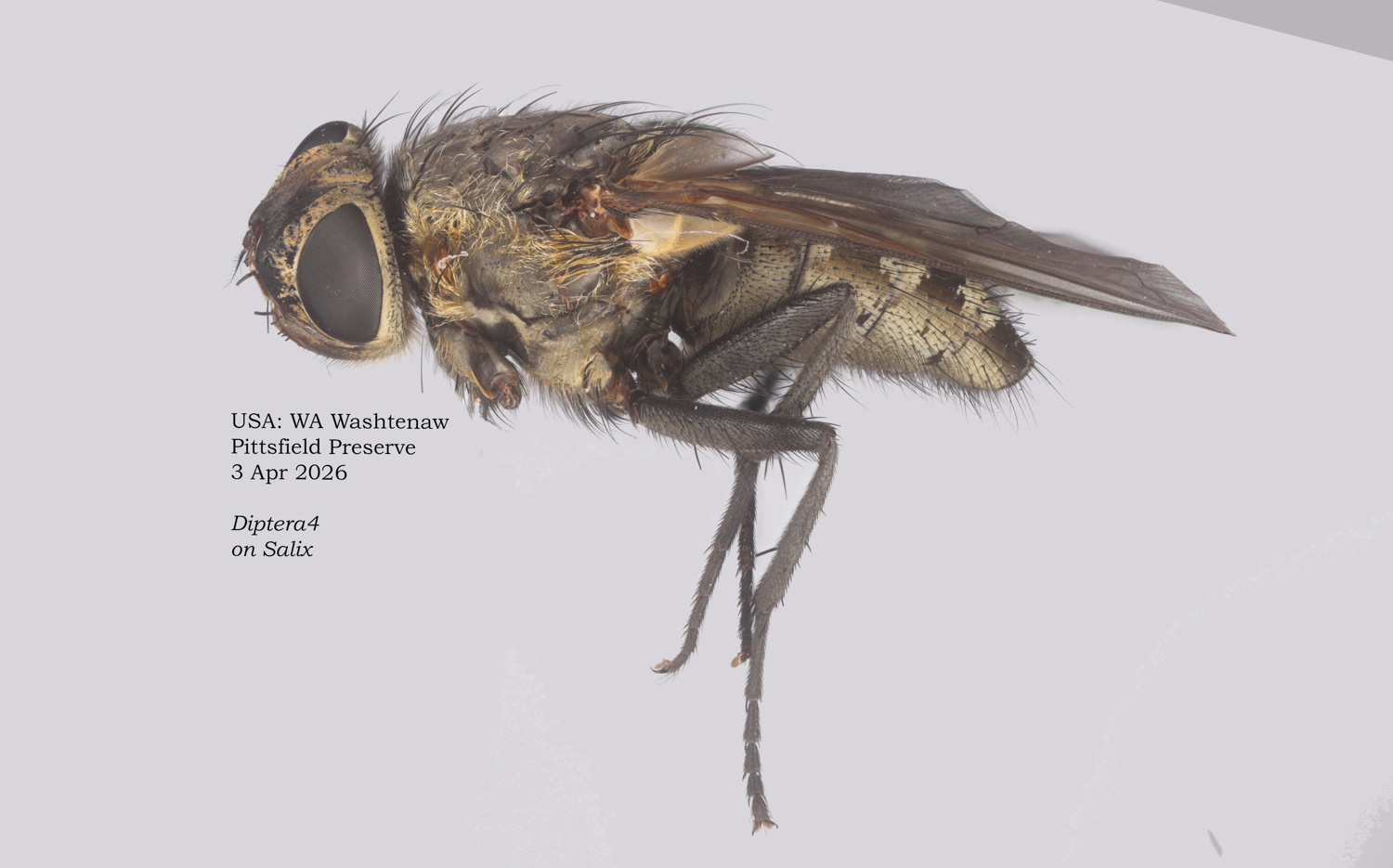
Diptera4
|
North Carolina, early Apr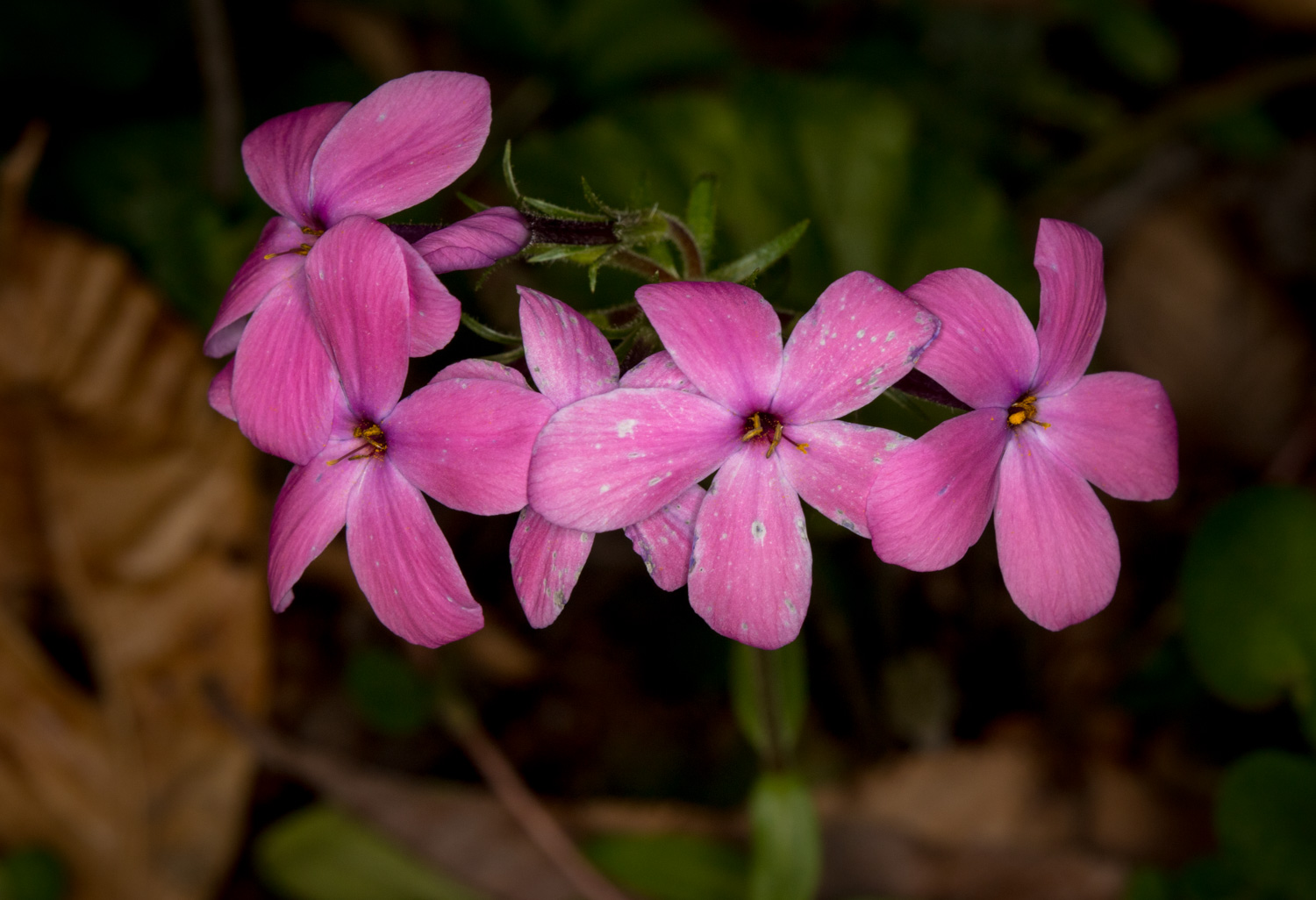
|
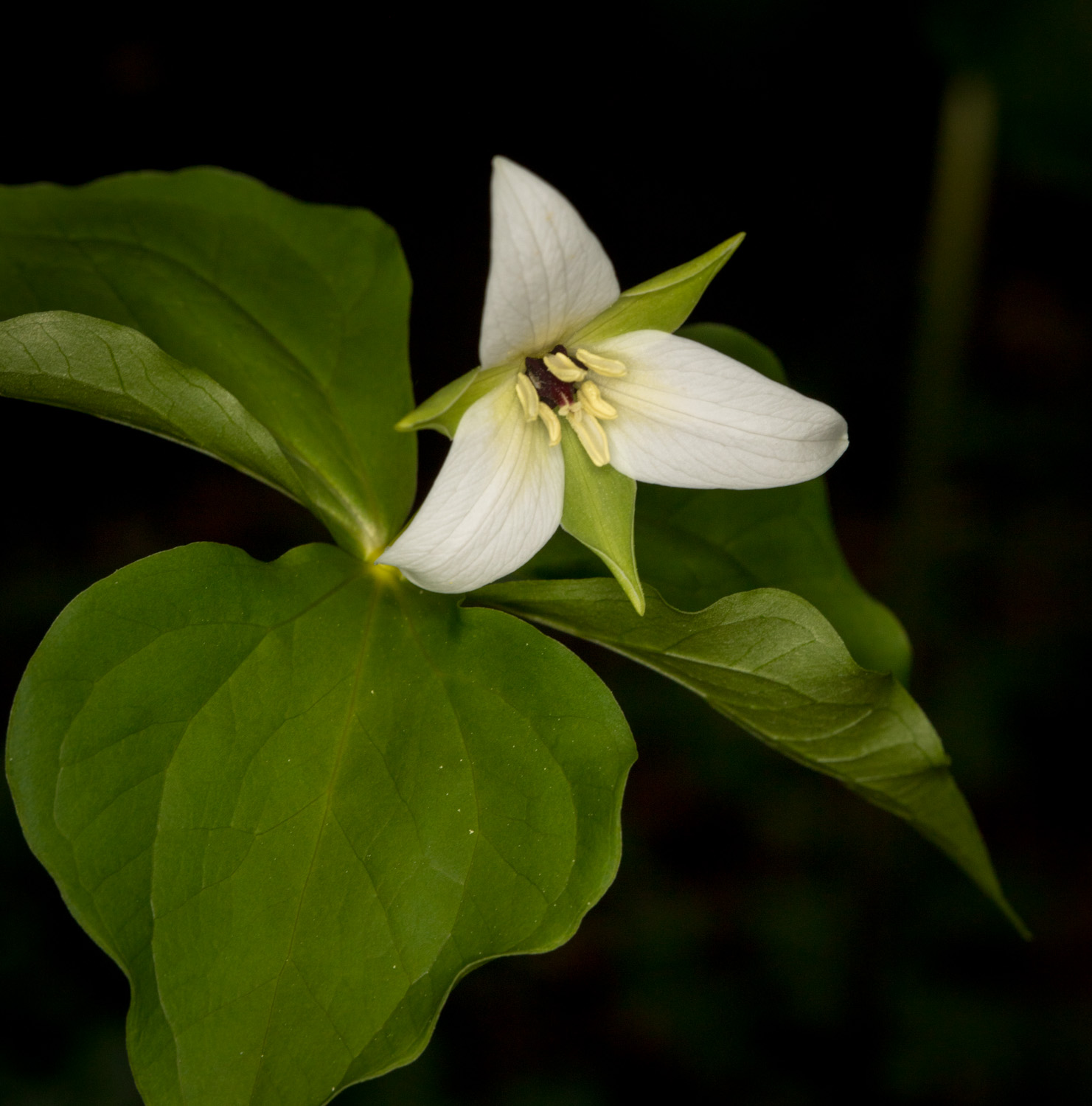
|
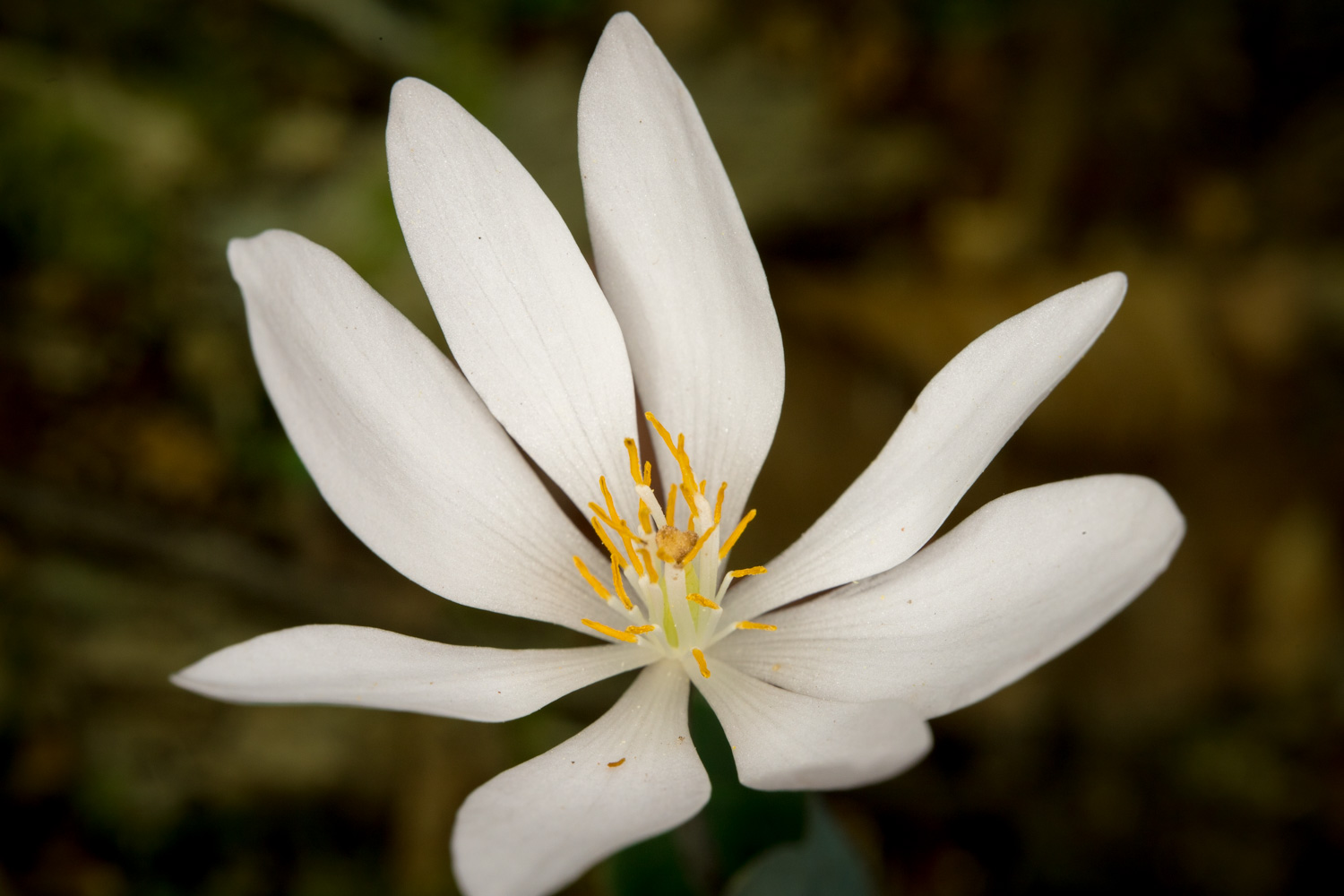
|
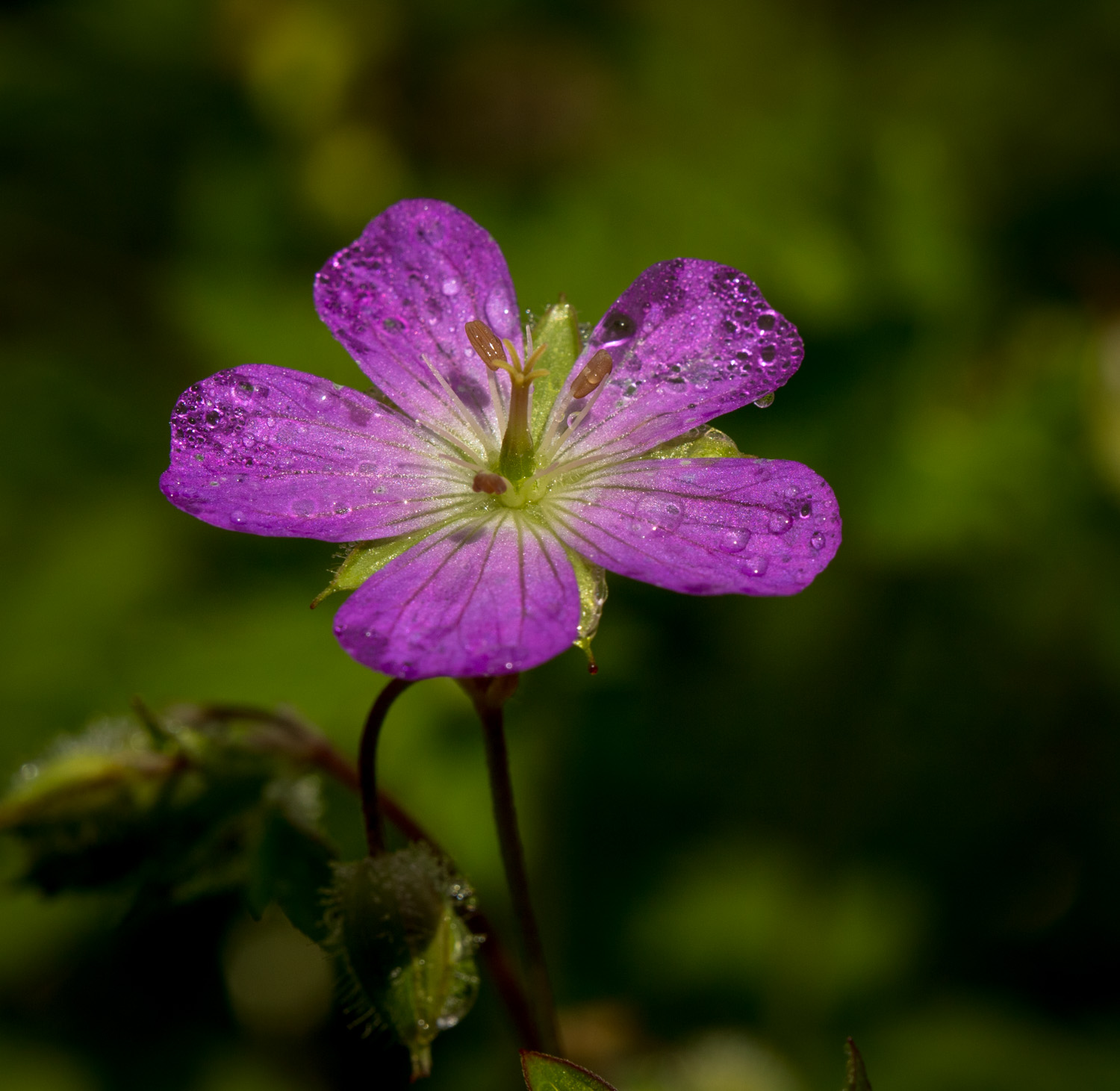
|
|
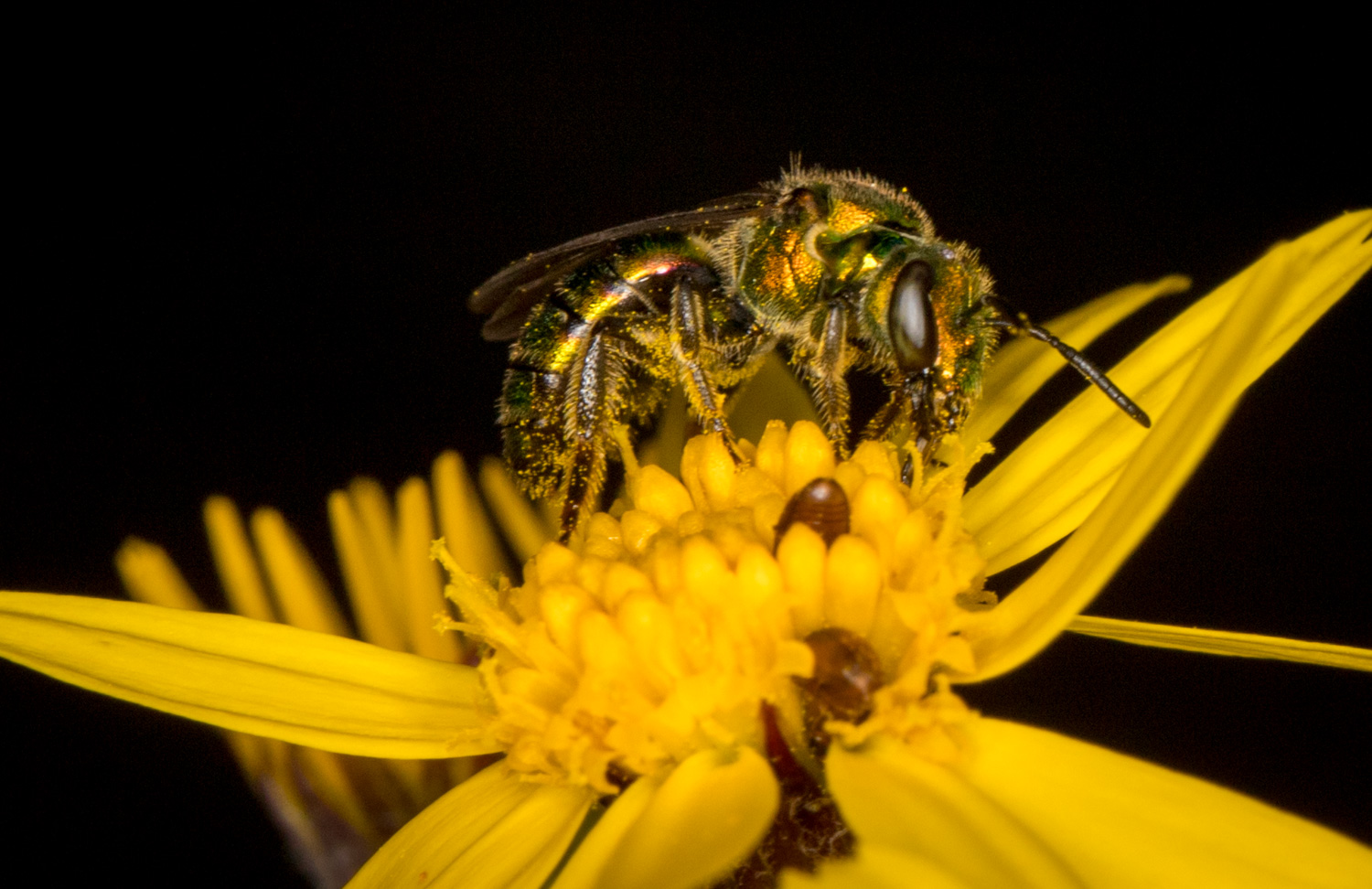
Green sweat bee
|
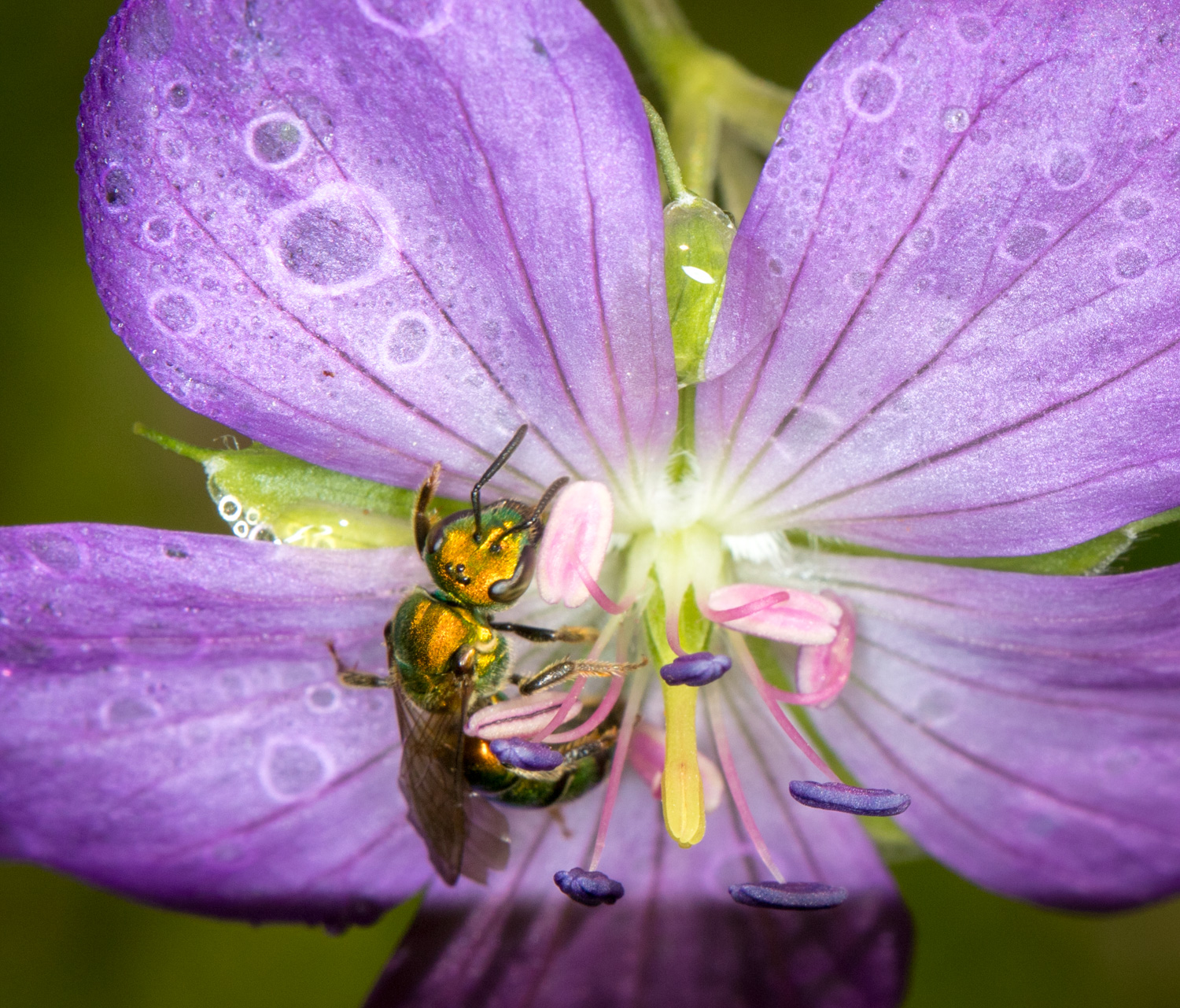
Pure green sweat bee
|
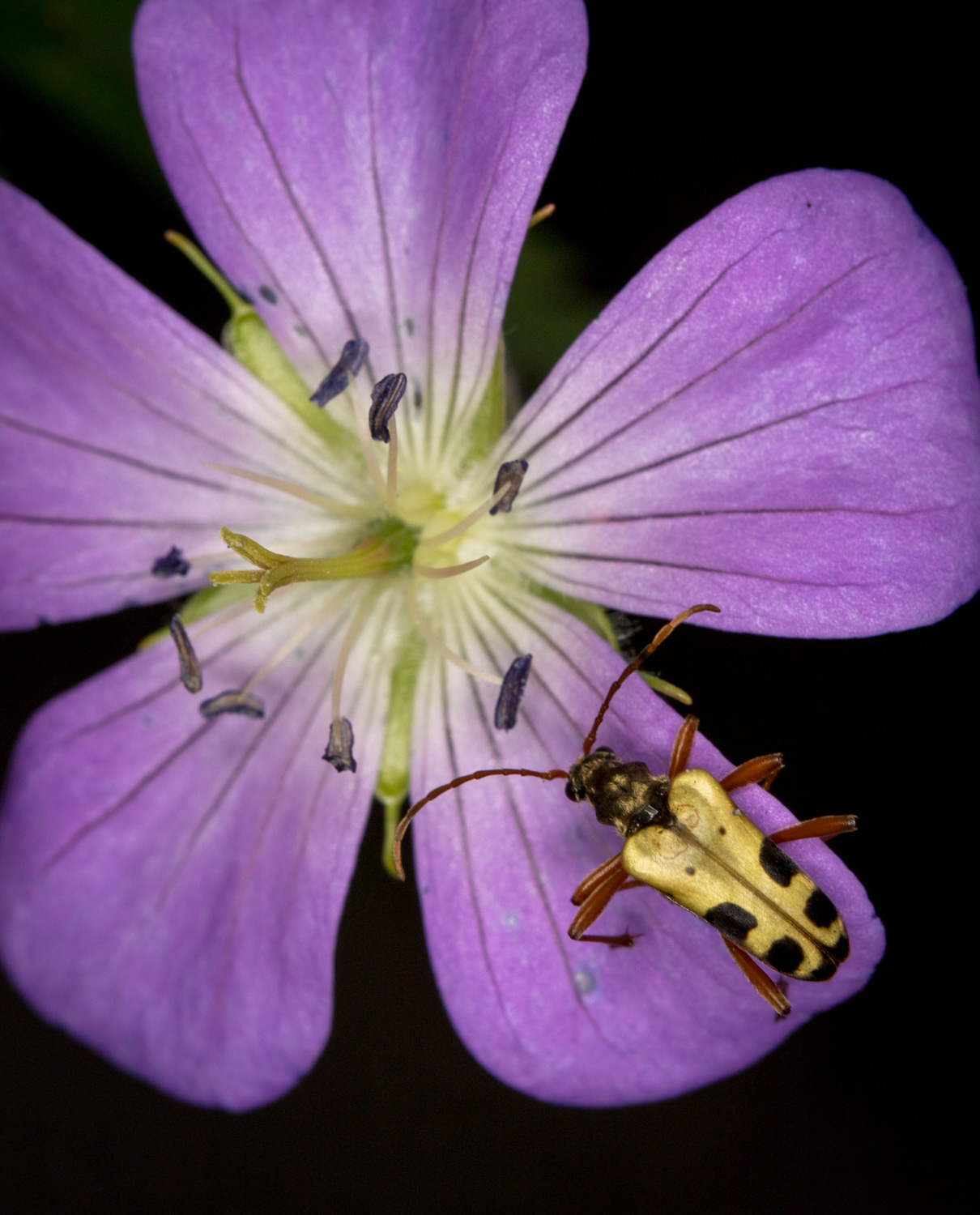
Longhorn beetle
|
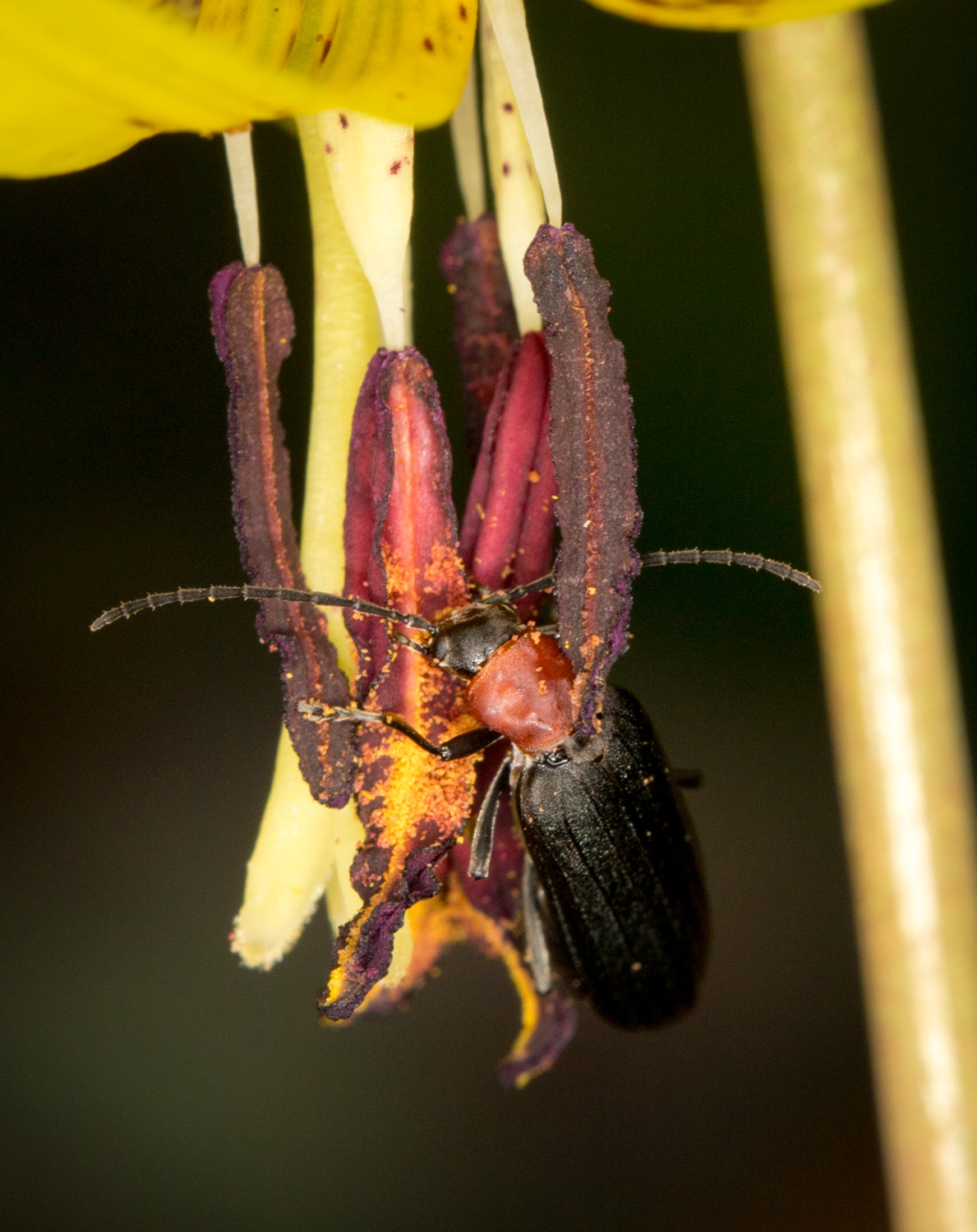
False Blister Beetle
|
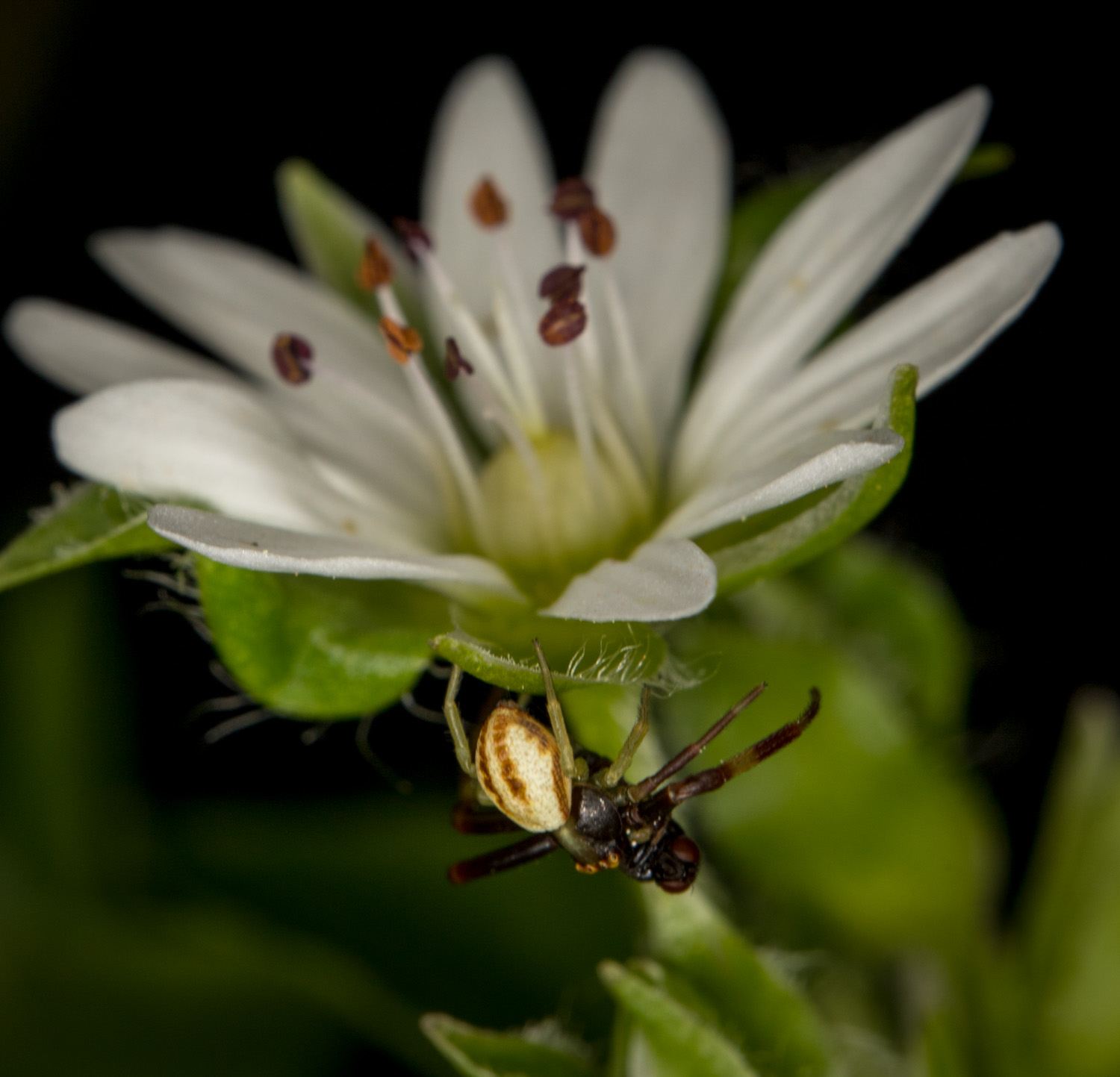
Goldenrod crab spider
|
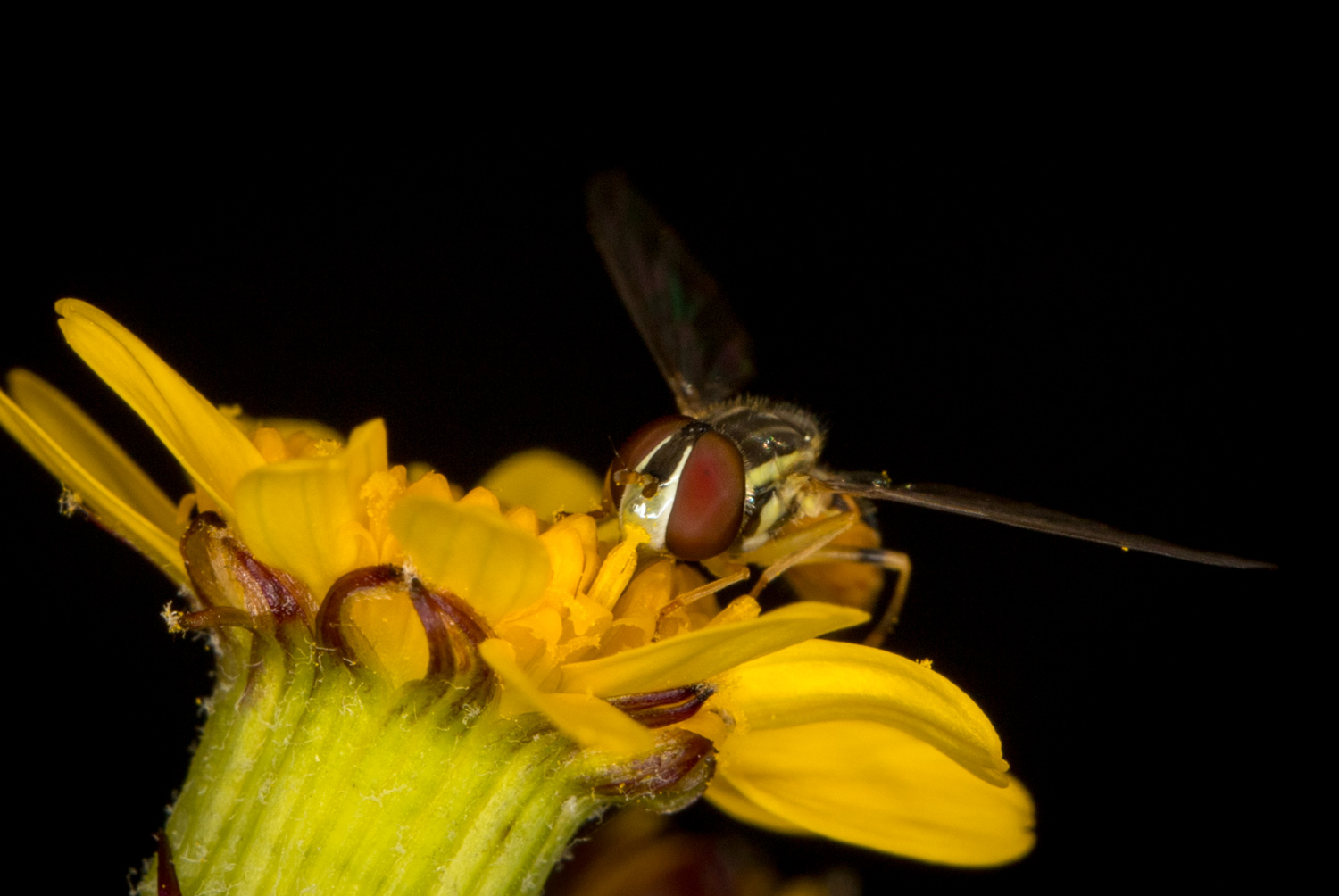
Calligrapher hoverfly
|
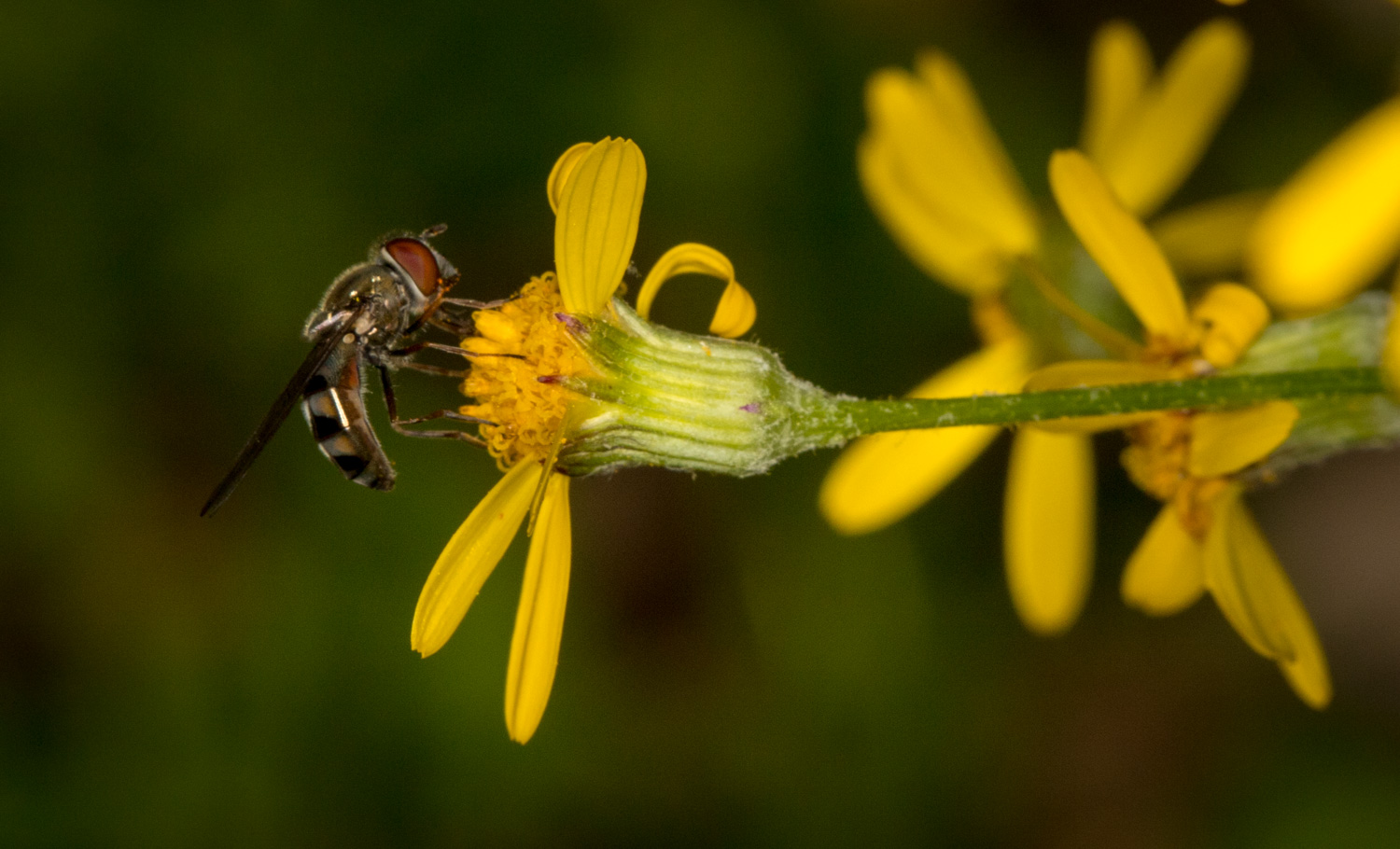
Sedgesitter
|
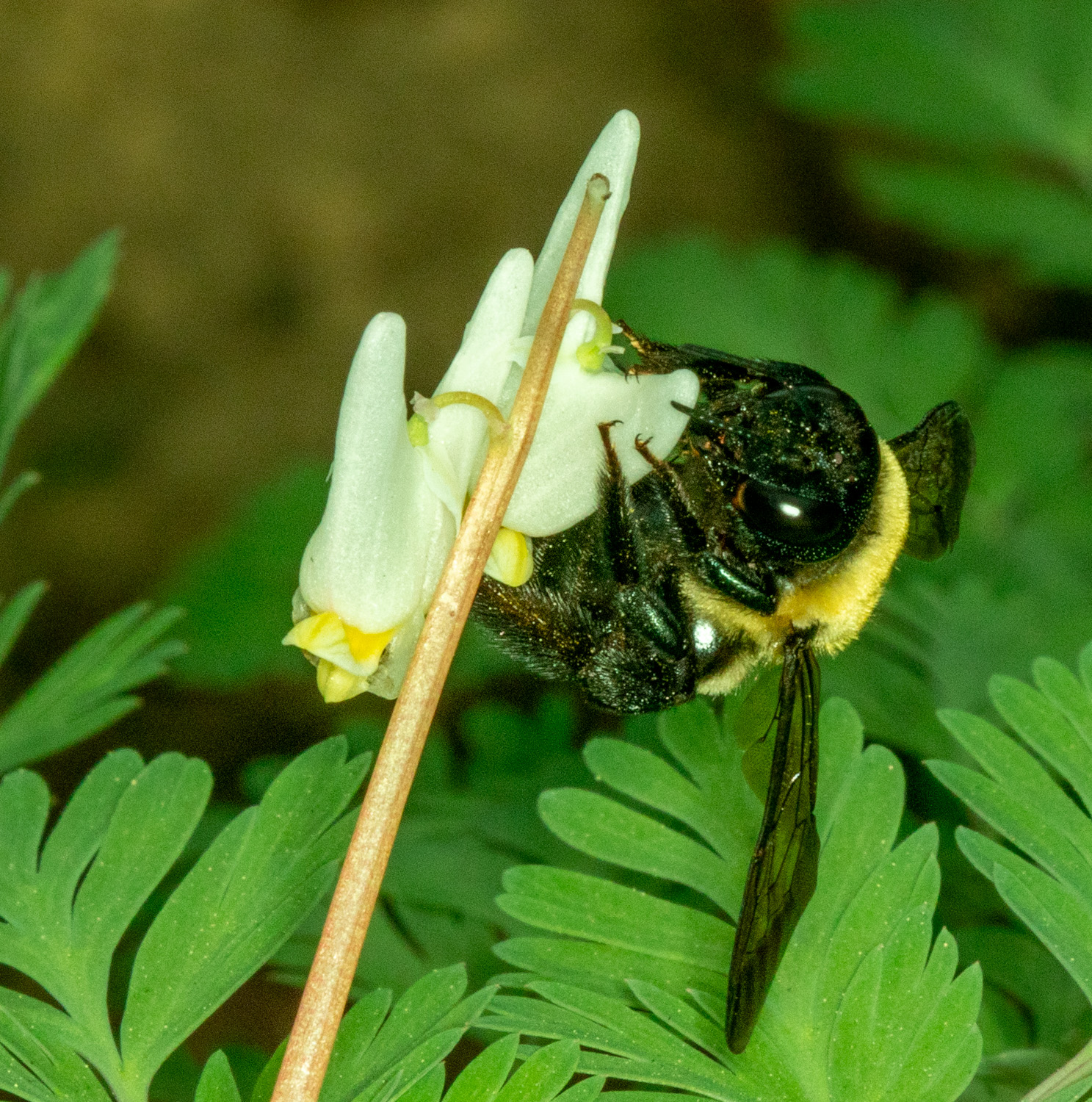
Bumblebee
|
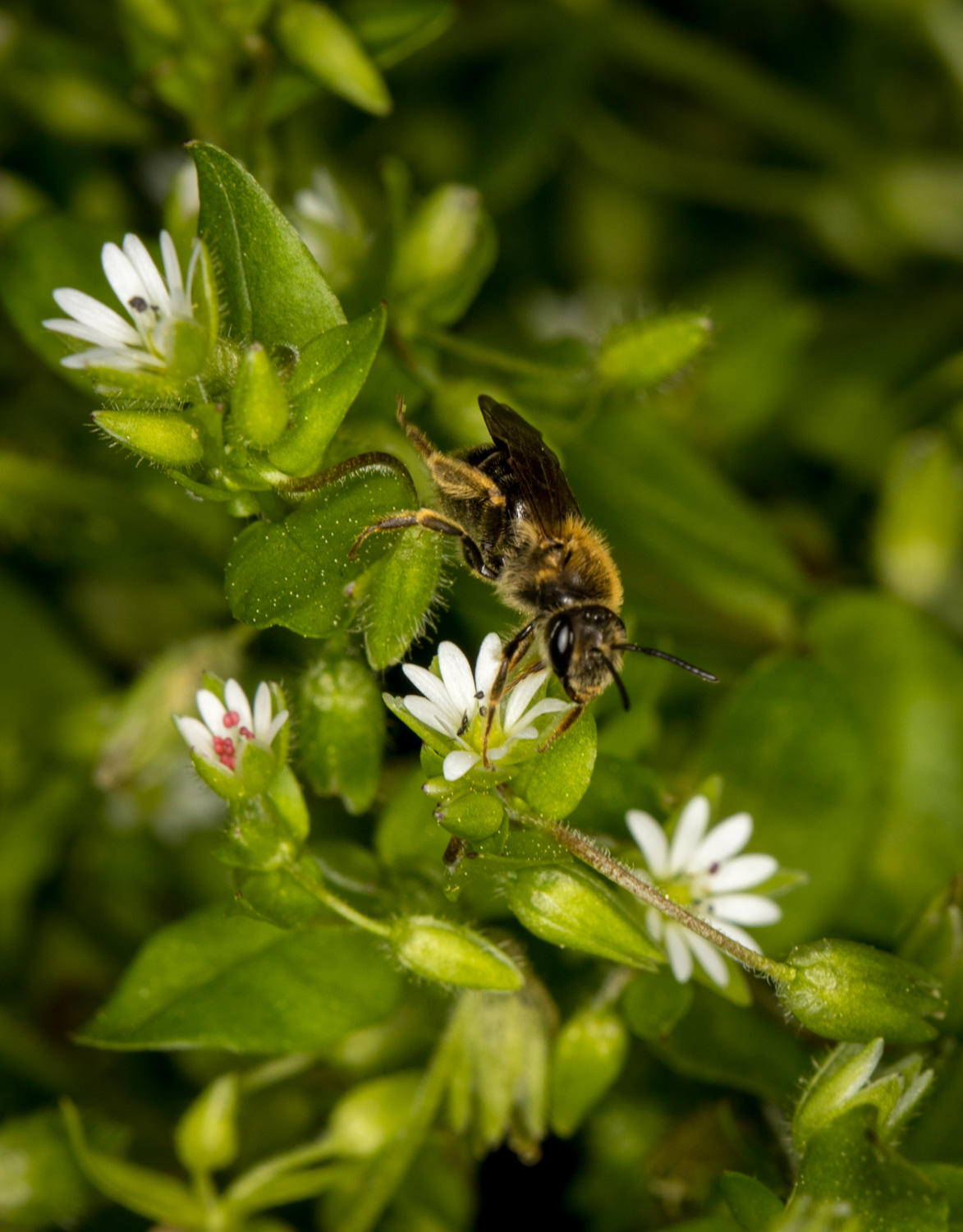
Mining bee
|
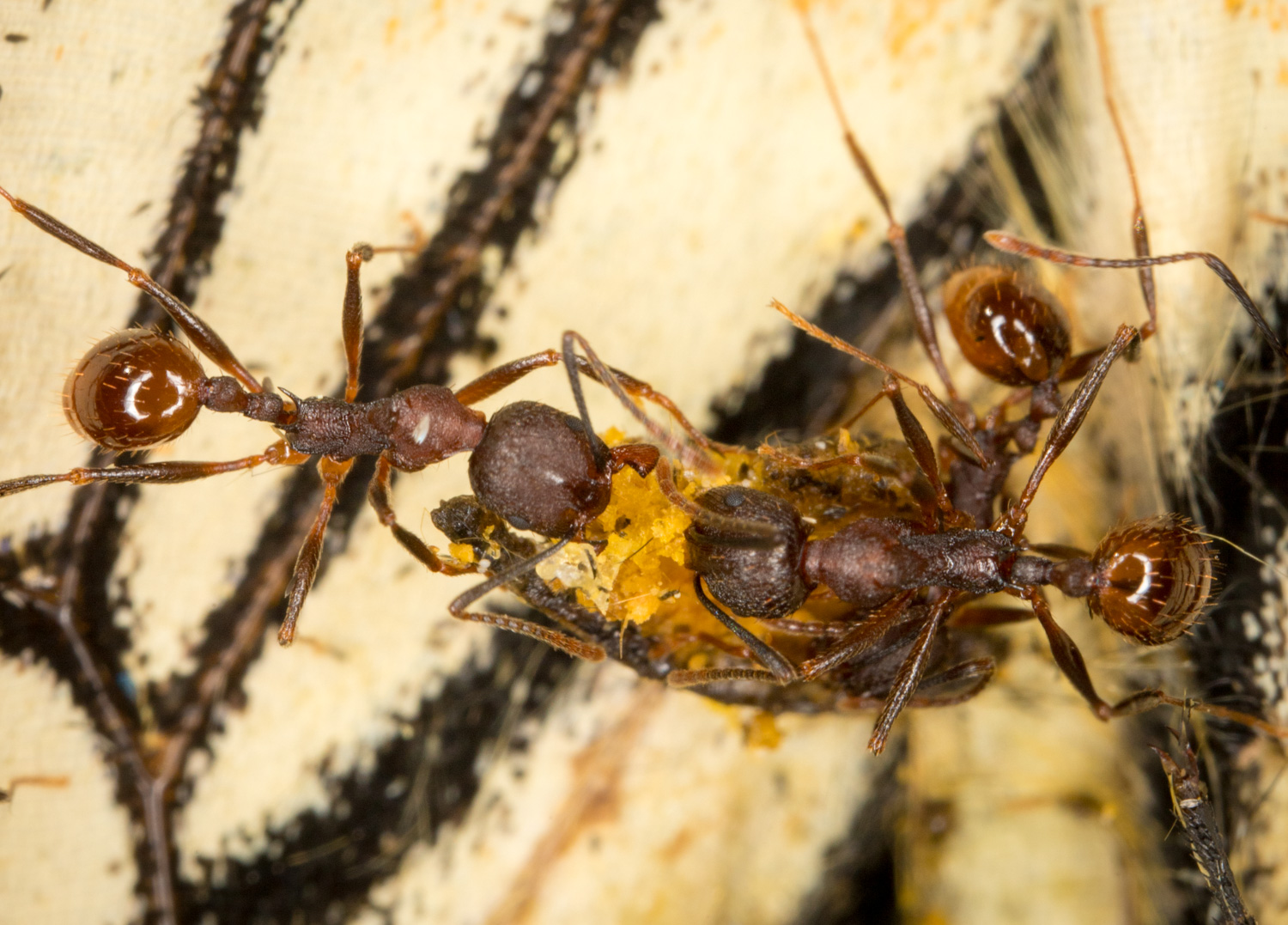
Spine-waisted ant (on butterfly wing)
|
David Cappaert, Update September 16, 2026
