Community Pollinator Survey, Friends of Greenview

In the spring of 2026, Friends of Greenview and Pioneer Woods collaborated on a project to build pollinator networks for Washtenaw County nature preserve. Greenview was one of 5 cooperating groups; in all we investigated 11 sites and 20 flowering plants on participant properties (see other site summaries in links at right).

  • The objectives: 1) to gain insight into the relationships between spring wildflowers and their pollinators; 2) to create a model for community science that goes beyond a species list, to address ecology.
  • The protocol: collect and identify all insects visiting flowers for key species coming into bloom in April and May.
  • The product: a list of flower-visiting species, and a measure of their relative abundance.
  • Caveats:
    • Small sampling effort. Our collection was modest (170 specimens, 43 species), but sufficient to identify broad trends.
    • We did not assess floral abundance, though we know that the mature pear trees will have had a hundred, or a thousand times more flowers the small stands of spring beauty.
    • Sampling effort was not equal between plants. E.g., we don't have a very good idea of what visits trout lily, because we spent less time collecting on that plant.

Click any image for a larger magnification.

Related pages


Survey coordinators:
David Cappaert
Shawn Severance Washtenaw County Naturalist

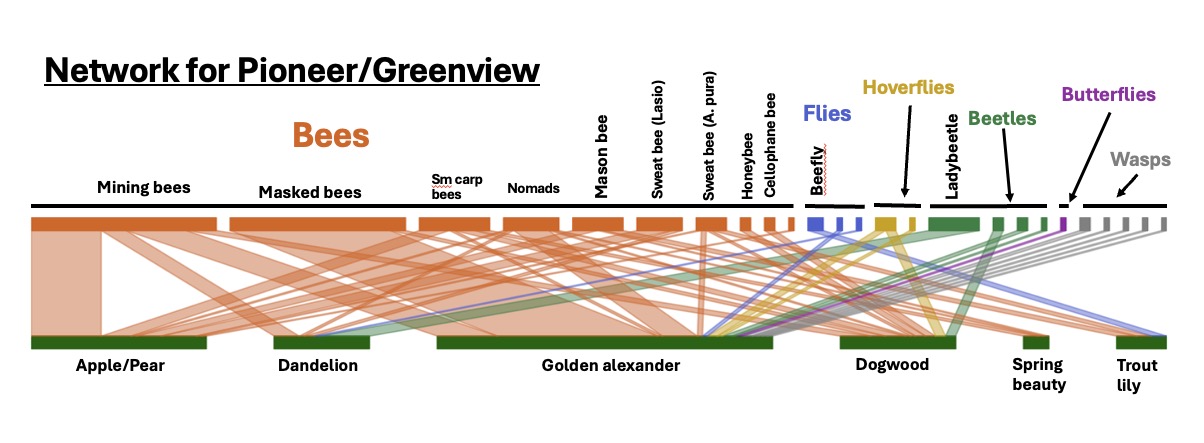
The network


* See below for species-level data underlying this chart.

Our results here, together with the larger dataset covering all sites, provides us with an opportunity to speculate about pollinator ecology in the sites where we sampled. A few observations for Greenview:

... What else do you see? What questions do these data raise?

A few notable species seen at this site

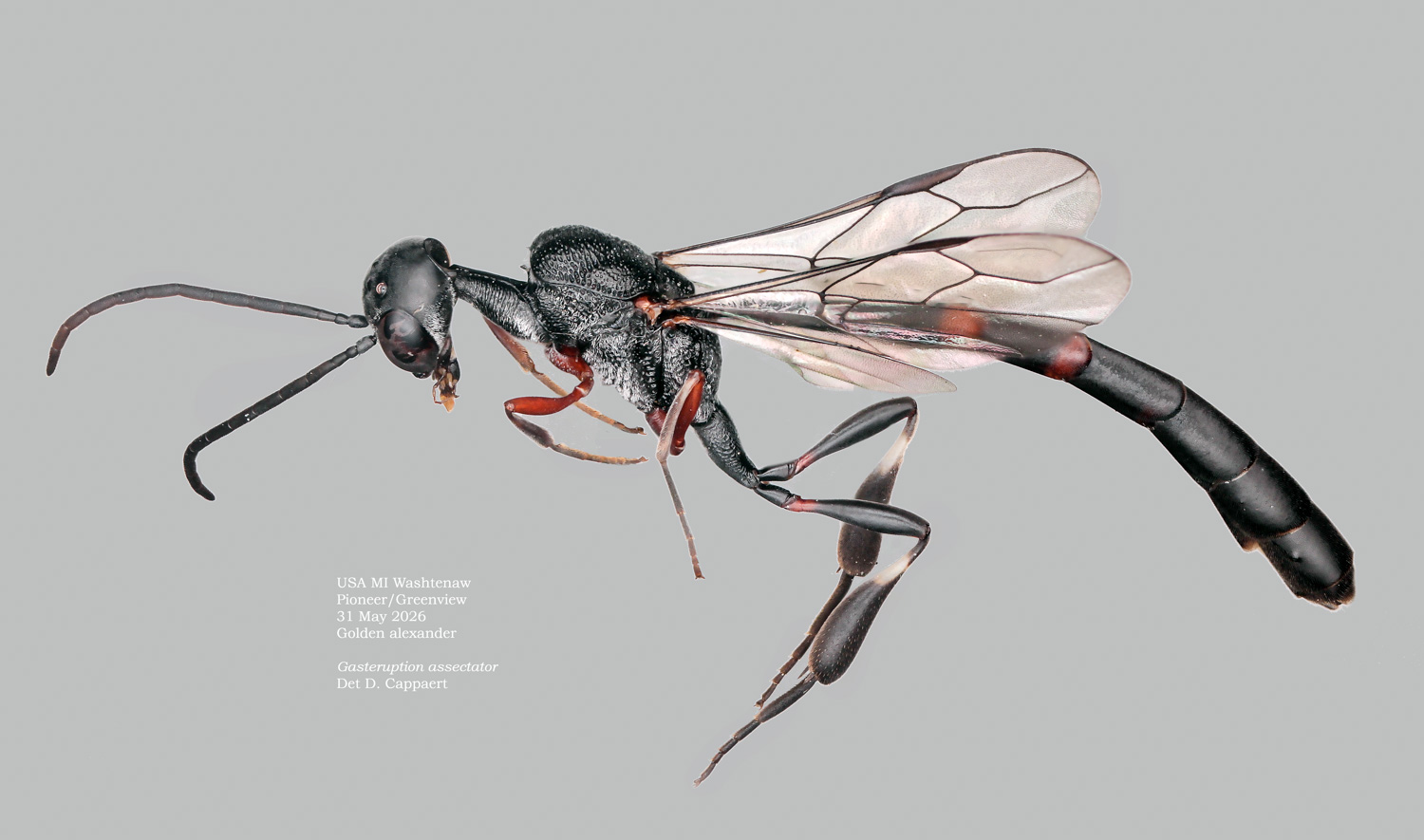
A wasp parasite of Hylaeus (masked bees - see right). Wasps in general contribute little to pollination. But they benefit from the nectar flowers provide.
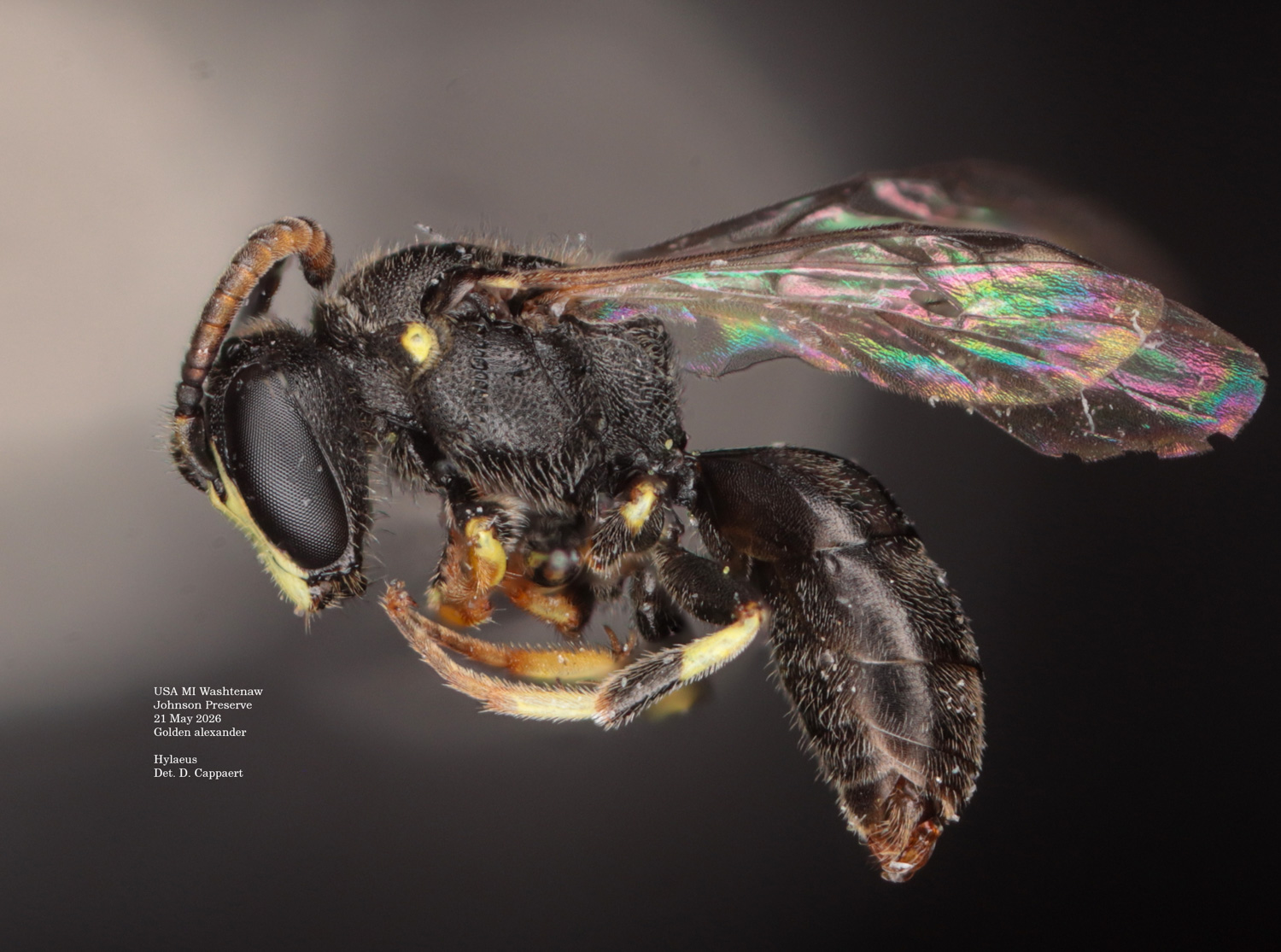
Above: Hylaeus, masked bee. One of the most abundant taxa in late May.

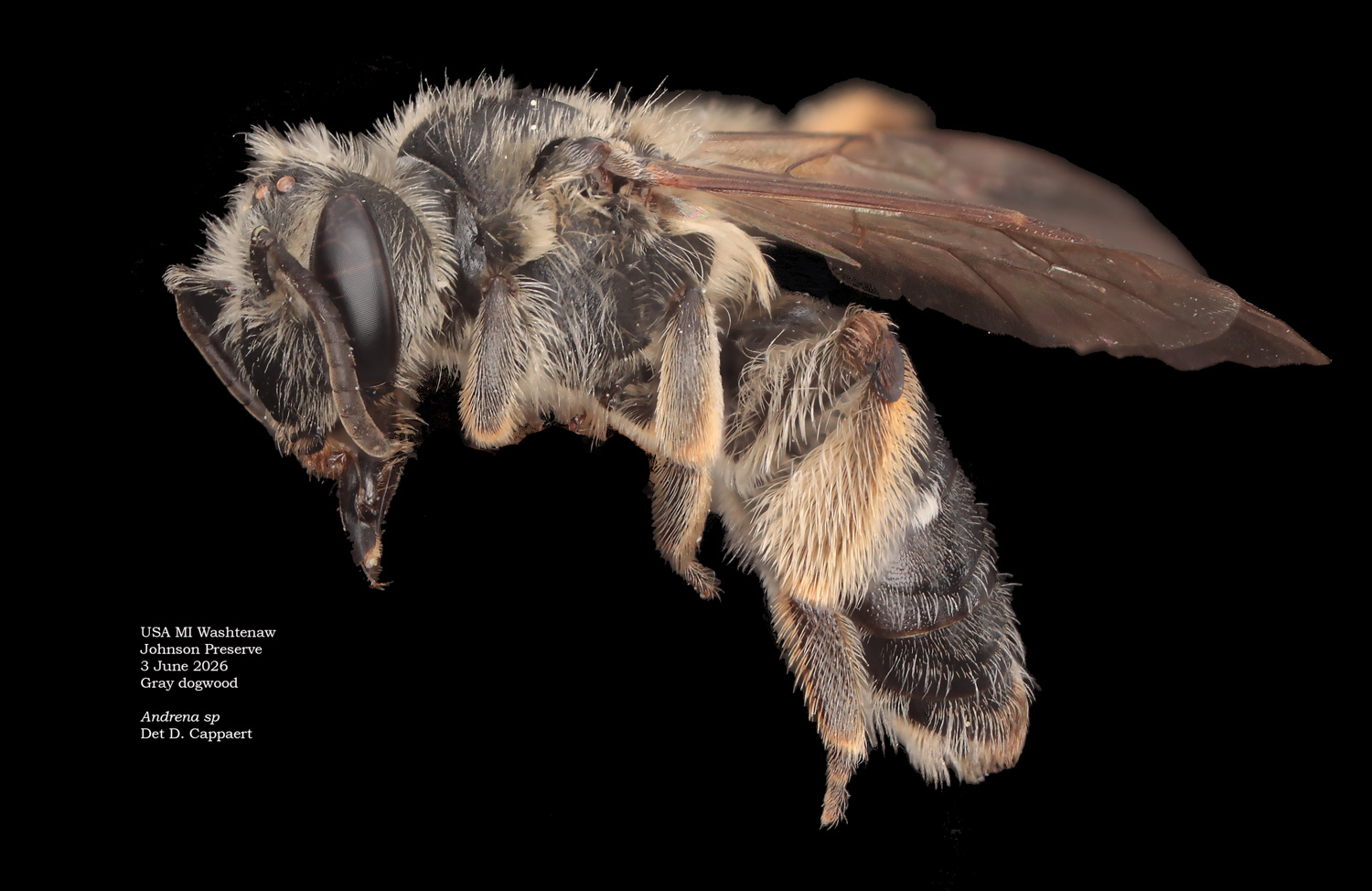
Below: A mining bee species abundant on golden alexander. Still working on the species name.
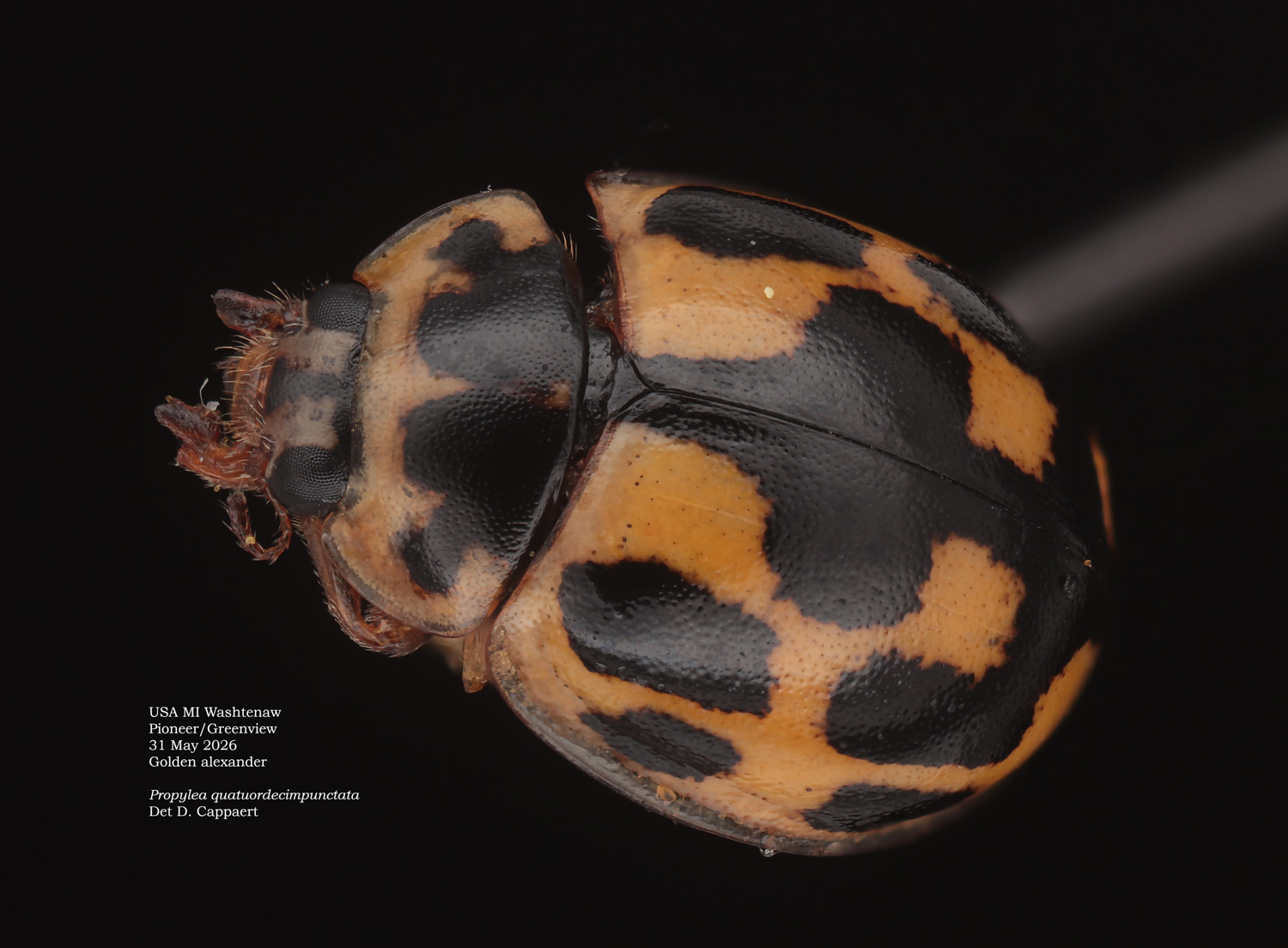
Above: 14 spotted ladybeetle.

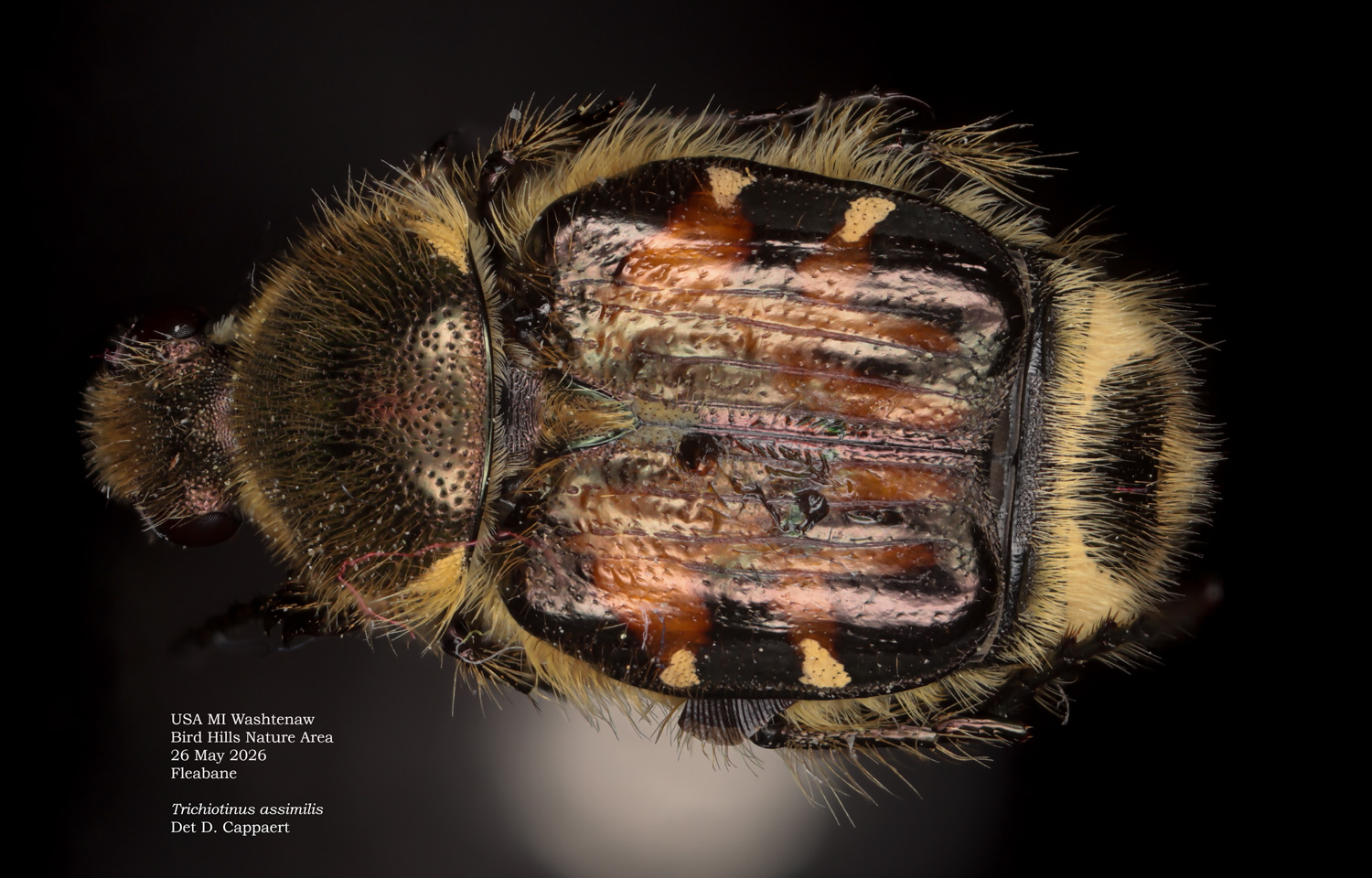
Below: Bee-mimic beetle.

Pioneer Woods — Insect Species by Plant, 2026

Group ID Apple/Pear Dandelion Gold Alex Gray dogwood Spring beauty Trout lily
Bee Andrena NOTimitatrix —1————
Andrena commoda———2——
Andrena cratagi———2——
Andrena cressonii———2——
Andrena dunningi6—————
Andrena forbesii——1———
Andrena heraclei4—————
Andrena imitatrix—2————
Andrena krigiana——1———
Andrena milwaukeensis—1————
Andrena miserabilis4—————
Andrena nasonii—1————
Andrena sp——10———
Apis mellifera———2——
Augorochlora pura1—11—3
Ceratina sp6—143—
Colletes inaequalis———2——
Hylaeus affinis——24———
Hylaeus mesillae——83——
Lasioglossum Lasioglossum—1————
Lasioglossum dialictus11————
Lasioglossum pectorale4—————
Lasioglossum pioneer12—————
Nomada red—1————
Nomada sp1—711—
Osmia cornifrons5————4
Osmia sp————1—
Xylocopa virginica1—————
Coleoptera Coleomegilla maculata—10————
Cyrtophorus verrucosus———2——
Propylea quatuordecimpunctata——1———
Trichiotinus assimilis——2———
Lepidoptera Phyciodes tharos——1———
Non-syrph fly Bombylius major—————3
Cerodontha sp——1———
Fly sp—1————
Syrphid Eristalis arbustorum——1———
Toxomerus marginata——22——
Wasp Gasteruption assectator——1———
Isodontia mexicana——1———
Polistes fuscatus——1———
parasitoid micro——1———
Wasp sp——2———
Total visitors 35196723510

David Cappaert, Update September 16, 2026

Overlay Image